

Winter skin care is easier to start before the cold, dry stretch arrives. This two-week plan focuses on small changes that reduce everyday stress on the skin barrier: less hot water, gentler cleansing, regular moisturizing, and a little more protection from dry indoor air and friction.
Two weeks is a practical time to establish a routine, not a guaranteed skin-repair timeline. Winter conditions affect people differently, and seasonal research finds mixed results for measurements such as transepidermal water loss (TEWL), the passage of water through the skin. Some studies report seasonal changes; others find different patterns depending on climate, body site, or measurement method. A systematic review and a study of seasonal skin properties in women in Guangzhou illustrate why winter dryness is common, but not universal. [1, 2]
Why prevention can be easier than catching up
Low humidity, hot water, repeated cleansing, and friction can all add to the daily load on skin. In a reconstructed epidermis model, just one hour of low-humidity exposure changed barrier-related measures, including TEWL and markers involved in skin structure. That is useful mechanistic evidence, but a laboratory model cannot tell us exactly how every person’s skin will respond at home. [3]
Hot water may contribute, too. In a study of 50 healthy adults, immersing a hand for 10 minutes in water at about 41°C increased TEWL and redness. This was a hand-immersion experiment, not a whole-body shower trial, but it supports choosing comfortably warm rather than very hot water. [4] Cleansers matter as well: surfactant type, contact time, and frequency can influence how drying or irritating a cleanser feels. [5]
The goal for the next 14 days is simple: reduce avoidable stress and make moisturizing easy to repeat.
Week One: Reduce the load
Days 1–2: Adjust your shower
Turn the water down to comfortably warm and keep showers brief. Pat skin dry rather than rubbing, and avoid scrubbing dry or flaky areas. The hot-water study measured hand immersion, so it does not establish an exact ideal shower temperature or duration; these are sensible ways to limit prolonged heat and water exposure. [4]
Days 3–4: Review your cleanser
Start with the cleanser that leaves your skin feeling tight or uncomfortable. Try a gentler option, or reduce how long it stays on your skin and where you use it. A rinse-off product’s overall formula and your own response matter, not simply whether it is labeled natural, handmade, or fragrance-free. Research reviews describe how some cleansing agents can interact with skin proteins and lipids, while mildness varies by formulation. [5]
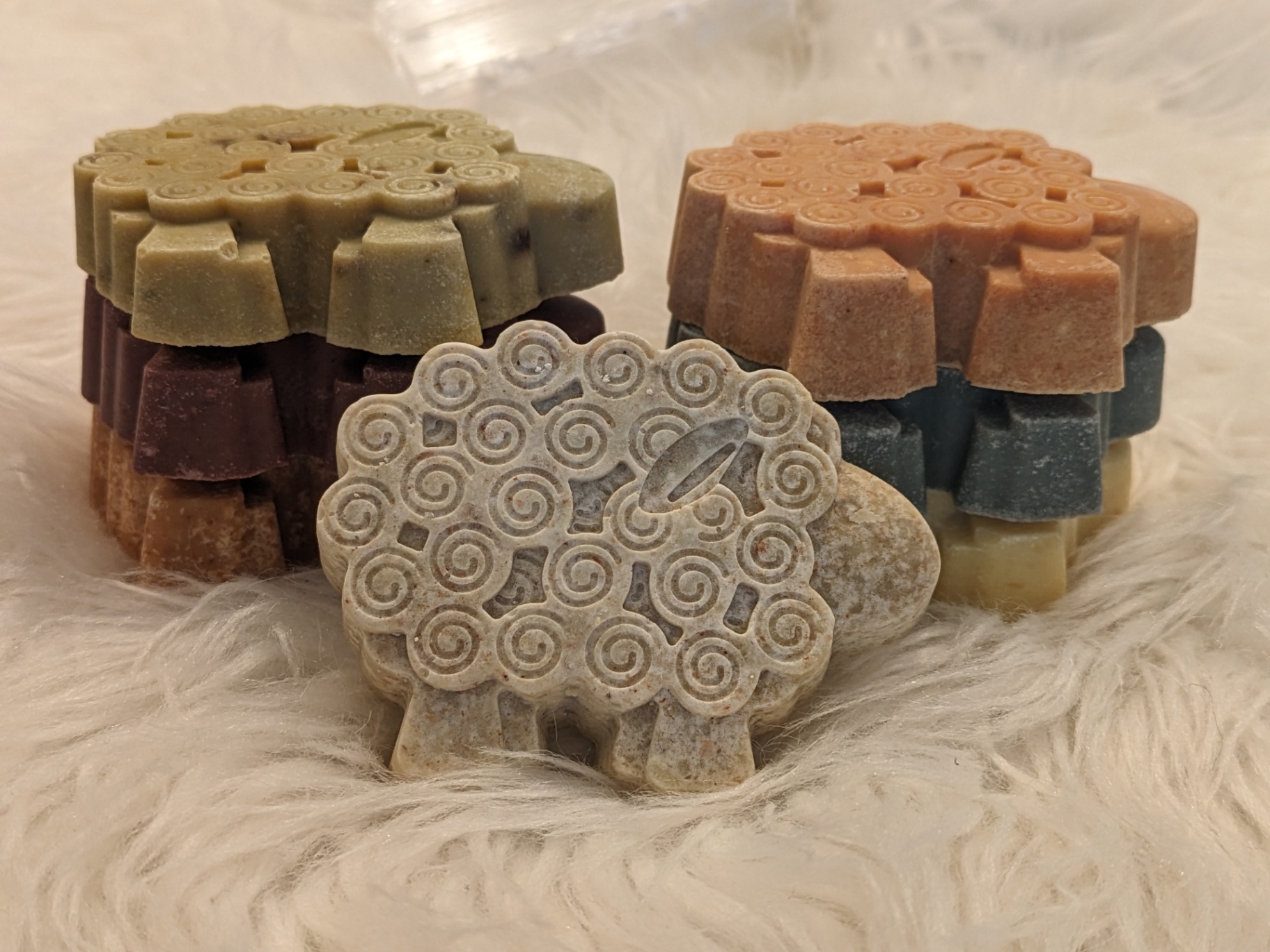
Our sheep-milk soaps are traditional soap bars, and they work well for many customers. As discussed in our pH and soap guide, a traditional soap bar is not the same as a syndet cleanser. If a bar leaves your skin uncomfortable, a fragrance-free syndet may be a better fit for your routine.
Days 5–6: Make moisturizing part of washing
After a shower or handwashing, pat skin so it is no longer dripping, then apply moisturizer while it is still slightly damp. “Within three minutes” is a useful reminder, not a proven cutoff. A study comparing immediate moisturizer application with a 30-minute delay found benefits from moisturizing, but did not find a significant difference between the two timings. [6] Another small study found that moisturizer used after frequent soap washing helped limit changes in skin measures. [7]
If you wash your hands often, keep a moisturizer where you wash and apply it when you can. Regular use may help, though a Cochrane review found the prevention evidence for occupational hand irritation was limited and not conclusive. [8]
Day 7: Check indoor humidity and laundry
If indoor air feels very dry, use a hygrometer to check it. The U.S. Environmental Protection Agency recommends roughly 30–50% relative humidity as a general indoor-air range. This is not proof that a humidifier prevents dry skin; clinical evidence for skin outcomes from household humidifiers is weaker than the evidence that humidity affects skin in laboratory settings. If you use one, clean it regularly and follow the manufacturer’s directions. [3, 9]
For your next laundry load, consider fragrance-free detergent and skip fabric softener on clothes worn next to the skin. This is a low-effort way to reduce exposure to some potential irritants, not a claim that detergent commonly causes allergic skin reactions. One study found positive detergent patch tests in 5 of 738 volunteers drawn from a dermatitis-clinic population (0.7%); that figure is not a general-population prevalence estimate. A separate review of textile-care products found potential allergens in many product ingredient lists, which shows presence, not that every product causes a reaction. [10, 11]
Week Two: Rebuild and protect
Days 8–10: Choose moisturizer by function
Moisturizers can combine three useful functions:
- Humectants, such as glycerin or urea, attract and hold water.
- Emollients soften rough-feeling skin.
- Occlusives form a surface layer that slows water loss.
These categories overlap in real products, and formulation matters. [12] Urea has been studied in moisturizers for dry skin; a small double-blind trial found improvements in hydration and scaling with urea creams. Urea can sting on cracked or sensitive areas, so check the label and use a product that feels comfortable for you. [13, 14]
For many people, a cream or lotion with humectant and emollient ingredients is a convenient daily choice. A balm can add a richer emollient or occlusive layer over dry spots. No single texture suits everyone.
Days 11–12: Add an overnight layer where you need it
Try a small amount of a comfortable balm or ointment on dry hands, feet, or lips before bed. Cotton gloves or socks can help keep the product in place if you like wearing them, but evidence specifically proving overnight occlusion prevents dry hands is limited. Avoid tight or damp coverings, and stop if the approach makes your skin feel worse.
For hands, cotton liners under work gloves may reduce direct friction or contact with materials. Change gloves if they become damp inside. Gloves are a practical barrier, but they are not a substitute for reducing unnecessary wet work or moisturizing after washing. Evidence for workplace hand-care interventions remains uncertain. [8]
On lips, avoid licking or picking at dry skin; repeated wetting and drying can contribute to irritation. Choose a bland lip product you tolerate, and be mindful that flavors or fragrances may bother some people. [15]
Days 13–14: Keep the routine and check in
Continue gentle cleansing and moisturizing. Once a day, note whether you have tightness after washing, flaking, or itching. If a new product appears to make irritation worse, stop using it. See a dermatologist or other qualified clinician for persistent symptoms, a spreading rash, or cracks that bleed or do not improve with consistent care.

Where our products fit
Our skin balms are small-batch cosmetic moisturizers, not treatments for diagnosed skin conditions. The $10 balms include Frankincense, Rose, Lavender, Peony, Pine, and Unscented; our Pine Resin Balm is also available in a 6-ounce size for $25. The Unscented Skin Balm is made without added essential oils or botanical scents. Fragrance-free does not mean allergy-proof, so check the ingredients and discontinue use if irritation occurs.
Our balms are richer than a typical humectant lotion and can be used as a protective layer on dry areas. They contain farm-sourced lanolin, olive oil, mango butter, shea butter, and beeswax. If you’re considering lanolin-rich skincare for skin barrier repair, it’s worth keeping the claim in perspective: lanolin-containing balms can moisturize and help limit water loss, but they do not rebuild the skin barrier as a medical treatment. Our Unscented Skin Balm also offers a fragrance-free option for customers who prefer to avoid added scent. If you know or suspect you react to an ingredient, do not use it without professional advice.

For more targeted seasonal guidance, read our winter repair map for chapped hands and cracked heels and our companion article on indoor heating and skin.
One-week-out checklist
- Keep showers brief and comfortably warm.
- Choose a cleanser that does not leave your skin feeling tight.
- Moisturize after washing, while skin is slightly damp.
- Keep hand moisturizer where you wash.
- Check indoor humidity; clean any humidifier regularly.
- Try fragrance-free laundry detergent and skip softener on next-to-skin layers.
- Protect hands from friction and wet work; keep gloves dry inside.
- Track tightness, flaking, itching, and any worsening after a new product.
Medical disclaimer: This article is for general education, not medical advice, diagnosis, or treatment. Scalise Family Sheep Farm soaps and balms are cosmetic products. Consult a qualified healthcare professional about persistent or severe symptoms, bleeding cracks, or a spreading rash.
Academic References & Scientific Sources
- Green M, Kashetsky N, Feschuk A, Maibach HI. “Transepidermal water loss (TEWL): Environment and pollution, A systematic review.” Skin Health and Disease. 2022. DOI
- Wan M, Hu L, Hu Y, et al. “Seasonal variability in the biophysical properties of forehead skin in women in Guangzhou City, China.” International Journal of Dermatology. 2015. DOI
- Izutsu-Matsumoto Y, et al. “Effect of low humidity on the barrier functions of keratinocytes in a reconstructed human epidermal model.” International Journal of Cosmetic Science. 2025. DOI
- Herrero-Fernandez M, Montero-Vilchez T, Diaz-Calvillo P, et al. “Impact of Water Exposure and Temperature Changes on Skin Barrier Function.” Journal of Clinical Medicine. 2022;11(2):298. DOI
- Ananthapadmanabhan KP, Lips A, Vincent C, et al. “Cleansing without compromise: the impact of cleansers on the skin barrier and the technology of mild cleansing.” Dermatologic Therapy. 2004;17(Suppl 1):1–9. DOI
- Nguyen HTT, et al. “Moisturizing effectiveness of immediate compared with delayed moisturization after bathing.” Journal of Cosmetic Dermatology. 2022. DOI
- Samadi A, et al. “Protective Effects of Moisturizers on Skin Barrier during Regular Hand Washing with Soap Bars.” Indian Journal of Dermatology. 2021. Full text
- “Interventions for preventing occupational irritant hand dermatitis.” Cochrane Database of Systematic Reviews. Full text
- U.S. Environmental Protection Agency. “Improving Your Indoor Environment.” Guidance
- Belsito DV, et al. “Allergic contact dermatitis to detergents: A multicenter study to assess prevalence.” Journal of the American Academy of Dermatology. 2002;46:200–206. DOI
- Bai H, Tam I, Yu J. “Contact Allergens in Top-Selling Textile-care Products.” Dermatitis. 2020. DOI
- Barnes TM, et al. “Vehicles for Drug Delivery and Cosmetic Moisturizers: Review and Comparison.” 2021. Full text
- Serup J. “A double-blind comparison of two creams containing urea as the active ingredient.” 1992. PubMed
- Piquero-Casals J, et al. “Urea in Dermatology: A Review of its Emollient, Moisturizing, Keratolytic, Skin Barrier Enhancing and Antimicrobial Properties.” 2021. DOI
- Fonseca A, Jacob SE, Sindle A. “Art of prevention: Practical interventions in lip-licking dermatitis.” International Journal of Women’s Dermatology. 2020. DOI


