

If you’ve searched for pH-balanced soap, you may have found bold claims that traditional soap is harmful, or that any cleanser labeled “pH-balanced” is automatically gentler. The reality is more nuanced.
Skin is mildly acidic, and a traditional soap bar is alkaline. That difference matters, especially with frequent washing or already-sensitive skin. But a brief wash with soap isn’t automatically damaging, and pH alone doesn’t tell you whether a cleanser will suit you.
What does “pH-balanced” actually mean?
The pH scale describes how acidic or alkaline a water-based solution is. A pH below 7 is acidic; 7 is neutral; above 7 is alkaline. The scale is logarithmic, so a one-point difference represents a tenfold change in hydrogen-ion concentration.
Healthy skin’s surface is mildly acidic, although readings vary by body site, age, measurement method, and recent washing. Research has reported values around 4.1–5.8 in common body areas, while another large study estimated an average near 4.7.[1][2] This surface acidity is associated with processes involved in barrier function and the skin’s resident microorganisms.[3]
“pH-balanced,” however, does not have one universal numerical definition for cosmetics. In practice, brands often use it to suggest that a cleanser has a pH close to skin’s mildly acidic surface. That wording isn’t a guarantee of a particular pH or of gentle performance. Cosmetic claims must not be false or misleading, but the label alone doesn’t tell you what the product’s measured pH is, or how it was tested.[4]
What can alkaline cleansers do to skin?
Traditional soap can temporarily raise the skin’s surface pH. After one wash, the pH generally moves back toward its previous level over time; studies have observed recovery over hours, rather than an instant return to baseline.[5][6] The size and duration of the change depend on the person, the product, and how often and how long they wash.
Why pay attention at all? Skin’s outer layer relies on an organized barrier of cells and lipids. Laboratory research shows that pH can influence stratum-corneum properties and the enzymes involved in processing skin lipids.[7] Repeated washing may also affect hydration, surface fats, and microbial populations. These effects are not identical for every cleanser or every person.
Comparative studies offer useful context:
- In an infant study, alkaline soap caused a larger immediate rise in skin pH than the tested pH 5.5 detergent cleansers.[8]
- A study of repeated washing found that soap produced a more persistent pH rise than a synthetic detergent cleanser.[5]
- Research on elderly people with dry skin supports considering an acidic syndet-based routine, though the study included lotion as part of the care regimen, so the effect cannot be attributed to cleanser alone.[9]
- A more recent forearm-use study found differences among tested soaps and a syndet after frequent washing. Its results are informative, but they don’t mean every syndet is mild or every soap causes lasting harm.[10]
A change in pH is not the same thing as proof of permanent damage. The practical concern is more relevant for people whose skin barrier is already vulnerable, who wash repeatedly throughout the day, or who know that traditional soap leaves their skin uncomfortable. The skin microbiome research also deserves care in interpretation: studies show that cleansing and skin pH can influence resident microbes, but they do not establish that every alkaline soap causes a harmful or lasting microbiome change.[3][11]
Why handmade soap is alkaline by chemistry
True soap is made through saponification: fats or oils react with an alkali, typically sodium hydroxide, to form fatty-acid salts, the soap itself, and glycerol. In water, those soap salts produce an alkaline solution. That’s why traditional soap bars commonly have a higher pH than skin.[12]
This isn’t a manufacturing defect. It’s part of what makes a product chemically soap. A cleanser with a pH around 5–6 is generally a syndet (short for synthetic detergent), or a blend that includes synthetic detergents, not a conventional bar made only of saponified oils.
Two soap-making terms are sometimes misunderstood:
- Superfatting means the recipe uses less alkali than would be needed to convert all the fats into soap. This leaves some oils or fats unsaponified and can influence the bar’s feel. It does not make a traditional soap bar pH-neutral.
- Curing allows a handmade bar to lose water and become harder with use. It does not normally change an alkaline soap into a pH-balanced syndet or bring its pH down to skin level.
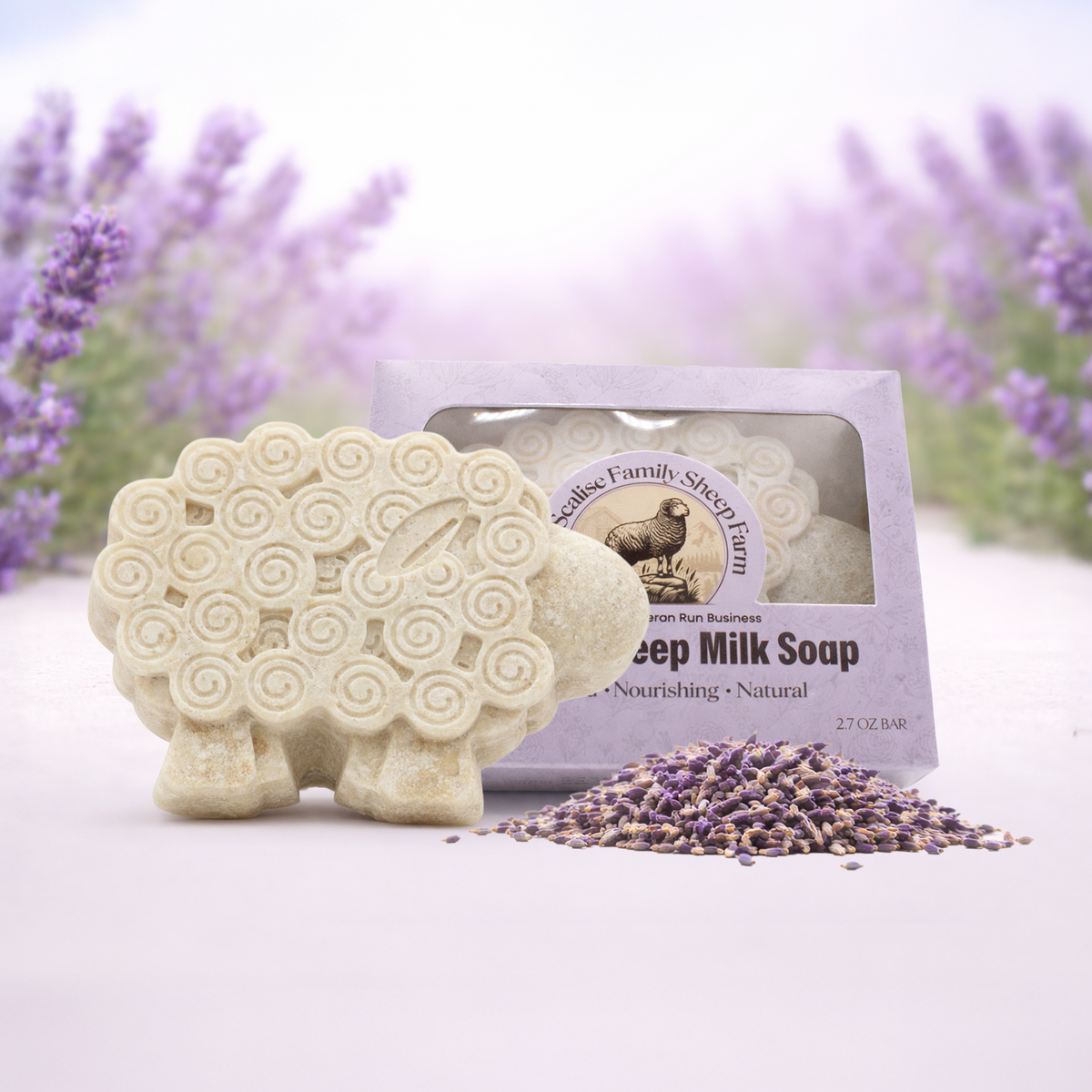
Sheep’s milk contributes to the recipe and the character of the lather, but it does not make a saponified soap bar pH-neutral. Our Lavender Sheep Milk Soap and Frankincense Sheep Milk Soap are traditional, small-batch soaps, not pH-balanced syndets. Our product pages do not publish a measured pH, so we don’t claim a specific pH for these bars.

The honest verdict: soap or syndet?
For many people with healthy skin, a brief wash with an alkaline soap, followed by thorough rinsing and moisturizer if needed, is generally well tolerated. Evidence does not show that occasional use inevitably causes lasting harm. But if you have very reactive or persistently dry skin, a diagnosed skin condition, or wash many times a day, a well-formulated, fragrance-free syndet may be a better choice.
One important qualification: lower pH doesn’t automatically mean gentler. Research has found that surfactant type and the overall formulation matter; some acidic cleansers can be more irritating than neutral ones.[13][14] Look at the whole product and how your skin responds, not only a pH number.
How to choose a cleanser
When reading a label, treat “pH-balanced” as a claim to investigate. If a brand provides a number, look for context: Is it the pH of the finished product? Was it measured, and under what conditions? A stated pH still doesn’t prove mildness.
Other practical factors matter, too:
- Choose based on your skin and routine. If soap leaves you tight or uncomfortable, try a fragrance-free syndet and compare.
- Keep washing brief. Long, repeated contact can matter more than a quick rinse-off.
- Use comfortably warm water. Very hot water may leave skin feeling drier.
- Rinse thoroughly and pat dry instead of rubbing.
- Moisturize after washing if your skin feels dry or tight.
A handmade natural soap can be a thoughtful choice for people who enjoy its ingredients, lather, and feel. A syndet can be the more suitable option for someone who needs a cleanser formulated closer to the skin’s surface pH. Neither choice has to be a moral judgment, or a promise of a particular skin outcome.
FAQ
Is pH-balanced soap the same as a syndet?
Not necessarily. The phrase “pH-balanced” doesn’t identify the cleanser’s chemistry. A true soap is alkaline; a pH 5–6 cleanser is more likely a syndet or a soap-and-syndet combination.
Does alkaline soap permanently change skin pH?
A wash can temporarily raise surface pH. Research suggests the skin generally moves back toward its prior level over time, though repeated washing can prolong the change.[5][6]
Does superfatting make soap pH-balanced?
No. Superfatting leaves some fats unsaponified and can affect how a bar feels, but it does not turn traditional soap into a pH-neutral cleanser.
Is a lower-pH cleanser always gentler?
No. pH is only one part of a cleanser’s formulation. Surfactant type, concentration, fragrance, contact time, and your individual skin response matter too.[13][14]
Academic References & Scientific Sources
- Segger D, Assmus U, Brock M, et al. “Multicenter study on measurement of the natural pH of the skin surface.” International Journal of Cosmetic Science. 2008.
- Lambers H, Piessens S, Bloem A, Pronk H, Finkel P. “Natural skin surface pH is on average below 5, which is beneficial for its resident flora.” International Journal of Cosmetic Science. 2006;28(5):359–370.
- Proksch E. “pH in nature, humans and skin.” The Journal of Dermatology. 2018;45(9):1044–1052.
- U.S. Food and Drug Administration. Cosmetics Labeling Claims.
- Korting HC, Hübner K, Greiner G, Hamm G, Braun-Falco O. “Influence of repeated washings with soap and synthetic detergents on pH and resident flora of the skin.” Acta Dermato-Venereologica. 1987;67:41–47.
- Blaak J, Staib P. “The Relation of pH and Skin Cleansing.” Current Problems in Dermatology. 2018;54:132–142.
- Ananthapadmanabhan KP, Lips A, Vincent CK, et al. “pH-induced alterations in stratum corneum properties.” International Journal of Cosmetic Science. 2003;25(3):103–112.
- Gfatter R, Hackl P, Braun F. “Effects of soap and detergents on skin surface pH, stratum corneum hydration and fat content in infants.” Dermatology. 1997;195:258–262.
- Thune P, Nilsen T, Hanstad IK, Gustavsen T, Lövig Dahl H. “The water barrier function of the skin in relation to stratum corneum water content, pH and skin lipids.” Acta Dermato-Venereologica. 1988;68:277–283.
- Khosrowpour Z, et al. “Skin biophysical assessments of four types of soaps by forearm in-use test.” Journal of Cosmetic Dermatology. 2022;21(7):3102–3110.
- Korting HC, Kober M-M, Mueller M, Braun-Falco O. “Differences in the skin surface pH and bacterial microflora due to the long-term application of synthetic detergent preparations of pH 5.5 and pH 7.0.” Acta Dermato-Venereologica. 1990;70:429–434.
- Mijaljica D, Spada F, Harrison IP. “Skin Cleansing without or with Compromise: Soaps and Syndets.” Molecules. 2022;27(6):2010.
- Hawkins S, Dasgupta BR, Ananthapadmanabhan KP. “Role of pH in skin cleansing.” International Journal of Cosmetic Science. 2021;43(4):474–483.
- Baranda L, González-Amaro R, Torres-Álvarez B, Alvarez C, Ramírez VV. “Correlation between pH and irritant effect of cleansers marketed for dry skin.” British Journal of Dermatology. 2002;147(4):732–737.
- Ohman H, Vahlquist A. “The alkaline pH-adapted skin barrier is disrupted severely by SLS-induced irritation.” International Journal of Cosmetic Science. 2009;31(5):337–347.
- Ali SM, Yosipovitch G. “Skin pH: From Basic Science to Basic Skin Care.” Acta Dermato-Venereologica. 2013;93(3):261–267.


