Wool is naturally resilient, warm, and long-wearing, but washing it carelessly can shrink or felt it. Whether you’re caring for a wool hat, a felted toy, or wool dryer balls, the safest approach depends on what the item is made to do. Here’s how to wash wool while preserving its shape and texture, and when felting is actually the goal.
Why wool felts: a simple explanation
Wool fibers have an outer cuticle made up of overlapping scales. The fibers also have a natural waviness, called crimp, that helps them hold air and gives wool its characteristic spring. During washing, wet fibers can move against each other. The scale edges create greater resistance in one direction than the other, so repeated movement can make fibers migrate and catch together, much like a tiny ratchet. Over time, they become entangled, the fabric tightens, and it shrinks. This kind of felting shrinkage is generally irreversible.[1][2]
Four conditions can contribute:
- Agitation and pressure: Rubbing, twisting, wringing, vigorous washing, and tumble drying encourage fibers to move and interlock.
- Temperature: Heat can make felting more likely, especially when combined with mechanical action. A hot wash is not the only risk; a heated tumble dryer can be a problem, too.
- Sudden temperature changes: Moving wool between very warm and cold water can add stress. Keep wash and rinse water at a similar temperature.
- Wash chemistry: Wool is a protein fiber, and strong alkaline products can damage it. The relationship between pH and felting is complex, not a simple rule that more alkaline always means more felting, but household soap is not the best choice for routine wool washing.
Fiber type, yarn, and construction matter as well. Fine wool, including many merino fabrics, can be especially prone to felting; coarser wool may behave differently, but is not immune. Superwash wool has been specially treated to resist felting during laundering. It is more washable than untreated wool, but it is not invulnerable: the care label still comes first.[2]

Wool care at a glance
| Item | Recommended care | What to avoid |
|---|---|---|
| Wool dryer balls | Usually, remove lint and let them air out. If a ball has loosened and needs tightening, intentional re-felting may help. | Treating them like a wool garment; using heat and agitation on other wool items. |
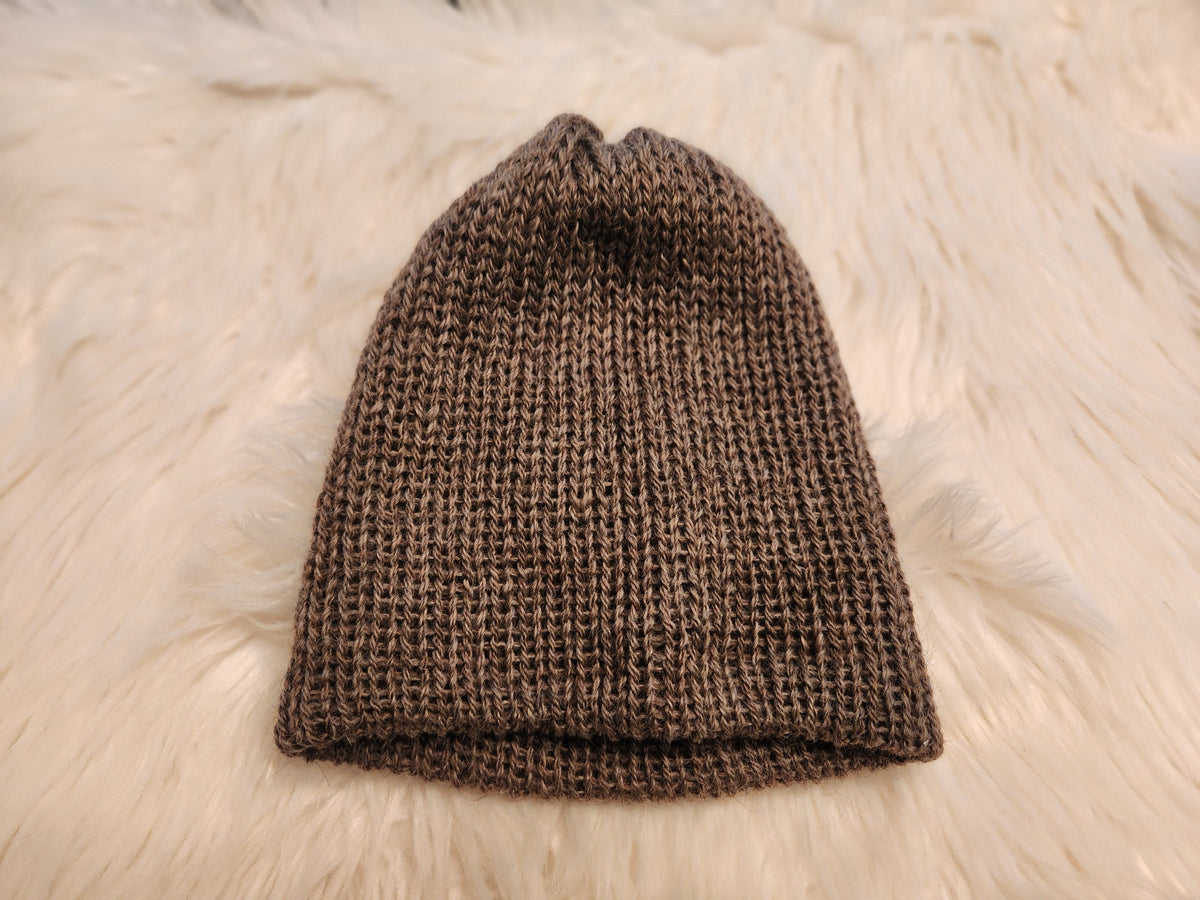
| Icelandic wool skull cap | Hand-wash gently in cool water with a wool-specific wash; reshape and dry flat. | Machine washing unless the care label explicitly allows it; rubbing, wringing, and tumble drying. |
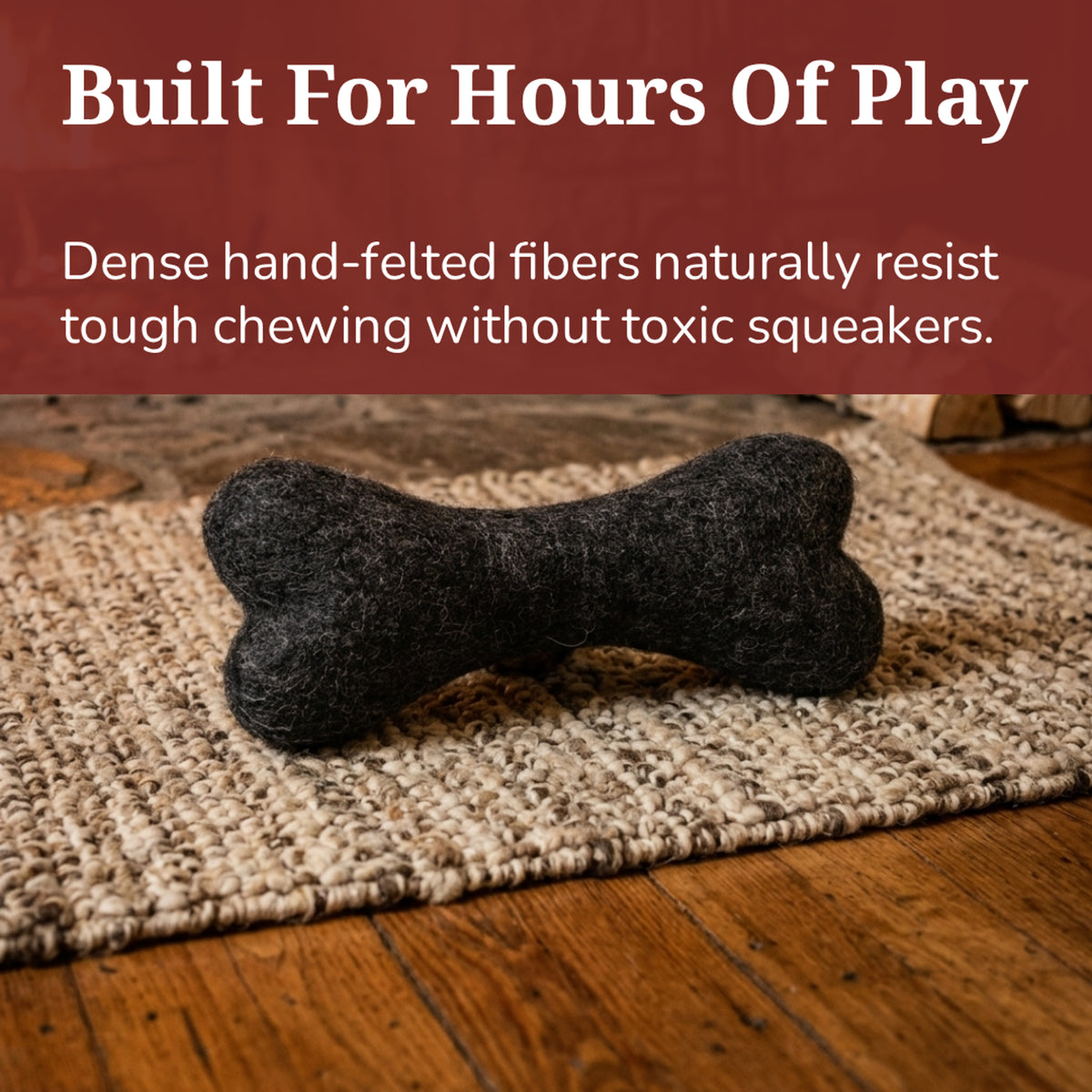
| Felted wool dog toy | Check the product tag. If washing is permitted, use cool water and a mild wash, then air-dry fully. | Assuming felted means indestructible or safe for unsupervised chewing. |
Wool dryer balls: when felting is the point
Dryer balls are intentionally compacted during production, so their wool fibers hold together. In ordinary use, you generally don’t need to wash them: remove loose lint and let them air out between loads. Our product listing describes them as reusable for hundreds of loads.[3]
If a ball has become noticeably loose or fuzzy, you can try tightening it with a deliberate re-felting wash. Put it in a mesh laundry bag, wash it in hot water with agitation, then dry it thoroughly. This is the exception to the usual wool-care rules: heat and agitation are being used on purpose to encourage the fibers to bind more tightly. It’s not a guaranteed fix, and the change is permanent. Surface fuzz by itself may not mean the ball needs re-felting.
Icelandic wool skull cap: gentle hand washing
For a washable skull cap, fill a basin with cool water and add a small amount of wool-specific detergent. Submerge the cap and gently press the water through it: don’t scrub, rub, or twist. Rinse in water at a similar temperature, press out excess water, and reshape the hat. Lay it flat on a clean towel to dry, away from direct heat.
The cap’s product listing identifies it as natural Icelandic sheep wool, but doesn’t provide specific washing instructions. Check the care label before washing; if it says dry-clean only or gives different directions, follow the label.[4] A machine’s combination of water, movement, and spin can felt or distort untreated wool.
Felted wool dog toy: clean gently and inspect
A felted toy has already been deliberately compacted, but that doesn’t mean it cannot change shape, loosen, or suffer damage when wet. Check its tag first. If washing is allowed, use cool water and a mild wash, handle it gently, and let it air-dry completely before offering it again.
Inspect the toy regularly for loose fibers, tears, or pieces that could come free. Keep play supervised. This toy isn’t intended for aggressive chewers, and no wool toy should be considered chew-proof.
Sheep milk soap isn’t wool wash
Our handmade sheep milk soaps are made for skin, not for wool care. Traditional soap is alkaline, so it isn’t our recommendation for washing wool fibers. Choose a wool-specific wash or a gentle detergent labeled as suitable for wool instead. We’d rather be clear about the right use for a product than suggest a shortcut that could harm a garment.
A gentle routine for washable wool
- Read the care label first. If an item is valuable, structured, or marked dry-clean only, consult a professional cleaner.
- Use cool or lukewarm water and a detergent made for wool or labeled wool-safe.
- Keep handling to a minimum. Press gently; don’t scrub, twist, or wring.
- Keep wash and rinse temperatures similar.
- Remove water with a towel. Press the item gently or roll it in a clean towel.
- Reshape and dry flat away from radiators, direct heat, and tumble dryers.
Before storing wool for the season, make sure it’s clean and completely dry. University of Maryland Extension notes that clothes-moth larvae are attracted to soiled woolens and recommends clean storage in sealed boxes, along with periodic inspection. Cedar storage can offer protection, but clean, sealed storage is the more dependable first step.[5]
Wool-washing questions, answered
My wool shrank. Can I fix it?
You can sometimes ease a slightly shrunken item back toward its original shape by gently reshaping it while damp. But if the fibers have felted and locked together, the change is usually permanent. You may improve the shape a little; you can’t reliably reverse the entanglement.[1][2]
Can I use fabric softener?
It’s best to avoid it. Fabric softener can leave a coating on fibers, changing their feel and performance. A wool-specific wash is the safer choice.
Is hot water ever okay?
For ordinary wool clothing and accessories, avoid hot water. The exception in this guide is a wool dryer ball that you’re intentionally trying to re-felt. Even then, the result is not guaranteed.
How do I get an odor out of wool?
Start by airing the item in a dry, well-ventilated place. If it still needs cleaning, follow the care label and use a gentle wool-safe wash. Dry it fully before putting it away.
Care that respects the fiber
At Scalise Family Sheep Farm, we raise Icelandic sheep and value the work behind natural fibers. Wool provenance matters: a clear account of where wool comes from and how it’s processed helps shoppers make informed choices and supports farms and makers who care for their flocks. Whether you’re washing a wool item from our shop or one you already own, gentle handling is the best way to help it last.
Sources
- Flanagan, G. F. “Felting and Ratchet Action of Wool Fibers.” Textile Research Journal 36, no. 1 (1966): 55–65. https://doi.org/10.1177/004051756603600107
- Hassan, M. M., and C. M. Carr. “A Review of the Sustainable Methods in Imparting Shrink Resistance to Wool Fabrics.” Journal of Advanced Research 18 (2019): 39–60. https://pmc.ncbi.nlm.nih.gov/articles/PMC6369147/
- Scalise Family Sheep Farm, Natural Wool Dryer Balls product listing.
- Scalise Family Sheep Farm, Handmade Icelandic Wool Skull Cap product listing.
- University of Maryland Extension, Clothes Moths.