

When the furnace starts running, many people notice the same pattern: tighter skin, rough elbows, itchy shins, flaky cheeks, and hands that seem to crack overnight. This is common winter dry skin, but the mechanism is more specific than “the heat pulls moisture out of your skin.”
Indoor heating does not remove water directly from your skin. Instead, heating usually lowers indoor relative humidity. That drier air increases the water-vapor gradient between your skin and the surrounding environment, increasing the demand for evaporation. If the skin barrier cannot compensate, transepidermal water loss (TEWL) and dryness-related symptoms can follow.
The good news is that a practical skin barrier repair routine can reduce many of these problems.
What low humidity does to the skin barrier
The outermost layer of skin, the stratum corneum, works like a “bricks and mortar” structure. Corneocytes form the bricks, while an organized mixture of ceramides, cholesterol, and fatty acids forms the mortar. Natural moisturizing factors inside the corneocytes help hold water in the stratum corneum.8
Low ambient humidity increases evaporative demand. In human workers exposed to ultra-low-humidity conditions, both skin capacitance, a measure related to stratum corneum hydration, and TEWL changed within weeks, demonstrating that prolonged dry-air exposure can alter barrier behavior.2
The response is not always a simple “low humidity equals higher TEWL” story. The skin can adapt by increasing differentiation, lipid production, and other water-conserving processes. In a reconstructed human epidermis model, exposure to approximately 50% relative humidity increased glucosylceramide synthase and filaggrin expression, improved lipid lamellar organization, and accelerated barrier recovery after disruption.3
Animal and organotypic research also suggests that dry environments can stimulate epidermal growth and barrier-repair signaling. That adaptation may help explain why some long-term studies find normal or even lower TEWL measurements despite lower stratum corneum hydration.4
In practical terms, skin may become both drier and more tightly sealed as it adapts. TEWL is useful, but it is not the same thing as skin hydration. A normal TEWL reading does not necessarily mean skin feels comfortable or has plenty of water.
Why winter air can be especially difficult
Cold outdoor air generally holds less water vapor than warm air. Add wind, low humidity, frequent transitions between outdoors and heated rooms, and repeated handwashing, and the evaporative burden increases.
Seasonal studies, however, are mixed. A systematic review found contradictory results across studies of climate and season: some reported higher TEWL during winter, while others found higher TEWL during summer or no meaningful seasonal difference at certain body sites.1
A one-year study of facial skin found higher winter TEWL and seasonal changes in the facial microbiome, but it involved only 10 healthy participants and cannot establish that winter air alone caused the changes.5
So the honest conclusion is this: winter conditions can contribute to barrier stress, but winter does not raise TEWL in exactly the same way for everyone. Age, genetics, eczema, cleansing habits, skin location, pollution, wind, and indoor humidity all matter.
Indoor air pollution is relevant, too. A systematic review found that particulate matter and nitrogen dioxide exposure were associated with increased TEWL in several human studies.1 Heating systems may redistribute dust or particulates in a home, but that does not mean heating ducts automatically cause skin disease. Keep the HVAC system maintained, change filters as recommended, and address visible dust without assuming the ductwork is the root cause of every rash.
Hot showers can compound indoor-heating dryness
A long, hot shower feels soothing in the moment, but it can increase barrier stress. In a prospective study of 50 healthy adults, ten minutes of hand immersion in water at approximately 41°C increased TEWL from 25.75 to 58.58 g/m²/h. Skin pH and erythema also increased.6
The effect is not just about temperature. Water exposure can swell corneocytes and disrupt the organization of intercellular lipids. Surfactants can interact with skin lipids and proteins, increasing irritation and TEWL. Laboratory research specifically found that skin susceptibility to water and detergents depends on temperature, supporting the recommendation to avoid very hot water when skin is already dry or inflamed.7
This is one reason “indoor heating dry skin” often becomes worse after a hot evening shower: dry room air increases evaporative demand, while hot water and cleanser temporarily challenge the barrier.
What dry barrier stress can lead to
The first signs are usually tightness, roughness, dullness, flaking, and itching. If the skin becomes sufficiently dry, small fissures may form, especially on the hands, knuckles, heels, and fingertips.
For people with atopic dermatitis, psoriasis, rosacea, or a history of hand dermatitis, dry air may be one contributing trigger among many. It is not the sole cause of eczema. Atopic dermatitis is multifactorial, involving immune signaling, genetics, barrier lipids, filaggrin biology, irritants, allergens, and microbial factors.9
The evidence-aligned winter skin routine
1. Moisturize after bathing
Apply an emollient soon after bathing, while the skin is still slightly damp. This is commonly called “soak and seal”: pat gently rather than rubbing completely dry, then apply moisturizer.
Emollients clearly reduce TEWL and improve skin comfort. However, direct clinical evidence proving that damp-skin application always reduces TEWL more than application to fully dry skin is limited. The recommendation makes physiological sense because an occlusive layer can slow evaporation of water already present in the stratum corneum, but timing should not become a rigid rule. If your skin is dry, apply moisturizer whenever you can do it consistently.9
2. Use the right moisturizer category
Moisturizers generally combine three functions:
- Humectants, such as glycerin, bind water.
- Emollients, such as plant oils and lanolin, soften and fill microscopic roughness.
- Occlusives, such as petrolatum, beeswax, and some waxes or butters, slow water evaporation.
Reviews of moisturizer design support combining these functions rather than relying on a humectant alone, particularly in low-humidity environments.8 Petrolatum-based and physiologic-lipid formulations have the strongest barrier-repair evidence in dermatology, while “natural” does not automatically mean non-irritating.9
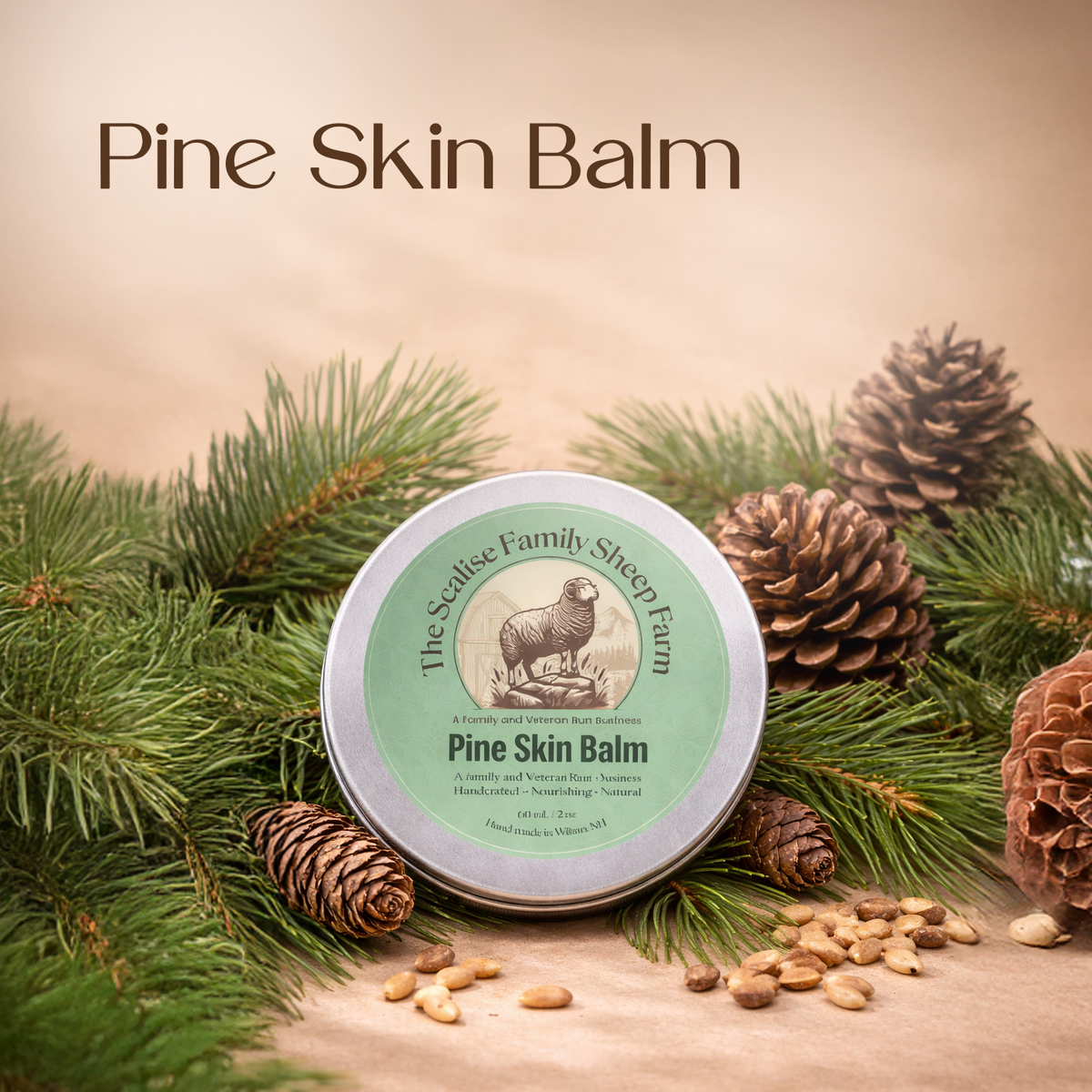
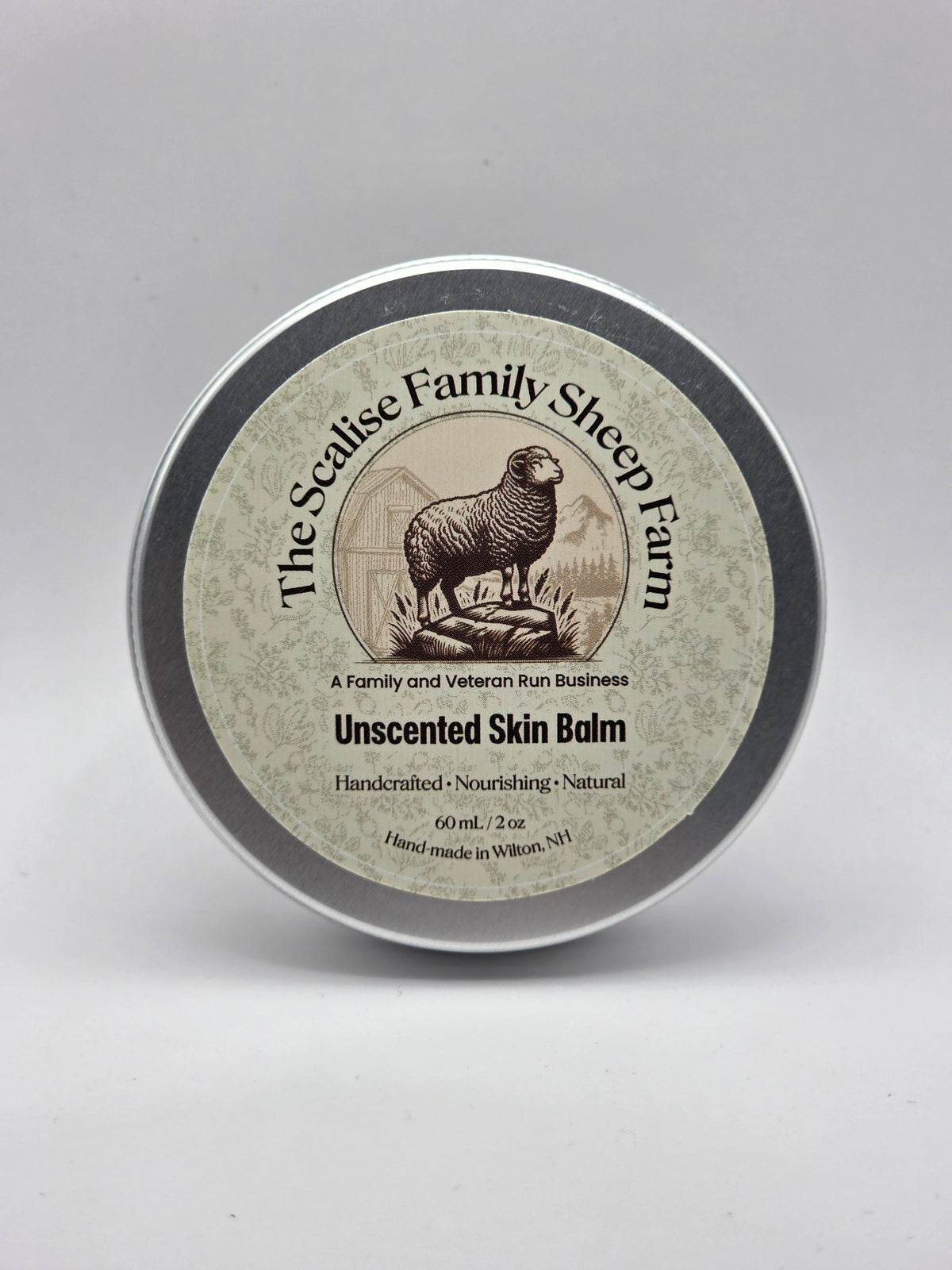
At Scalise Family Sheep Farm, our skin balms are cosmetic moisturizers made in small batches. Frankincense, Rose, Lavender, Peony, Pine, and Unscented balms are $10; the 6-ounce Pine Resin Balm is $25. They are intended to moisturize and protect dry skin, not to treat diagnosed eczema, infection, or inflammatory disease.
3. Manage indoor humidity, but keep expectations realistic
A hygrometer can show whether your home is extremely dry. A practical target is roughly 30–50% relative humidity. Evidence for humidifiers and skin outcomes is more modest than many advertisements suggest: controlled studies have found improved comfort or hydration in some settings, but null effects on TEWL in others.1
If you use a humidifier, clean and dry it according to the manufacturer’s instructions. A poorly maintained humidifier can support microbial growth and distribute contaminants into the air. More humidity is not always better; excessive humidity can encourage condensation and mold.
4. Shorten and cool your showers
Use lukewarm water, keep showers reasonably short, and apply moisturizer afterward. Reduce cleanser on areas that are not visibly dirty or sweaty. Hands, underarms, feet, and skin folds usually need more cleansing than dry lower legs.
5. Consider separate face and body cleansers
Facial skin may be more sensitive to fragrance, essential oils, exfoliating ingredients, and high-cleansing formulas. A lower-irritation facial cleanser may be a better fit than using the same bar everywhere.
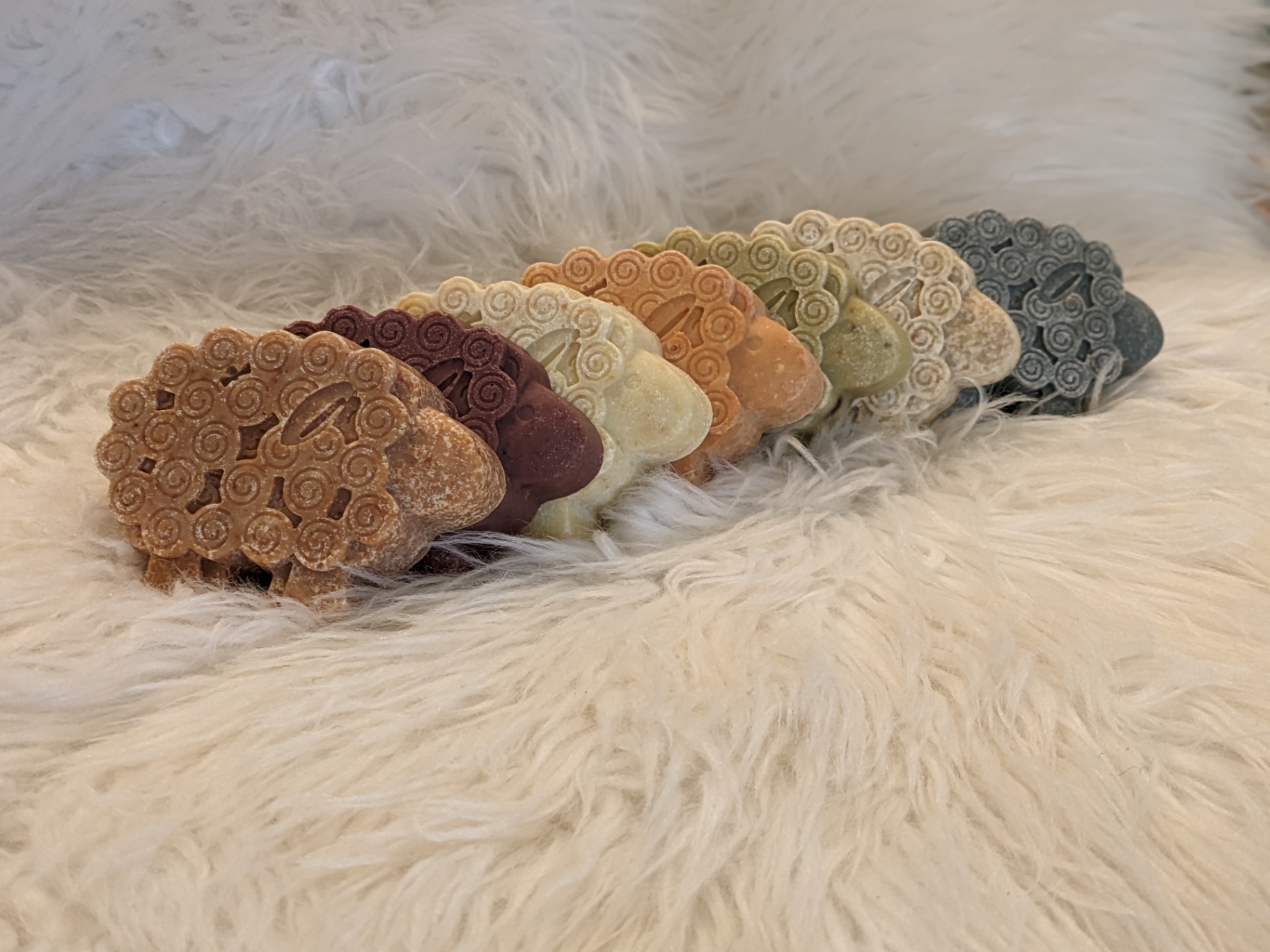
Our handmade sheep-milk soap collection is made in Wilton, New Hampshire, using sheep’s milk from our farm. It is a traditional cold-process-style bar and part of our farm-sourced, handmade natural soap line. Still, for severely dry winter skin, a fragrance-free syndet or other lower-irritation cleanser may be more appropriate than any traditional soap bar. Soap can be enjoyable and well tolerated, but it is not automatically the best choice for every compromised barrier.
6. Reduce friction and sweat
Wear soft cotton layers next to dry or irritated skin. Avoid rough wool directly against a compromised barrier if it causes itching. Also avoid overdressing to the point of heavy sweating, followed by rapid cooling outdoors. Sweat, friction, and repeated temperature changes can aggravate sensitive skin.
7. Do not exfoliate active flaking
Dry flakes are not necessarily a sign that your skin needs a scrub. Scrubbing, brushes, acids, and aggressive exfoliation can remove fragile stratum corneum and worsen fissuring. Focus on hydration, occlusion, gentle cleansing, and time.
The simple fix: protect the barrier consistently
The most useful winter routine is not complicated: lukewarm, shorter showers; less cleanser; moisturizer soon afterward; a richer balm on hands and fissure-prone areas; and indoor humidity that is comfortable without becoming excessive.
Consistency matters more than chasing a perfect product. If dryness persists despite these changes, or if you develop painful cracks, bleeding, oozing, spreading redness, severe itching, or sleep-disrupting flares, see a dermatologist. Persistent symptoms may reflect eczema, contact dermatitis, psoriasis, infection, or another condition requiring diagnosis and treatment.
Medical disclaimer: This article is for general educational purposes and is not medical advice, diagnosis, or treatment. Scalise Family Sheep Farm’s soaps and balms are cosmetic products and are not treatments for diagnosed eczema or other medical conditions. Patch-test new products, discontinue use if irritation occurs, and consult a qualified healthcare professional for persistent or severe symptoms.
Academic References & Scientific Sources
- Green M, Kashetsky N, Feschuk A, Maibach HI. “Transepidermal water loss (TEWL): Environment and pollution, A systematic review.” Skin Health and Disease. 2022;2(2):e104. DOI · PMID 35677917
- Chou T-C, Lin K-H, Wang S-M, et al. “Transepidermal water loss and skin capacitance alterations among workers in an ultra-low humidity environment.” Archives of Dermatological Research. 2005;296:489–495. DOI · PMID 15750803
- Sun R, Celli A, Crumrine D, et al. “Lowered Humidity Produces Human Epidermal Equivalents with Enhanced Barrier Properties.” Tissue Engineering Part C: Methods. 2015;21(1):15–22. DOI · PMID 24803151
- Denda M, Sato J, Masuda Y, et al. “Exposure to a dry environment enhances epidermal permeability barrier function.” Journal of Investigative Dermatology. 1998;111:858–863. DOI · PMID 9804350
- Seo JY, You SW, Gu K-N, et al. “Longitudinal study of the interplay between the skin barrier and facial microbiome over 1 year.” Frontiers in Microbiology. 2023;14:1298632. DOI
- Herrero-Fernandez M, Montero-Vilchez T, Diaz-Calvillo P, et al. “Impact of Water Exposure and Temperature Changes on Skin Barrier Function.” Journal of Clinical Medicine. 2022;11(2):298. DOI · PMID 35053992
- Ohlenschlaeger J, Friberg J, Ramsing D, Agner T. “Temperature dependency of skin susceptibility to water and detergents.” Acta Dermato-Venereologica. 1996;76:274–276. DOI · PMID 8869682
- Zeichner JA, Del Rosso JQ. “Multivesicular Emulsion Ceramide-containing Moisturizers: An Evaluation of Their Role in the Management of Common Skin Disorders.” Journal of Clinical and Aesthetic Dermatology. 2016;9(12):26–32. PMC · PMID 28210396
- Elias PM. “Optimizing Emollient Therapy for Skin Barrier Repair in Atopic Dermatitis.” Annals of Allergy, Asthma & Immunology. 2022;128(5):505–511. DOI · PMID 35065300
- Hebert A, Rippke F, Weber TM, Heer Nicol N. “Efficacy of nonprescription moisturizers for atopic dermatitis: an updated review of clinical evidence.” American Journal of Clinical Dermatology. 2020;21:641–655. DOI · PMID 32524381
- van Zuuren EJ, Fedorowicz Z, Christensen R, et al. “Emollients and moisturizers for eczema.” Cochrane Database of Systematic Reviews. 2017;2:CD012119. DOI · PMID 28166390


