

When you pick up a bar of our sheep-milk soap, you're not just holding a skincare product. You're holding a story, one that starts with Icelandic sheep grazing New Hampshire pastures and ends with zero waste hitting a landfill. It's a full-circle journey that we're pretty proud of, and today we're going to walk you through every step.
The Problem with "Normal" Skincare
Here's a stat that'll make you think twice about your shower routine: the global beauty industry produces over 120 billion units of packaging every year, and the vast majority of it is plastic that ends up in landfills or oceans (Zero Waste Week, 2023).[^1] A single household's bathroom products can generate more than 500 plastic bottles annually, with only about 9% of all plastic ever produced being recycled (Geyer et al., 2017).[^2]
And that's just the packaging. The production side is even messier. Industrial skincare manufacturing relies on synthetic detergents, petroleum-derived ingredients, and supply chains that stretch across continents, each step adding to the carbon footprint.
We knew there had to be a better way. And honestly? The answer was grazing right outside our window.
It Starts with the Sheep (and the Land)

Our Icelandic sheep aren't just cute faces (though they definitely are). They're actually environmental workers, participating in what agricultural scientists call regenerative grazing, a practice that can actually improve soil health rather than deplete it.
Here's the science: when managed properly, grazing animals contribute to what researchers call the "carbon cycle" of grasslands. Their grazing stimulates plant growth, their manure adds organic matter back to the soil, and their hooves help work that organic matter deeper into the ground. A landmark study published in Agricultural Systems found that well-managed grazing operations can sequester between 3.6 and 8.1 metric tons of CO2 equivalent per hectare annually (Machmuller et al., 2015).[^3]
In plain English? Our sheep are helping pull carbon out of the atmosphere and put it back in the ground where it belongs. The grass they eat grows back stronger, the soil gets richer, and the whole system keeps cycling.
This is the opposite of industrial agriculture, where inputs constantly flow in and waste constantly flows out. On our family farm, we're working toward a closed-loop system, where the outputs of one process become the inputs for another.
From Pasture to Pour: The Soap-Making Journey
So how does sheep grazing turn into handmade natural soap? Let's trace the path.
Step 1: Happy sheep, healthy milk. Our Icelandic sheep graze on New Hampshire pastures, eating the grasses and plants they're naturally designed to eat. No concentrated feedlots, no artificial growth hormones. The result is milk that's naturally higher in butterfat and nutrients than commercial dairy, including the vitamins, proteins, and fatty acids that make sheep-milk soap so beneficial for skin (Park et al., 2007).[^4]
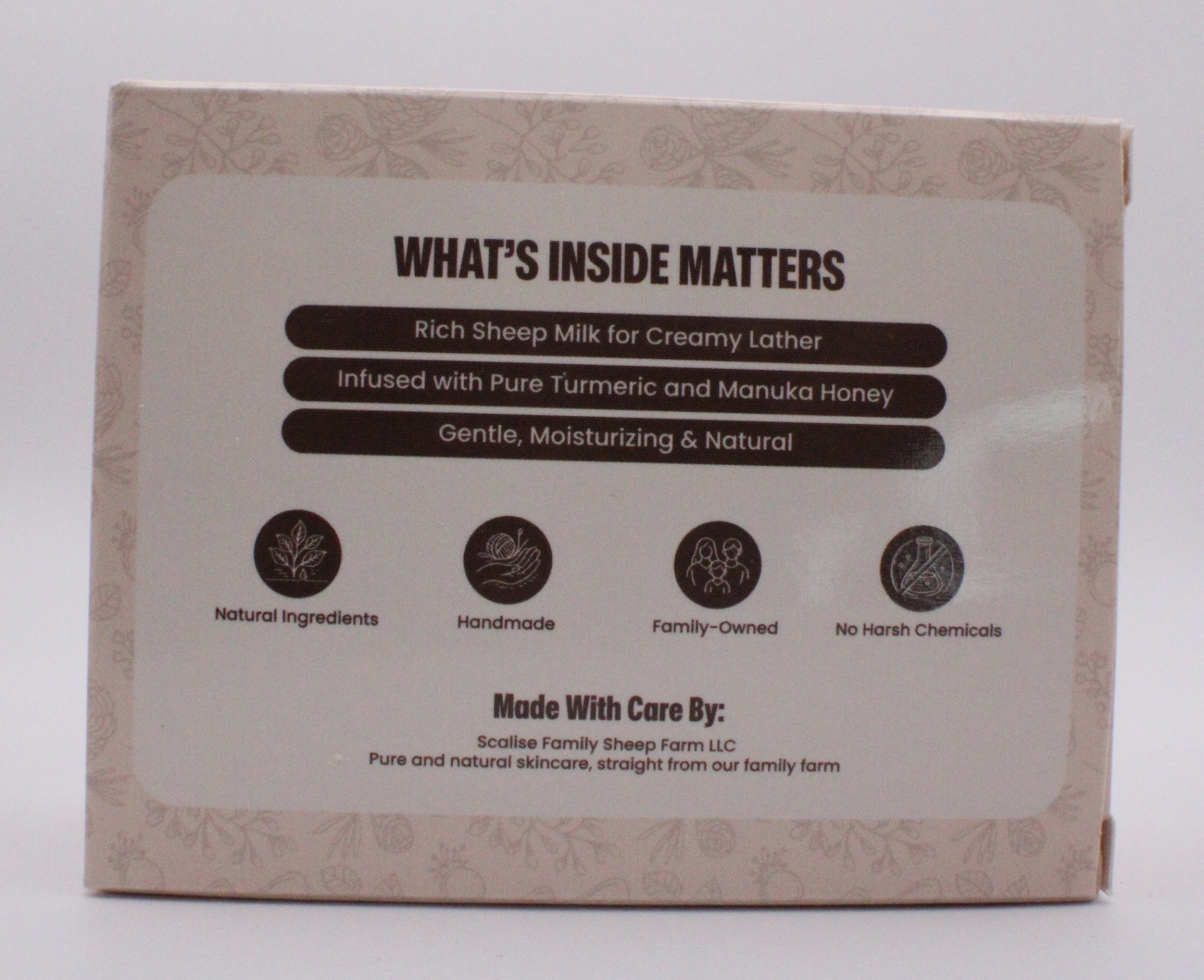
Step 2: Small-batch production. Every bar of our farm-sourced soap is made in small batches right here on the property. We're not shipping milk across the country to a factory; we're literally walking it from the barn to the soap room. This hyper-local production slashes the transportation emissions that industrial skincare relies on.
Step 3: Natural ingredients, period. Our recipes use ingredients you can actually pronounce, sheep milk, plant-based oils, essential oils, and natural colorants. No synthetic detergents, no petroleum byproducts, no mystery chemicals. Research published in the International Journal of Cosmetic Science has shown that natural soap formulations can maintain skin barrier function while reducing exposure to potentially harmful synthetic surfactants (Ananthapadmanabhan et al., 2004).[^5]
Step 4: The manure loop. Here's where zero-waste gets real. Our sheep produce manure (a lot of it), and rather than treating it as waste, we compost it and return it to our pastures. This is textbook nutrient cycling, the same principle that sustainable farms have used for thousands of years. A comprehensive review in Agronomy for Sustainable Development confirmed that integrated crop-livestock systems like ours significantly reduce the need for synthetic fertilizers while maintaining soil fertility (Lemaire et al., 2014).[^6]
Ditching the Plastic
One of the things that drove us crazy about conventional skincare was the packaging situation. Pump bottles, squeeze tubes, plastic tubs, all designed to be used once and thrown away.
Bar soap is inherently more sustainable. There's no plastic pump mechanism, no squeeze tube that can't be fully emptied, no bottle that needs to be manufactured, shipped, and eventually (maybe) recycled.
But we wanted to go further than just "no plastic bottle."
Our packaging uses compostable and recyclable materials wherever possible. The boxes break down. The labels break down. When you're done with a bar of our Lavender Sheep Milk Soap or Frankincense Sheep Milk Soap, there's nothing left that needs to sit in a landfill for 500 years.
This matters more than you might think. The Environmental Protection Agency estimates that containers and packaging make up about 28% of municipal solid waste in the United States (EPA, 2021).[^7] Every bar soap that replaces a plastic bottle is a small win, and small wins add up.
The Skin Benefits (Because Zero-Waste Should Still Work)
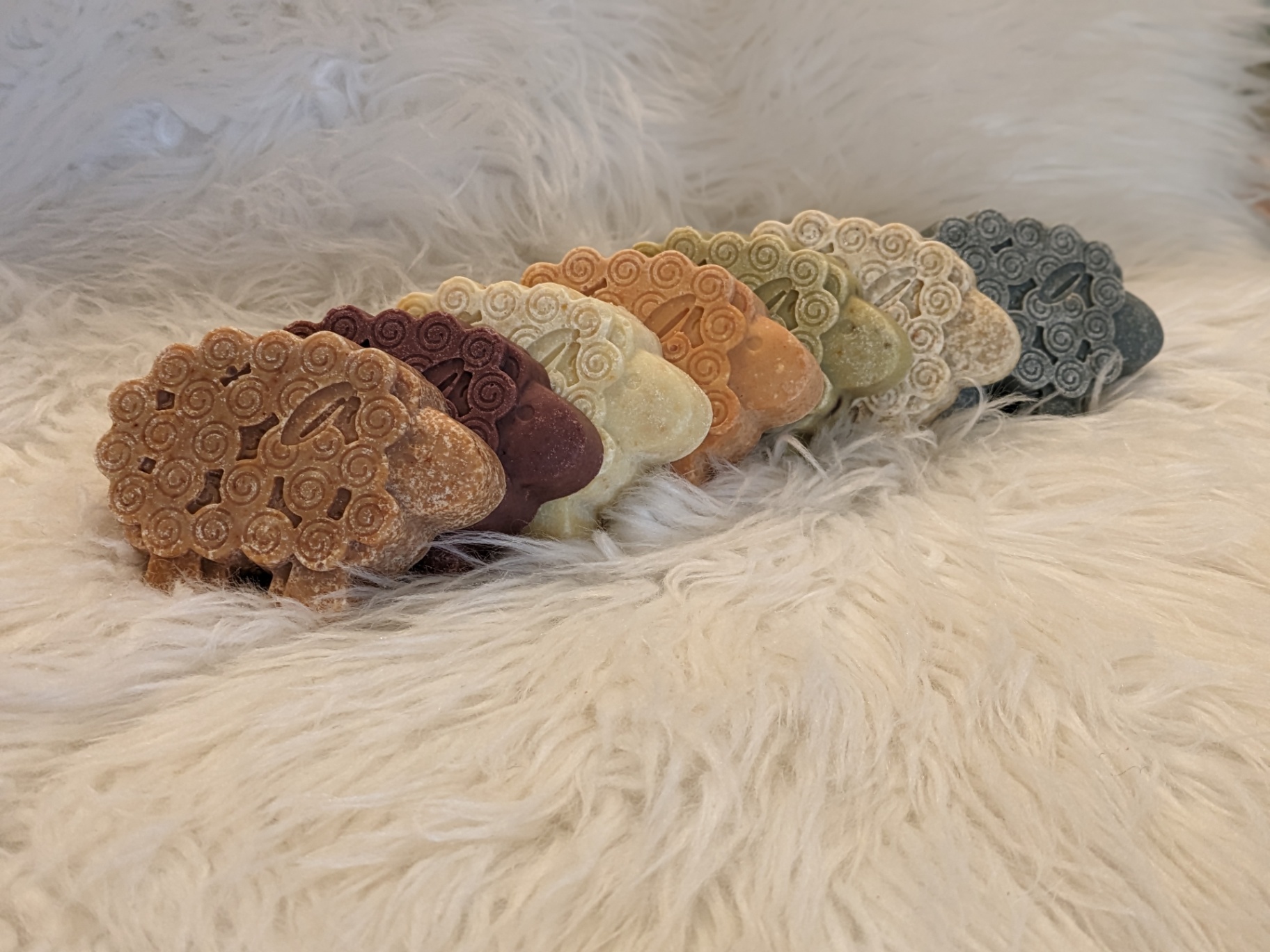
Here's the thing: sustainability doesn't mean anything if the product doesn't actually work. We're not asking you to sacrifice your skin health for the planet.
Luckily, you don't have to. Sheep-milk soap brings serious benefits for skin:
-
Higher fat content: Sheep milk contains nearly twice the fat content of cow's milk, which translates to a creamier, more moisturizing bar that doesn't strip your skin's natural oils (Park et al., 2007).[^4]
-
Natural lactic acid: The gentle alpha-hydroxy acid in sheep milk provides mild exfoliation without harsh chemical peels (Smith, 1996).[^8]
-
Vitamins A, D, and E: These naturally occurring vitamins support skin cell regeneration and provide antioxidant protection.
-
Smaller fat globules: Research suggests sheep milk's fat structure allows for better absorption into the skin compared to other milk types (Claeys et al., 2014).[^9]
When you choose small-batch soap from a family farm, you're getting a product that was made with attention and care, not pumped out of an industrial vat by the thousand.
Why "Zero-Waste" is Really About Systems Thinking
The term "zero-waste" can sound like marketing fluff, so let's be clear about what we actually mean.
True zero-waste farming isn't about perfection, it's about designing systems where waste from one process becomes a resource for another. Agricultural researchers call this "circular economy" thinking, and it's been shown to dramatically reduce environmental impact while maintaining (or improving) productivity (Jurgilevich et al., 2016).[^10]
On our farm, that looks like:
- Sheep graze pastures → pastures provide food → sheep provide milk and manure
- Manure composts → compost fertilizes pastures → pastures grow back stronger
- Milk becomes soap → soap provides income → income supports the whole cycle
- Wool becomes products → like our Icelandic Wool Skull Cap → nothing wasted
Every piece connects. Every output has a destination. That's the full-circle story.
Bringing It Home
When you use a bar of our sheep-milk soap, you're participating in something bigger than just washing your hands. You're supporting regenerative agriculture, reducing plastic waste, and choosing a product that was made with intention from start to finish.
Is it going to save the planet single-handedly? Of course not. But it's a concrete step in the right direction, and it proves that "sustainable" and "effective" don't have to be opposites.
That's the story of a soap bar. From New Hampshire pasture to your shower, and nowhere near a landfill.
References
[^1]: Zero Waste Week. (2023). Beauty Industry Packaging Statistics. Zero Waste Week Organization.
[^2]: Geyer, R., Jambeck, J. R., & Law, K. L. (2017). Production, use, and fate of all plastics ever made. Science Advances, 3(7), e1700782.
[^3]: Machmuller, M. B., Kramer, M. G., Cyle, T. K., Hill, N., Hancock, D., & Thompson, A. (2015). Emerging land use practices rapidly increase soil organic matter. Nature Communications, 6, 6995.
[^4]: Park, Y. W., Juárez, M., Ramos, M., & Haenlein, G. F. W. (2007). Physico-chemical characteristics of goat and sheep milk. Small Ruminant Research, 68(1-2), 88-113.
[^5]: Ananthapadmanabhan, K. P., Moore, D. J., Subramanyan, K., Misra, M., & Meyer, F. (2004). Cleansing without compromise: the impact of cleansers on the skin barrier and the technology of mild cleansing. Dermatologic Therapy, 17(s1), 16-25.
[^6]: Lemaire, G., Franzluebbers, A., Carvalho, P. C. D. F., & Dedieu, B. (2014). Integrated crop–livestock systems: Strategies to achieve synergy between agricultural production and environmental quality. Agriculture, Ecosystems & Environment, 190, 4-8.
[^7]: U.S. Environmental Protection Agency. (2021). Facts and Figures about Materials, Waste and Recycling. EPA.gov.
[^8]: Smith, W. P. (1996). Epidermal and dermal effects of topical lactic acid. Journal of the American Academy of Dermatology, 35(3), 388-391.
[^9]: Claeys, W. L., Verraes, C., Cardoen, S., De Block, J., Huyghebaert, A., Raes, K., Dewettinck, K., & Herman, L. (2014). Consumption of raw or heated milk from different species: An evaluation of the nutritional and potential health benefits. Food Control, 42, 188-201.
[^10]: Jurgilevich, A., Birge, T., Kentala-Lehtonen, J., Korhonen-Kurki, K., Pietikäinen, J., Saikku, L., & Schösler, H. (2016). Transition towards circular economy in the food system. Sustainability, 8(1), 69.


