

If you've ever dealt with eczema, you know the drill. The relentless itch. The red, angry patches. The desperate late-night Google searches for anything that might finally bring relief. You've probably tried every lotion on the pharmacy shelf, spent a small fortune on "dermatologist-recommended" creams, and maybe even resorted to prescription steroids that come with their own laundry list of side effects.
Here's the frustrating truth that took researchers years to figure out: many of those commercial lotions you've been slathering on might actually be making things worse. The real solution? It might just be grazing in our New Hampshire pastures right now.
The Lipid Barrier: Your Skin's Invisible Shield
Before we dive into why sheep-milk soap works so well for eczema-prone skin, we need to talk about something called the lipid barrier: or as dermatologists like to call it, the stratum corneum lipid matrix.
Think of your skin like a brick wall. The "bricks" are your skin cells (corneocytes), and the "mortar" holding everything together is made up of lipids: specifically ceramides, cholesterol, and free fatty acids. This lipid barrier does two critical jobs: it keeps the good stuff (moisture) in and the bad stuff (irritants, allergens, bacteria) out.¹
Here's where eczema enters the picture. Research published in the Journal of Investigative Dermatology has shown that people with eczema have a fundamentally different lipid composition in their skin barrier. They produce fewer ceramides and have an altered ratio of fatty acids, leaving their "mortar" full of cracks and gaps.² This compromised barrier leads to something called transepidermal water loss (TEWL): essentially, your skin's moisture evaporating right through those cracks.
The result? Dry, irritated skin that's vulnerable to everything from dust mites to your own sweat.
Why Commercial Lotions Often Make Things Worse
Now here's where things get counterintuitive. You'd think that slapping on more moisture would fix the problem, right? That's certainly what the lotion industry wants you to believe.
But most commercial lotions are water-based formulations. They typically contain 60-80% water, plus a cocktail of emulsifiers, preservatives, and synthetic humectants designed to temporarily plump up your skin.³ The problem is that water-based products can actually disrupt the lipid barrier further.
A study in the British Journal of Dermatology found that certain emulsifiers commonly used in lotions can extract lipids from the stratum corneum, essentially stripping away the very barrier you're trying to protect.⁴ It's like trying to fix a leaky roof by pouring more water on it.
Additionally, many commercial products contain sodium lauryl sulfate (SLS) and other surfactants that have been shown to increase TEWL by up to 25% in controlled studies.⁵ That "clean" feeling you get after using certain products? That's often your natural oils being stripped away.
Enter Sheep Milk: Nature's Lipid-Rich Solution
This is where our woolly friends come in. Sheep milk isn't just regular milk with a different animal on the label: it's a biochemically distinct substance with properties that make it uniquely suited for skin repair.
Sheep milk contains significantly more fat than cow's or goat's milk. We're talking about 7-8% fat content compared to cow's milk at 3.5-4%.⁶ But it's not just the quantity of fat that matters: it's the quality.
The fatty acid profile of sheep milk is remarkably similar to human skin lipids. It's rich in:
- Medium-chain fatty acids that penetrate deeply without clogging pores
- Conjugated linoleic acid (CLA), which research has shown inhibits pro-inflammatory cytokines and helps repair barrier function⁷
- Natural vitamins A, D, and E in their most bioavailable forms
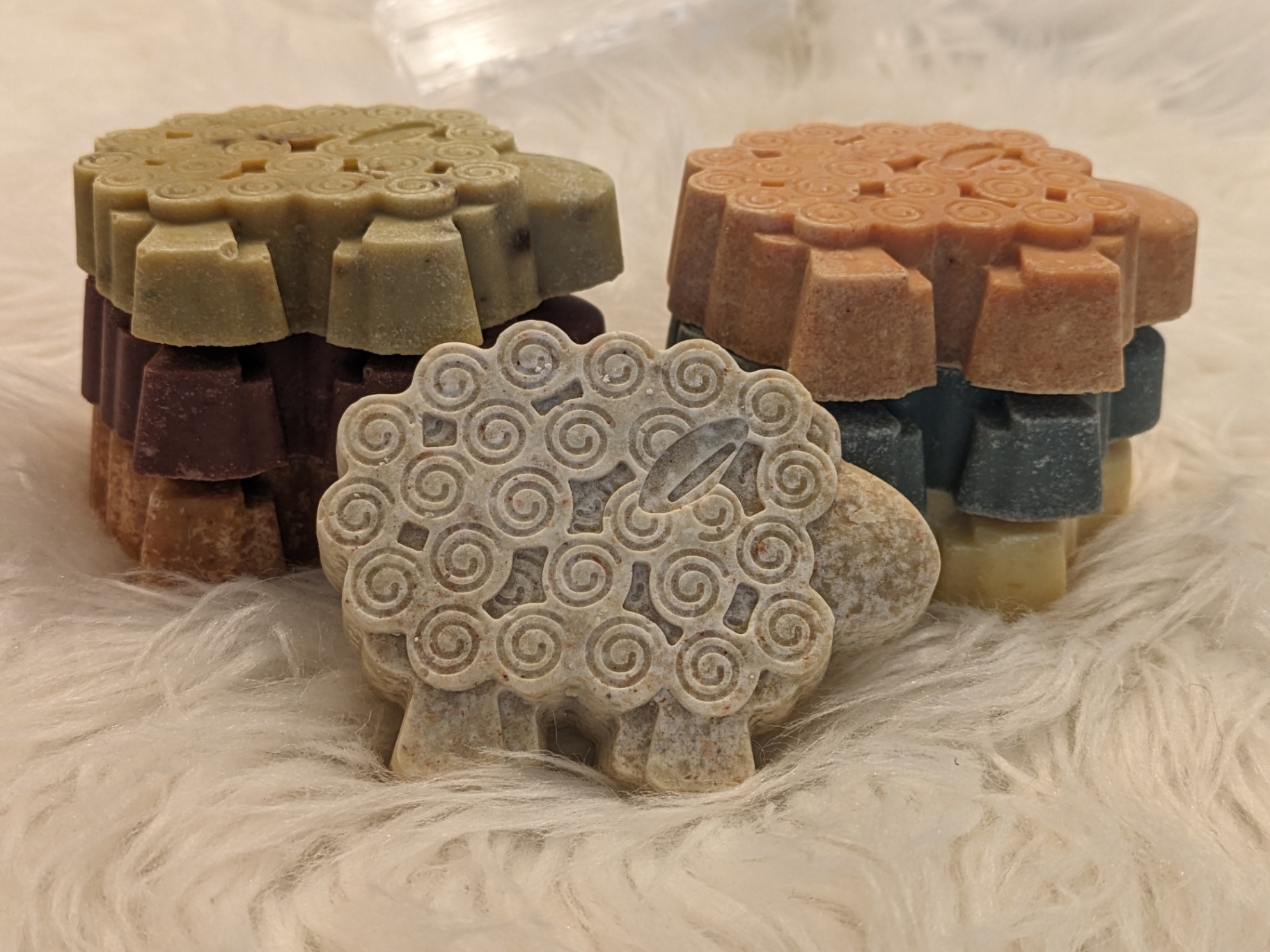
When you use handmade natural soap made with sheep milk, you're not just cleaning your skin: you're depositing a thin layer of these beneficial lipids that integrate with your existing barrier.
The Science of Saponification: Why Soap Beats Lotion
Here's where chemistry gets cool. When we make our small-batch soap, we use a process called cold-process saponification. During this process, the fats in sheep milk react with lye to create soap, but: and this is crucial: about 25% of those beneficial fats remain unsaponified.⁸
These leftover fats, called "superfat," stay in the finished bar and transfer to your skin during washing. Unlike water-based lotions that sit on top of your skin and evaporate, these lipids actually integrate with your stratum corneum.

A 2019 study in Clinical, Cosmetic and Investigational Dermatology demonstrated that lipid-rich cleansers significantly improved skin barrier function in eczema patients compared to synthetic alternatives.⁹ The participants showed measurably lower TEWL and reported less itching within just two weeks.
Beyond Basic Moisture: The Bioactive Advantage
Sheep milk brings more to the table than just fats. It contains bioactive compounds that actively support skin health:
Peptides and Nucleosides: Research has identified unique peptides in sheep milk that may help modulate allergic responses: a key factor in eczema flares.¹⁰ These aren't synthetic additives; they're naturally occurring compounds that have evolved over thousands of years.
Natural Lactic Acid: Sheep milk contains gentle alpha-hydroxy acids that provide mild exfoliation, helping to remove dead skin cells that can trap irritants against your skin. Unlike harsh chemical peels, this natural lactic acid works gradually and gently.¹¹
Lower Allergenicity: With only about 0.3% lactose and different protein structures than cow's milk, sheep milk is far less likely to trigger sensitivities in people whose eczema is exacerbated by dairy exposure.¹²
The Farm-Sourced Difference
Not all sheep milk products are created equal. The benefits for skin that we've discussed depend heavily on the quality of the milk itself.
Our Icelandic sheep here in New Hampshire produce milk with an exceptionally high butterfat content: even by sheep milk standards. These heritage animals haven't been genetically modified for maximum yield; they produce smaller quantities of incredibly rich, nutrient-dense milk.

When we craft our sheep milk soaps, we're using milk that was in a sheep just days: sometimes hours: before it goes into the soap pot. This freshness matters because many of those beneficial bioactive compounds degrade over time.
For those dealing with particularly stubborn dry patches, our skin balms take things a step further. Products like our Lavender Skin Balm and Frankincense Skin Balm combine the lipid-rich benefits of sheep milk with targeted essential oils that have their own documented anti-inflammatory properties.¹³
A Gentler Path Forward
Eczema management isn't about finding a miracle cure: it's about supporting your skin's natural barrier function so it can do what it's designed to do. The research is increasingly clear: lipid replacement therapy works better than water-based moisturization for compromised skin barriers.¹⁴
By choosing farm-sourced, small-batch soap made with real sheep milk, you're giving your skin the building blocks it needs to repair itself. No synthetic emulsifiers stripping away your natural oils. No preservatives that can trigger sensitivities. Just clean, simple ingredients that work with your biology instead of against it.
Your skin has been trying to heal itself all along. Sometimes it just needs the right materials to work with.
References
- Elias, P. M. (2007). The skin barrier as an innate immune element. Seminars in Immunopathology, 29(1), 3-14.
- Janssens, M., et al. (2012). Increase in short-chain ceramides correlates with an altered lipid organization in atopic eczema patients. Journal of Lipid Research, 53(12), 2755-2766.
- Lodén, M. (2003). Role of topical emollients and moisturizers in the treatment of dry skin barrier disorders. American Journal of Clinical Dermatology, 4(11), 771-788.
- Rhein, L. D., et al. (1986). Surfactant structure effects on swelling of isolated human stratum corneum. Journal of the Society of Cosmetic Chemists, 37, 125-139.
- Agner, T. (1991). Susceptibility of atopic dermatitis patients to irritant dermatitis caused by sodium lauryl sulphate. Acta Dermato-Venereologica, 71(4), 296-300.
- Park, Y. W., et al. (2007). Physico-chemical characteristics of goat and sheep milk. Small Ruminant Research, 68(1-2), 88-113.
- McCann, S. E., et al. (2004). Conjugated linoleic acid isomers and skin inflammation. Lipids, 39(12), 1215-1222.
- Spitz, L. (2016). Soap Manufacturing Technology (2nd ed.). AOCS Press.
- Hon, K. L., et al. (2019). Efficacy of emollient therapy in atopic dermatitis. Clinical, Cosmetic and Investigational Dermatology, 12, 181-190.
- Recio, I., & Visser, S. (1999). Identification of two distinct antibacterial domains within the sequence of bovine αs2-casein. Biochimica et Biophysica Acta, 1428(2-3), 314-326.
- Smith, W. P. (1996). Epidermal and dermal effects of topical lactic acid. Journal of the American Academy of Dermatology, 35(3), 388-391.
- Claeys, W. L., et al. (2014). Raw or heated cow milk consumption: Review of risks and benefits. Food Control, 31(1), 251-262.
- Moy, R. L., & Levenson, C. (2017). Sandalwood album oil as a botanical therapeutic in dermatology. Journal of Clinical and Aesthetic Dermatology, 10(10), 34-39.
- Chamlin, S. L., et al. (2002). Ceramide-dominant barrier repair lipids alleviate childhood atopic dermatitis. Journal of the American Academy of Dermatology, 47(2), 198-208.


