

A sheep milk soap label can tell you far more than the scent or color of the bar. It can reveal whether you are buying a traditional soap or a synthetic detergent bar, which fats create its lather, whether fragrance comes from essential oils, and whether the formula contains ingredients you may need to avoid.
At Scalise Family Sheep Farm, we believe customers deserve a clear view of what goes into their skincare. Our family raises Icelandic sheep and uses milk from our own farm in our small-batch products. That farm-sourced process is an important part of our story: but provenance is not, by itself, proof that one formula is clinically superior to another.
Here are 10 practical things to check before buying sheep milk soap.
1. Look for a complete ingredient list
Start with the full ingredient list, not just the front-label claims. Product names such as “natural,” “nourishing,” or “sensitive skin” do not tell you enough about the formula.
Ingredient lists may use everyday names, INCI names, or a combination of both. For example:
- Olive oil may appear as Olea europaea (Olive) Fruit Oil
- Coconut oil may appear as Cocos nucifera (Coconut) Oil
- Sheep milk may appear as Lac Ovis
- Fragrance may appear as Parfum, Fragrance, or a named essential oil
The order can provide a general sense of which ingredients are used in larger amounts, although ingredients present at low concentrations may have more flexibility in their placement. Most importantly, avoid products that provide only a vague “natural base” or fail to disclose the complete formula.
Research examining products marketed as natural found that “natural” descriptions did not reliably indicate the absence of potentially hazardous or allergenic substances.1
2. Confirm the source and identity of the milk
A genuine sheep milk soap should identify sheep milk clearly. Look for terms such as sheep milk, sheep’s milk, or Lac Ovis.
Sheep milk is chemically and nutritionally distinct from cow’s and goat’s milk. A peer-reviewed review describes it as relatively rich in fat, protein, minerals, and vitamins compared with several other domestic milks.2 Another proteomic study identified hundreds of proteins in sheep milk whey, including proteins associated with immune and inflammatory processes.3
That research helps explain why sheep milk is an interesting cosmetic ingredient. It does not, however, prove that every sheep milk soap will moisturize, repair, brighten, or calm skin. A rinse-off product, its concentration, processing method, pH, and the rest of its formula all affect the final experience.
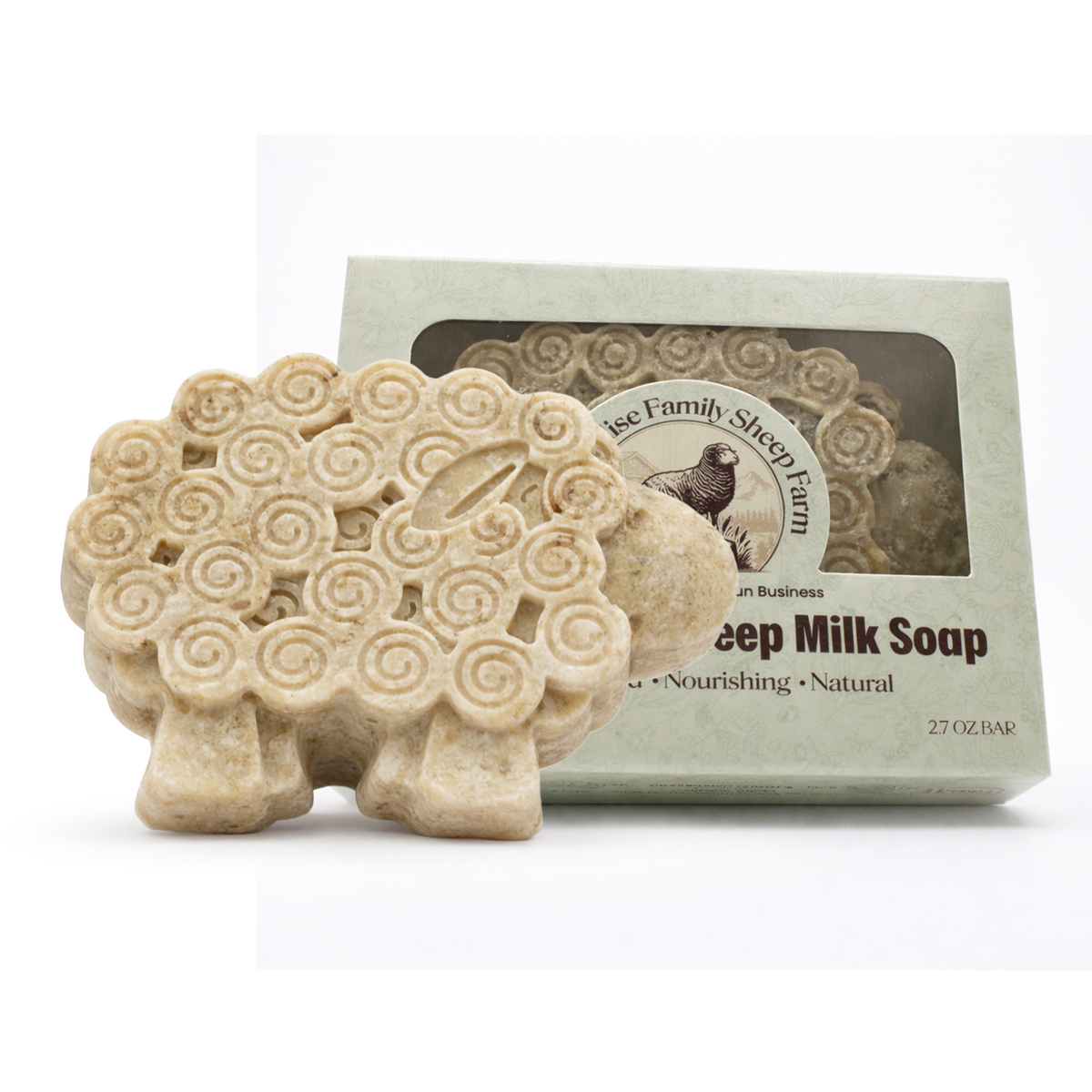
3. Understand the fats and oils in the soap base
Traditional soap is made from fats or oils combined with an alkali. Common ingredients include olive oil, coconut oil, palm oil, tallow, shea butter, mango butter, and castor oil.
Each oil contributes different properties:
- Coconut oil commonly contributes cleansing power, hardness, and lather.
- Olive oil can contribute a softer, conditioning feel.
- Butters such as mango or shea can influence hardness and skin feel.
- Castor oil is often used to support a creamy lather.
- Animal fats such as tallow may create a firm, traditional bar.
There is no single “best” oil for every person. Check the list according to your preferences, including whether you avoid palm oil, animal fats, or particular nut-derived ingredients.
The fat profile also affects how a soap performs. Research on cold-saponified soaps found that the distribution of saturated and unsaturated fatty acids influenced hardness, aroma, cleansing, and sensory characteristics.4
4. Do not fear sodium hydroxide: but understand its role
Sodium hydroxide, commonly called lye, is the alkali used to make solid soap. It reacts with oils and fats through saponification, producing soap molecules and glycerin.
Lye is hazardous in its concentrated form, but it is a necessary part of many traditional soap formulas. A properly made and cured bar should not contain a dangerous amount of free sodium hydroxide. The presence of “lye” on an ingredient list does not mean the finished bar is unsafe; it indicates how the soap was made.
Some labels list the original raw materials, such as olive oil and sodium hydroxide. Others list the resulting soap salts, such as sodium olivate or sodium cocoate. Both approaches can describe a traditional soap, but a clear label should make the formula understandable.
5. Know that glycerin may be naturally produced
Glycerin, or glycerol, is a natural byproduct of saponification. It is a humectant, meaning it can help attract and retain water at the skin’s surface.
A traditional handmade bar may contain naturally occurring glycerin even when “glycerin” is not separately listed. Conversely, some commercial bars add glycerin as a separate ingredient or use a prepared glycerin soap base.
Glycerin can contribute to a pleasant skin feel, but its presence alone does not prove that a bar is more moisturizing. The complete formula and how the product affects the skin after rinsing matter more than one ingredient name.
6. Ask about water content and curing
Water is used to dissolve sodium hydroxide and combine the ingredients during soapmaking. A fresh bar contains more water than a fully cured bar.
During curing, water gradually evaporates and the soap structure becomes firmer. Proper curing can improve hardness, longevity, lather, and overall feel. It also means that a small-batch soap may change slightly as it ages.
A long cure does not automatically make a soap medically gentler. In particular, traditional soap remains alkaline even after curing. Studies comparing cleansers have found that alkaline soap formulations can increase transepidermal water loss and erythema, especially in comparison with milder formulations.5
If your skin is very dry, eczema-prone, or visibly irritated, introduce any new cleanser cautiously.
7. Distinguish essential oils from generic fragrance
“Fragrance-free” and “essential-oil-free” are not the same claim.
A product labeled fragrance-free should not contain fragrance ingredients intended to scent the product, but labeling practices and marketing language can vary. A product scented with lavender, peppermint, tea tree, or frankincense essential oil is still scented: and essential oils can contain naturally occurring fragrance allergens.
Research on natural personal-care products found frequent use of fragrance allergens such as limonene, linalool, citral, and farnesol.1 If you have a known fragrance allergy, choose an unscented product and review the complete ingredient list.
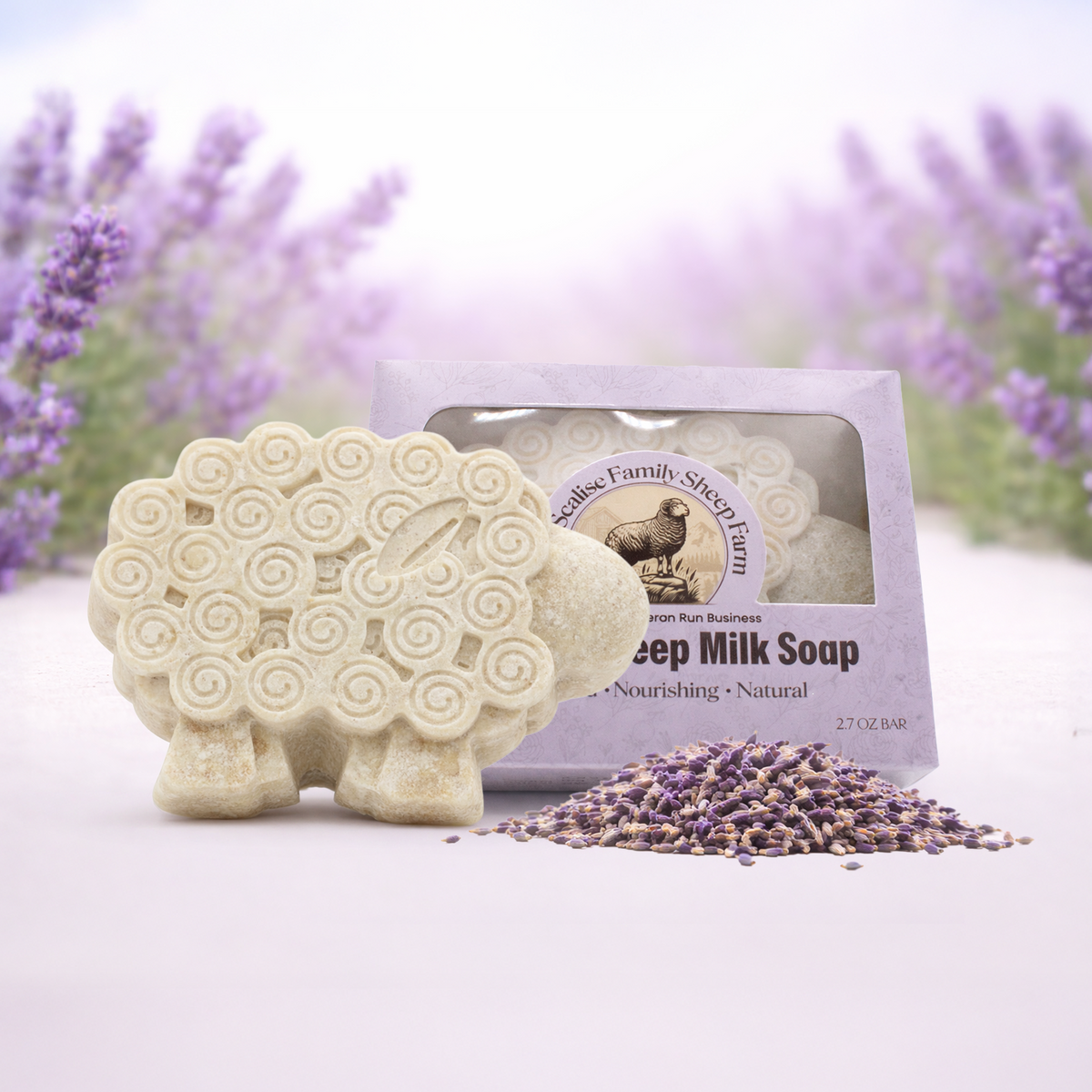
8. Check colorants, clays, herbs, and other extras
Natural color does not necessarily mean no colorant. A bar may contain clays, charcoal, turmeric, plant powders, herbs, or mineral pigments.
These ingredients can affect the bar’s appearance, texture, scent, or cleansing experience. They may also be personally relevant if you react to botanicals or prefer the shortest possible ingredient list.
For example, the current Scalise product pages describe:
- Lavender Sheep Milk Soap: sheep milk, olive oil, mango butter, lye, beeswax, coconut oil, oat bran, Aztec clay, lavender essential oil, and lavender petals.6
- Matcha Latte Sheep Milk Soap: sheep milk, olive oil, mango butter, lye, beeswax, coconut oil, oat bran, matcha powder, green tea leaves, and tea tree oil.7
- Frankincense Sheep Milk Soap: sheep milk, olive oil, mango butter, beeswax, frankincense resin, frankincense essential oil, oat bran, coconut oil, and lye.8
Always check the packaging for the most current formula, since product formulations can change.
9. Consider preservatives: and when they may be needed
A traditional solid soap bar has relatively little free water, so it may not require the same preservation system as a lotion, cream, liquid cleanser, or high-water product.
That does not mean all handmade soap is automatically preservative-free or that preservatives are inherently undesirable. Preservatives can help protect water-based products from microbial growth. Some formulas may also use chelators or stabilizers to improve shelf life and performance.
The right question is not simply, “Does this contain preservatives?” Ask instead:
- Is the product water-based?
- Does it contain botanicals or food-derived ingredients?
- Is the packaging exposed to repeated wet handling?
- Does the maker provide storage and shelf-life guidance?
10. Treat marketing claims as clues: not proof
Terms such as natural, hypoallergenic, sensitive-skin, and fragrance-free can be useful starting points, but they should never replace the ingredient list.
A systematic review found that “natural ingredients” are not necessarily safer or less irritating for people with atopic dermatitis or allergic contact dermatitis. It also concluded that terms such as “hypoallergenic” and “fragrance-free” have variable clinical usefulness and may not be consistently regulated.9
There is also an important caution for shoppers with food allergies or a damaged skin barrier. A case report described new goat’s-milk allergy in members of a household using goat milk soap marketed for sensitive skin.10 This was a goat milk case report: not evidence that sheep milk soap causes the same outcome: but it demonstrates why food-derived proteins deserve attention, especially for people with atopic dermatitis, known milk allergy, or a compromised skin barrier.
Finally, “farm-sourced” is a provenance claim. At Scalise Family Sheep Farm, it means we raise our own Icelandic sheep and use milk from our farm in our handmade products. That traceability is meaningful to us and to customers who want to support a family farm, but it is not a guarantee of superiority. Formula transparency, manufacturing quality, individual tolerance, and appropriate use matter too.
The bottom line
The best sheep milk soap is not defined by the longest list of impressive claims. It is defined by a clear ingredient list, responsible manufacturing, realistic expectations, and a formula that suits your skin and preferences.
At Scalise Family Sheep Farm, we make our soaps in small batches with sheep milk from our own flock, natural oils, botanicals, and carefully selected scent ingredients. Explore the complete sheep milk soap collection, or choose our unscented sheep milk soap if you prefer a fragrance-free option.
If you have a diagnosed allergy, eczema, or persistent irritation, consult a dermatologist or allergist before trying a new milk-based skincare product.
Academic References & Scientific Sources
- Klaschka U. Natural personal care products: analysis of ingredient lists and legal requirements. Environmental Sciences Europe. 2016;28(1):8. PMID 27752443.
- Balthazar CF, et al. Sheep Milk: Physicochemical Characteristics and Relevance for Functional Food Development. Comprehensive Reviews in Food Science and Food Safety. 2017;16(2):247–262. doi: 10.1111/1541-4337.12250. PMID 33371538.
- Palmer DJ, et al. In-Depth Characterization of Sheep (Ovis aries) Milk Whey Proteome and Comparison with Cow (Bos taurus). PLOS ONE. 2015;10(9):e0139774. doi: 10.1371/journal.pone.0139774. PMID 26447763.
- Vidal NP, et al. The Effects of Cold Saponification on the Unsaponified Fatty Acid Composition and Sensory Perception of Commercial Natural Herbal Soaps. Molecules. 2018;23(9):2356. doi: 10.3390/molecules23092356. PMID 30223479.
- Khosrowpour Z, et al. Effects of four soaps on skin trans-epidermal water loss and erythema index. Journal of Cosmetic Dermatology. 2019;18(3):857–861. doi: 10.1111/jocd.12758. PMID 30160004.
- Boozalis E, Patel S. Clinical utility of marketing terms used for over-the-counter dermatologic products. Journal of Dermatological Treatment. 2018;29(8):841–845. doi: 10.1080/09546634.2018.1467540. PMID 29671667.
- Mijaljica D, Spada F, Harrison IP. Skin Cleansing without or with Compromise: Soaps and Syndets. Molecules. 2022;27(6):2010. doi: 10.3390/molecules27062010. PMID 35335373.
- Anantharajah A, Randall KL. Goat’s milk allergy in a family following household sensitization to goat’s milk soap. Asia Pacific Allergy. 2021;11(2):e13. doi: 10.5415/apallergy.2021.11.e13. PMID 34007823.
- Kanyama T, et al. Natural soap is clinically effective and less toxic and more biodegradable in aquatic organisms and human skin cells than synthetic detergents. PLOS ONE. 2025;20(6):e0324842. doi: 10.1371/journal.pone.0324842. PMID 40531955.
This article is for general educational purposes and does not diagnose, treat, or prevent any medical condition. Ingredient lists and formulations may change; consult the product packaging and a qualified healthcare professional for individualized advice.


