

Walk into any high-end department store or browse a major beauty retailer’s website, and you’ll find aisles of sleek bottles promising "miracle" results. These products often boast high price tags and "clinically proven" synthetic ingredients. But there is a secret that the multi-billion dollar beauty industry isn't eager to share: the most potent, biologically appropriate skincare isn't brewed in a laboratory: it’s produced in a pasture.
At Scalise Family Sheep Farm LLC, we specialize in the "biological gold" of the agriculture world: Icelandic sheep milk. While "Big Beauty" relies on synthetic emulsifiers, water-diluted bases, and harsh preservatives to maintain global supply chains, we rely on the complex, nutrient-dense profile of fresh sheep milk.
In this deep dive, we’re going to look past the marketing fluff and uncover the academic science behind why sheep milk is objectively superior to the synthetic alternatives found on store shelves.
The Lipid Advantage: Triglycerides and Bioavailability
One of the most significant differences between mass-produced lotions and our handcrafted sheep milk products is the lipid profile. Big beauty brands often use mineral oil (a petroleum byproduct) or highly processed vegetable oils as their primary moisturizing agents. These substances often sit on top of the skin, creating an occlusive barrier that can clog pores without actually nourishing the dermal layers.
Sheep milk, however, is naturally high in triglycerides. In fact, sheep milk contains nearly twice the fat content of cow or goat milk [1]. These fats are not just "grease"; they are structured as medium-chain fatty acids (MCFAs) like caprylic and capric acid.

Research published in the Journal of Dairy Science highlights that the fat globules in sheep milk are smaller than those in cow milk [2]. In skincare, smaller fat globule size translates to better bioavailability. This means the moisturizing agents can actually penetrate the skin's lipid barrier more effectively, delivering nutrients where they are needed most rather than simply sliding off the surface. When you use our Lavender Sheep Milk Soap, you aren't just washing; you are delivering a concentrated dose of bioavailable lipids directly to your skin.
The Protein Paradox: Why A2 Casein Matters
If you’ve followed health trends in the dairy aisle, you’ve likely heard of A2 milk. Most commercial cow milk contains A1 beta-casein, a protein that has been linked in several studies to inflammatory responses in the body [3]. What "Big Beauty" doesn't mention is that when they use "milk proteins" in their formulations, they are almost always sourcing the cheapest, most processed A1 cow milk powders available.
Sheep milk is naturally and exclusively A2-type protein. This is a game-changer for individuals with sensitive skin or conditions like eczema and psoriasis. A2 proteins are significantly less likely to trigger the inflammatory cytokine response that leads to redness and irritation [4].

By utilizing fresh milk from our Icelandic flock, we ensure that the proteins in our soaps: like the Rose Sheep Milk Soap: remain in their natural, non-denatured state. These proteins act as humectants, drawing moisture into the skin and helping to repair the skin's natural barrier.
Lactic Acid: The Gentle Giant of AHAs
Alpha-hydroxy acids (AHAs) are the darlings of the skincare world for their ability to exfoliate and brighten the skin. Big brands typically use synthetic glycolic acid or high-concentration lactic acid created in a lab. While effective, these synthetic versions can often be too aggressive, leading to chemical burns or a compromised skin barrier if used daily.
Sheep milk is a natural powerhouse of lactic acid. Because it is delivered within a matrix of fats and proteins, the exfoliation process is "buffered." This allows for the gentle removal of dead skin cells and the stimulation of cell turnover without the "stinging" sensation associated with store-bought chemical peels.
Academic studies on the topical application of dairy-sourced lactic acid show a marked improvement in skin texture and a reduction in the appearance of fine lines by increasing the production of collagen and glycosaminoglycans in the dermis [5]. This is why products like our Frankincense Sheep Milk Soap leave the skin feeling "glowing" rather than "stripped."
The Vitamin Profile: Nature’s Retinol
"Big Beauty" spends millions marketing Retinol (Vitamin A). While Retinol is a gold standard for anti-aging, it is notoriously unstable and often causes "retinoid dermatitis": peeling, redness, and sensitivity.
Sheep milk is naturally rich in Vitamin A (Retinol), Vitamin E, and a suite of B vitamins. Because these vitamins are naturally occurring and fat-soluble, they are stabilized by the milk’s own triglyceride structure.
- Vitamin A: Encourages healthy skin cell production.
- Vitamin E: A potent antioxidant that protects against free radical damage and UV-induced oxidative stress [6].
- B-Complex: Specifically B12 and Riboflavin, which help maintain skin tone and reduce inflammation.
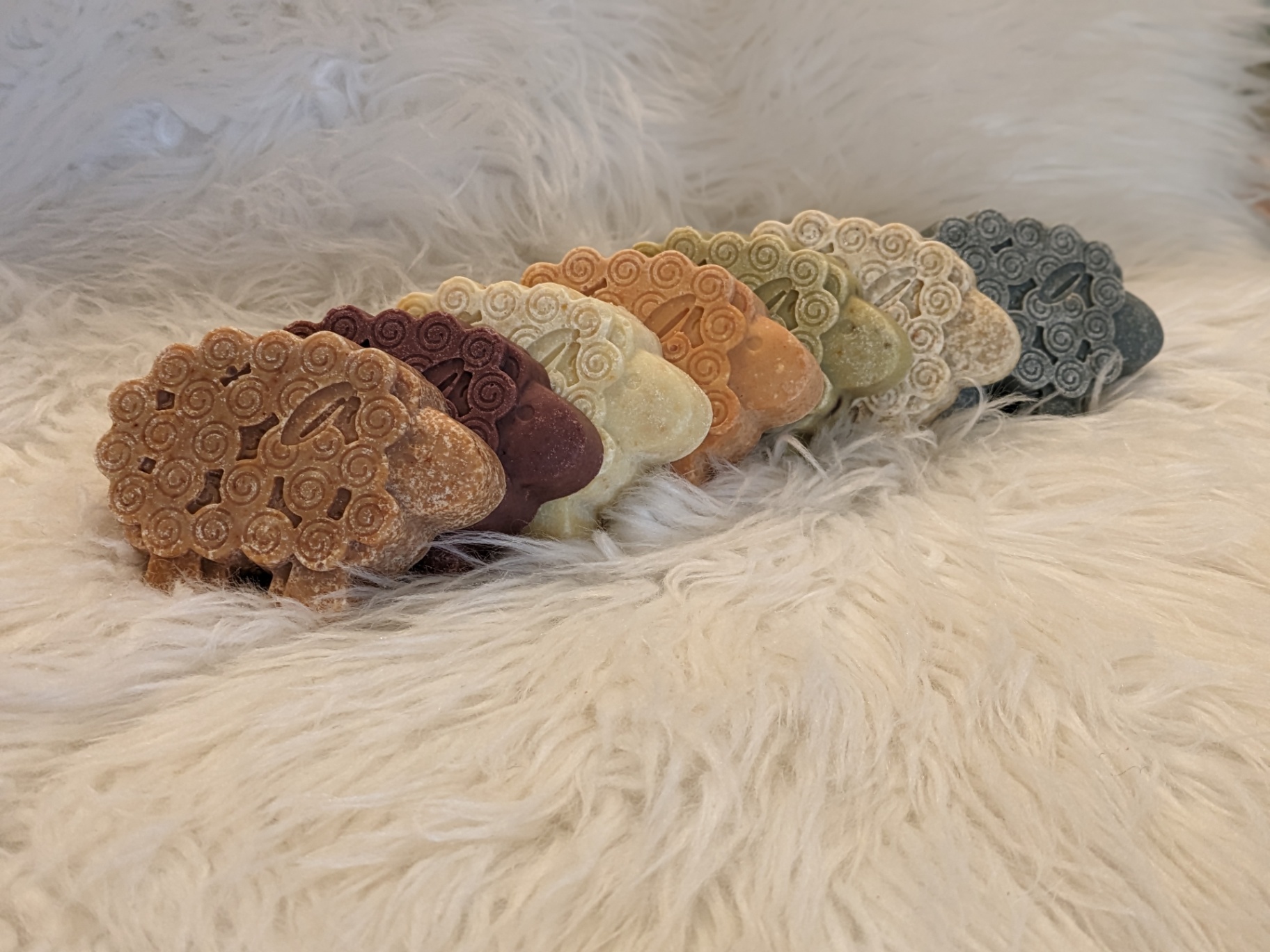
When you choose a farm-fresh product, you are getting these vitamins in their complex, synergistic forms rather than the isolated, synthetic versions used to fortify mass-market creams.
Why Won’t "Big Beauty" Use Sheep Milk?
If sheep milk is so scientifically superior, why don't you see it as the primary ingredient in every luxury brand? The answer is simple: Scalability and Profit Margins.
- Yield: An Icelandic sheep produces significantly less milk than a commercial Holstein cow. This makes the raw ingredient much more expensive.
- Perishability: Fresh sheep milk is difficult to transport and stabilize for the 2-year shelf-life required for big-box retail.
- Artisan Process: The high fat and protein content of sheep milk requires a specialized cold-process saponification method. Big brands prefer "melt-and-pour" or continuous-flow manufacturing, which destroys the delicate bio-actives in the milk.
At Scalise Family Sheep Farm LLC, we aren't interested in being in every big-box store. We are interested in the integrity of the product. We raise our sheep on natural forage in pastures, ensuring that the milk we use is as nutrient-dense as nature intended.

Conclusion: Reclaiming Your Skin Health
The "secrets" that big beauty brands hide aren't really secrets at all: they are just inconvenient truths for a business model built on synthetic efficiency. The science is clear: the A2 proteins, small-molecule triglycerides, and natural lactic acid found in sheep milk provide a level of nourishment that synthetic chemistry simply cannot replicate.
If you are tired of products that promise much but deliver little, it might be time to return to the basics. Whether it's our limited edition seasonal soaps or our year-round staples, every bar is a testament to the power of traditional agriculture and academic science working in harmony.
Ready to see the difference for yourself? Explore our full collection of sheep milk soaps and balms and feed your skin the nutrients it actually recognizes.

References & Academic Sources
- [1] Park, Y.W., et al. (2007). "Physico-chemical characteristics of goat and sheep milk." Small Ruminant Research. This study provides a comprehensive comparison of the lipid and protein densities across ruminant species.
- [2] Muir, D.D., et al. (1993). "The fat globule size distribution of milk from various species." Journal of Dairy Science. Documentation on the smaller globule size of sheep milk and its implications for digestion and absorption.
- [3] Pal, S., et al. (2015). "Milk Intolerance, Beta-Casein and Lactose." Nutrients. An analysis of the inflammatory differences between A1 and A2 beta-casein proteins.
- [4] Sodhi, M., et al. (2012). "Milk proteins and human health: A2 beta-casein hypothesis." Indian Journal of Endocrinology and Metabolism. Clinical look at the reduced inflammatory markers associated with A2 proteins.
- [5] Smith, W.P. (1996). "Epidermal and dermal effects of topical lactic acid." Journal of the American Academy of Dermatology. Research detailing how lactic acid improves skin thickness and collagen density.
- [6] Nachbar, F., & Korting, H.C. (1995). "The role of vitamin E in normal and damaged skin." Journal of Molecular Medicine. A study on the antioxidant capabilities of Vitamin E in topical applications.


