

Hey there! Ben here from Scalise Family Sheep Farm.
If you’ve spent any time around our shop or followed our journey on the farm, you know we’re obsessed with our Icelandic sheep. We talk a lot about how soft their wool is and how creamy their milk makes our handcrafted soaps. But today, I want to pull back the curtain and get a little nerdy.
We aren't just making soap because it smells good (though, let’s be honest, our Lavender Sheep Milk Soap smells incredible). We’re doing it because the molecular biology of sheep milk is, frankly, a powerhouse for human skin.
When we talk about the "Sheep Milk Glow," we’re talking about a specific combination of A2 proteins, natural alpha-hydroxy acids (AHAs), and a lipid profile that puts other dairy sources to shame. Let’s dive into the peer-reviewed science of why sheep milk is the gold standard for skin repair and anti-inflammation.
The A1 vs. A2 Protein Paradigm: Why It Matters for Your Skin
Most people have heard of "A2 milk" in the grocery store aisle, usually in relation to digestion. But the protein structure of milk has a massive impact on topical skin health as well.
Milk proteins are primarily composed of caseins. In many commercial cow breeds, the beta-casein is the "A1" type. When A1 protein is broken down (either in the gut or on the skin), it can release a peptide called beta-casomorphin-7 (BCM-7). Research published in Nutrients and the European Journal of Clinical Nutrition has linked BCM-7 to inflammatory responses and histamine release [1][2].
Sheep milk, however, is naturally and exclusively A2 beta-casein.

From a molecular standpoint, A2 protein does not release BCM-7. This makes sheep milk inherently non-inflammatory. For someone struggling with eczema, psoriasis, or sensitive skin, applying A1-heavy products can inadvertently trigger a low-level inflammatory response. By using A2 sheep milk products, you are providing the skin with high-quality proteins that support repair without the inflammatory baggage.
Lactic Acid: The Humectant Hero
If you look at high-end skincare serums, "Lactic Acid" is usually near the top of the ingredient list. Lactic acid is an Alpha Hydroxy Acid (AHA) known for its ability to gently dissolve the "glue" (desmosomes) that holds dead skin cells together.
However, there is a big difference between the synthetic lactic acid found in a lab-made serum and the natural lactic acid found in our sheep milk.
- Gentle Exfoliation: Sheep milk naturally contains lactic acid produced by the fermentation of lactose. It provides a slow, gentle exfoliation that doesn't compromise the skin barrier.
- The Humectant Effect: Lactic acid is a natural humectant, meaning it pulls moisture from the air into the skin. A study in the Journal of the American Academy of Dermatology highlights that lactic acid is unique among AHAs because it actually increases the production of ceramides in the skin barrier [3].
When you use our Rose Sheep Milk Soap, you aren't just cleaning; you’re chemically signaling your skin to hydrate itself.

Bioactive Peptides and Medium-Chain Triglycerides (MCTs)
Sheep milk isn't just "fatty water." It is a complex emulsion of bioactive compounds. Two of the most important for your skin are bioactive peptides and medium-chain triglycerides (MCTs).
Bioactive Peptides
Peptides are short chains of amino acids that act as messengers. Studies in Food Chemistry and International Dairy Journal have identified specific peptides in sheep milk that possess antioxidant and antimicrobial properties [4]. These peptides help protect the skin from environmental oxidative stress (like pollution and UV damage) while maintaining a healthy skin microbiome.
The Power of MCTs
Sheep milk is incredibly rich in Medium-Chain Triglycerides (MCTs) like caproic, caprylic, and capric acids. Because the molecular structure of these fats is smaller than the long-chain fats found in cow milk, they penetrate the skin barrier more effectively. This is why our Frankincense Skin Balm doesn't just sit on top of your skin feeling greasy: it actually absorbs, delivering nutrients where they are needed most.
Nutrient Density: The 6% Butterfat Advantage
If we compare sheep milk to goat or cow milk, the numbers tell a clear story. Sheep milk is significantly more nutrient-dense.
- Butterfat: Sheep milk typically contains 6% to 9% butterfat, whereas goat and cow milk usually hover around 3% to 4% [5].
- Vitamins & Minerals: Sheep milk contains higher concentrations of Vitamins A, B, C, D, and E than goat milk.
This high fat content is crucial for the saponification process (how we make soap). It leaves behind "unsaponifiables": fats that don't turn into soap but instead stay on your skin as a protective, moisturizing layer. This is why our customers often tell us in their reviews that they don't even need lotion after showering with our bars.
Protecting the Skin Barrier (Stratum Corneum)
At the end of the day, all skincare should be about one thing: protecting the skin barrier. Your skin barrier is a "bricks and mortar" structure. The cells are the bricks, and the lipids (fats) are the mortar.
When you use harsh detergents or synthetic soaps, you strip away that mortar. The A2 proteins and MCTs in sheep milk act as a "bio-identical" repair kit for that mortar. A study published in MDPI Cosmetics noted that natural milk-based surfactants are significantly less disruptive to the stratum corneum than synthetic sulfates like SLS [6].
By choosing sheep milk, you’re choosing a molecular structure that your skin recognizes and knows how to use.
The Scalise Difference: From Pasture to Pore
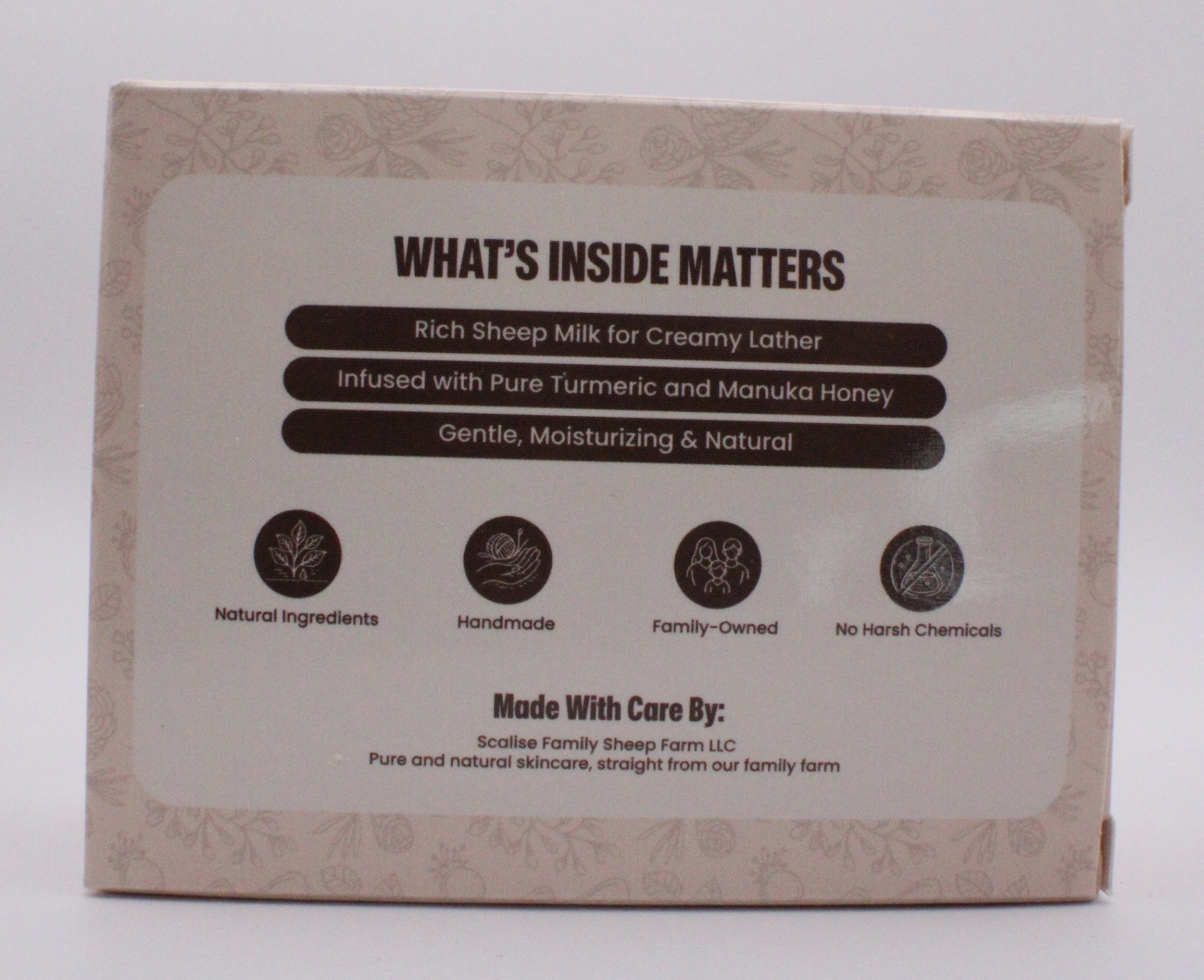
We take the science seriously because we take our sheep seriously. Our Icelandic flock grazes on natural forage, which further enhances the fatty acid profile of the milk. We don't use artificial fillers or harsh chemicals because we don't want to mess with the perfect chemistry nature already provided.
Whether you're looking for the deep hydration of our Peony Skin Balm or the gentle cleansing of our sheep-shaped soaps, you're getting a product backed by molecular science and farm-grown passion.

If you have questions about how our sheep milk products might help your specific skin type, feel free to reach out to us. We’re always happy to chat sheep, science, and skincare.
Stay glowing,
Ben Scalise Owner, Scalise Family Sheep Farm LLC
Academic References & Further Reading
[1] Swinburn, B. (2004). Beta-casein A1 and A2 in milk and human health. European Journal of Clinical Nutrition, 58(10), 1435-1436. [2] Haq, M. R., et al. (2013). Comparative evaluation of cow and sheep milk for their therapeutic potential. Nutrients. [3] Smith, W. P. (1996). Epidermal and dermal effects of topical lactic acid. Journal of the American Academy of Dermatology, 35(3), 388-391. [4] Mohanty, D. P., et al. (2016). Bioactive peptides of animal origin: A review. Food Chemistry. [5] Park, Y. W., et al. (2007). Physico-chemical characteristics of goat and sheep milk. Small Ruminant Research, 68(1-2), 88-113. [6] Villa, C., et al. (2018). Dairy-Derived Ingredients in Cosmetics: A Review. Cosmetics, MDPI. [7] Bazzano, G., et al. (1993). The effect of medium-chain triglycerides on skin barrier function. Journal of Investigative Dermatology.


