

If you've ever stepped outside in January here in New Hampshire, you know exactly what I'm talking about. That bitter cold hits your face like a slap, and within minutes, your hands feel like sandpaper. Your lips crack. Your knuckles split. And no matter how much of that store-bought lotion you slather on, it never seems to actually fix anything.
Trust me, we get it. Living and working on a farm in Wilton, NH means we're outside in the elements every single day, rain, snow, or that lovely -10°F wind chill that makes you question all your life choices. Over the years, we've learned a thing or two about keeping our skin from completely falling apart during these brutal winters. And spoiler alert: the secret has been right here on our farm the whole time.
Let's talk about how sheep milk products, specifically our handmade skin balms and pain salves, became our family's winter survival kit, and why they might just become yours too.
Why New Hampshire Winters Are So Brutal on Your Skin
Before we dive into solutions, let's understand the enemy we're dealing with.
Winter air is dry. Like, really dry. When temperatures drop, the air loses its ability to hold moisture, and that includes the moisture in your skin. Add in the wind (hello, Mount Washington), and you've got a recipe for disaster. The cold air strips away your skin's natural protective oils, leaving it vulnerable, cracked, and irritated [1].
Indoor heating doesn't help either. Cranking up the furnace might keep your toes warm, but it also sucks whatever remaining humidity out of the air. Your skin ends up in a constant battle between the dry cold outside and the dry heat inside.
And let's not forget frostbite. According to winter safety guidelines, early signs include loss of feeling and a white or pale appearance in your fingers, toes, ear lobes, or the tip of your nose [2]. Proper protection isn't just about comfort, it's about safety.
So what's the solution? Layering with thermal base layers and wearing proper accessories like hats, gloves, and scarves definitely helps protect exposed skin [2]. But for the skin that does face the elements? You need something that actually repairs and protects at a deeper level.
The Science Behind Sheep Milk and Skin Health
Here's where things get interesting.
Not all moisturizers are created equal. Most commercial lotions are water-based, which means they evaporate quickly and provide only temporary relief. What your winter-ravaged skin actually needs is fat, the good kind.
Sheep milk is absolutely loaded with it.
Compared to cow or goat milk, sheep milk contains significantly higher levels of butterfat (around 7% compared to cow milk's 3.5%) [3]. This fat is rich in medium-chain triglycerides, which are small enough to penetrate the skin's outer layer and provide deep, lasting moisture [4].
But it's not just about fat content. Sheep milk is also packed with:
- Vitamin A – essential for skin cell regeneration and repair [5]
- Vitamin E – a powerful antioxidant that protects against environmental damage [5]
- Lactic acid – a natural alpha-hydroxy acid (AHA) that gently exfoliates dead skin cells [6]
- Proteins and amino acids – the building blocks your skin needs to heal and stay elastic [3]
A 2015 study published in the International Journal of Molecular Sciences found that milk-derived lipids can help restore the skin's natural barrier function, which is exactly what gets compromised during harsh winter conditions [7].
This is why small-batch soap and balms made with farm-sourced sheep milk aren't just a trendy alternative, they're scientifically backed skincare that actually works.
Our Farm-to-Skin Approach: What We Use and Why
Let me be real with you: we didn't start making handmade natural soap and skin balms to sell them. We made them because we needed them.
Working with our Icelandic sheep means early mornings, frozen water buckets, and hands that take a beating. Commercial products just weren't cutting it. So we started experimenting with our own sheep milk, combining it with other natural ingredients like beeswax, essential oils, and plant butters.
The results? Game-changing.
Skin Balms: Your Winter Armor
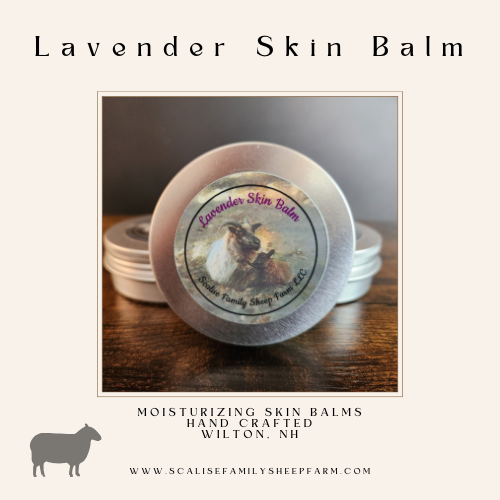
Our Lavender Skin Balm has become a farm favorite. The lavender essential oil not only smells incredible but also has natural anti-inflammatory properties that help soothe irritated, wind-chapped skin [8]. We slather this stuff on our hands, faces, and anywhere else that's taking a beating.
For those who prefer something a little more floral, our Rose Skin Balm and Peony Skin Balm offer the same deep moisture with different aromatic profiles.
And for the folks who want something a bit more earthy and grounding, the Frankincense Skin Balm is fantastic. Frankincense has been used for centuries for its skin-healing properties and has been shown in studies to promote cellular health [9].
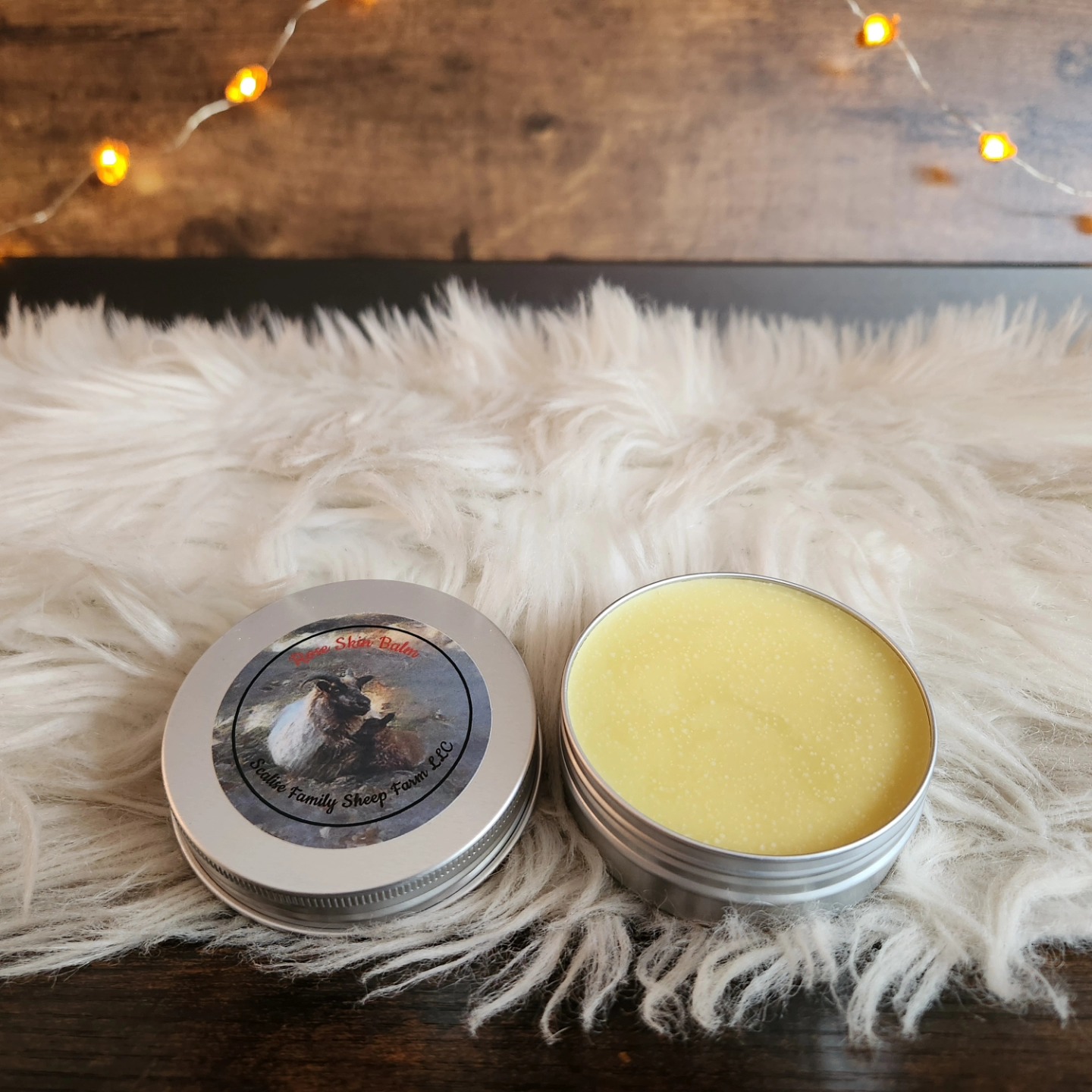
Our newest addition, the Pine Skin Balm, is perfect for those who want to smell like a New Hampshire forest while protecting their skin from said forest's brutal winter weather.
Pain Salves: For When Winter Really Gets You

Winter doesn't just dry out your skin, it can aggravate aches and pains too. Cold weather causes muscles to tense up and joints to stiffen. Our all-natural pain salve combines the moisturizing benefits of sheep milk with targeted relief for sore muscles and achy joints.
Whether you've been shoveling snow, hauling hay, or just dealing with the general stiffness that comes with cold weather, this stuff is a lifesaver.
Sheep Milk Soap: Daily Defense
Of course, good winter skincare starts in the shower. Most commercial soaps are actually detergents, they strip away your skin's natural oils, leaving you even drier than before.
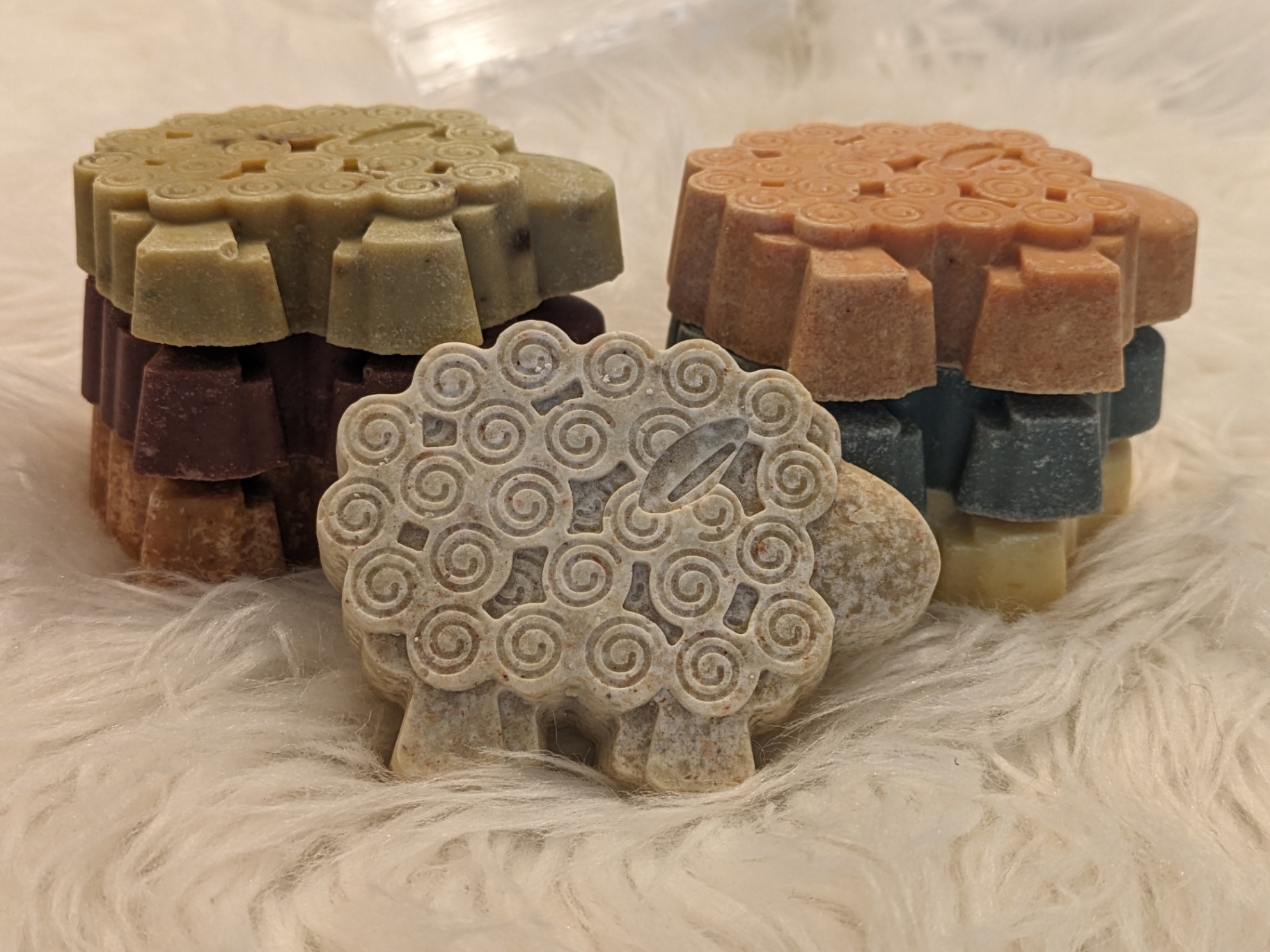
Our sheep-milk soap is different. It cleanses without stripping, leaving a thin layer of moisture-rich goodness on your skin. The benefits for skin are immediate: softer, smoother, and way less tight feeling after you towel off.
We've got a variety of scents to choose from, including Lavender, Rose, Frankincense, and Peppermint (which is amazing for waking up on those dark winter mornings).
Your New Hampshire Winter Skin Survival Checklist
Alright, let's put this all together. Here's how to actually survive a New Hampshire winter with your skin intact:
1. Layer up properly. Thermal base layers, wool socks, hats, mittens (better than gloves for keeping fingertips warm), and a good scarf to protect your face and lungs from cold air [2].
2. Switch to gentle, farm-sourced cleansers. Ditch the commercial soap and switch to handmade natural soap made with sheep milk. Your skin barrier will thank you.
3. Apply balm before you go outside. Think of it as armor. A layer of our skin balm creates a protective barrier against wind and cold.
4. Reapply throughout the day. Keep a tin of balm in your pocket, your car, your desk: anywhere you might need it. Cracked knuckles don't wait for convenient moments.
5. Don't forget your feet. Wool socks (we've got Icelandic sheep wool for that!) paired with proper boots can prevent frostbite and keep your feet from becoming a cracked, painful mess [2].
6. Hydrate from the inside out. Drink water. Seriously. It's easy to forget when you're not sweating, but your skin needs hydration from both directions.
The Bottom Line
New Hampshire winters are no joke. But with the right approach: and the right products: you don't have to suffer through months of dry, cracked, painful skin.
Everything we make here at Scalise Family Sheep Farm is small-batch, farm-sourced, and crafted with the same care we put into raising our Icelandic sheep. We use these products ourselves, every single day, because they actually work.
Ready to give your skin the winter protection it deserves? Check out our full line of sheep milk soaps, skin balms, and pain salves at scalisefamilysheepfarm.com. Your hands (and face, and elbows, and everywhere else) will thank you.
Stay warm out there, friends.
References
[1] American Academy of Dermatology. "Winter Skin Care Tips." AAD.org.
[2] New Hampshire Department of Safety. "Winter Weather Safety Guidelines."
[3] Park, Y.W., et al. (2007). "Physico-chemical characteristics of goat and sheep milk." Small Ruminant Research, 68(1-2), 88-113.
[4] Mao, Q., et al. (2019). "Milk fat globule membrane and its component phospholipids: a review." International Dairy Journal, 91, 34-47.
[5] Pullar, J.M., et al. (2017). "The Roles of Vitamin C in Skin Health." Nutrients, 9(8), 866.
[6] Tang, S.C., & Yang, J.H. (2018). "Dual Effects of Alpha-Hydroxy Acids on the Skin." Molecules, 23(4), 863.
[7] Vaughn, A.R., et al. (2015). "Effects of Topical Botanicals on Skin." International Journal of Molecular Sciences, 16(2), 3566-3590.
[8] Koulivand, P.H., et al. (2013). "Lavender and the Nervous System." Evidence-Based Complementary and Alternative Medicine, 2013, 681304.
[9] Al-Yasiry, A.R.M., & Kiczorowska, B. (2016). "Frankincense: therapeutic properties." Postepy Hig Med Dosw, 70, 380-391.


