

You've probably heard a lot about gut health lately. Probiotics, prebiotics, fermented foods: it's everywhere. But here's something most people don't realize: your skin has its own microbiome too. And just like your gut, this invisible ecosystem of bacteria, fungi, and other microorganisms plays a massive role in keeping you healthy.
Scientists have started calling the skin the body's "second brain" because of how interconnected it is with our overall well-being.¹ And if you've been washing with commercial soap loaded with synthetic detergents and harsh chemicals, you might be unknowingly waging war on the very bacteria that keep your skin glowing, hydrated, and protected.
That's where sheep-milk soap comes in. Let's dig into the science of why farm-sourced, small-batch soap made with real sheep milk might be exactly what your skin's microbiome has been craving.
What Exactly Is the Skin Microbiome?
Your skin is home to roughly one trillion microorganisms: bacteria, fungi, viruses, and mites: that form a complex ecosystem known as the skin microbiome.² This isn't as gross as it sounds. In fact, these little guys are essential for your health.
The skin microbiome performs several critical functions:
- Immune defense: Beneficial bacteria compete with harmful pathogens for resources, essentially crowding out the bad guys before they can cause infections.²
- Barrier integrity: A balanced microbiome helps maintain your skin's lipid barrier: the protective layer that keeps moisture in and irritants out.³
- Anti-inflammatory signaling: Certain microbial species communicate with your immune cells to reduce inflammation and calm reactive skin.⁴
When this delicate balance gets disrupted: a state scientists call "dysbiosis": problems start showing up. Eczema, acne, rosacea, and chronic dryness have all been linked to an imbalanced skin microbiome.⁵
The Problem with Commercial Soaps
Here's the uncomfortable truth: most commercial soaps aren't really "soap" at all. They're synthetic detergent bars (often called "syndet bars") formulated with sulfates, parabens, and artificial fragrances.⁶
These ingredients are incredibly effective at one thing: stripping away oils. Unfortunately, they don't discriminate between the dirty stuff and the essential lipids and beneficial bacteria your skin needs to thrive.
Research published in the Journal of Clinical and Aesthetic Dermatology found that harsh surfactants in commercial cleansers can significantly alter skin pH and reduce microbial diversity: two factors directly linked to compromised skin barrier function.⁷
In other words, that squeaky-clean feeling after a shower? It might actually mean you've just nuked your skin's natural defense system.
How Sheep Milk Supports Your Skin's Ecosystem
So what makes handmade natural soap with sheep milk different? It comes down to what sheep milk actually contains: and how those compounds interact with your skin.
Prebiotic Oligosaccharides
Sheep milk contains oligosaccharides: complex carbohydrates that act as prebiotics. These aren't digestible by human cells, but they're essentially a gourmet meal for beneficial bacteria.⁸
What's fascinating is that sheep milk oligosaccharides are structurally similar to those found in human breast milk, which is nature's gold standard for supporting healthy microbiome development.⁸ When applied topically through sheep-milk soap, these prebiotics help feed and sustain the "good" bacteria living on your skin.
Medium-Chain Fatty Acids (MCFAs)
Sheep milk is exceptionally rich in medium-chain fatty acids, including capric and caprylic acid.⁹ These fats do double duty:
- Antimicrobial activity: MCFAs have been shown to inhibit the growth of harmful bacteria like Staphylococcus aureus while leaving beneficial species relatively unharmed.¹⁰
- Barrier support: They integrate into your skin's lipid matrix, reinforcing the protective barrier that keeps moisture locked in.¹¹
A 2019 study in Nutrients found that MCFAs positively influence microbiome diversity and strengthen epithelial integrity: meaning they help keep your skin's ecosystem balanced while reducing "leaky" barrier issues.¹²

Bioactive Peptides
Sheep milk contains bioactive peptides with proven antibacterial and anti-inflammatory properties.⁸ These peptides have been shown to stimulate the growth of beneficial bacteria while suppressing pathogenic strains: essentially acting as a selective bouncer for your skin's microbial nightclub.
Lactoferrin and Immunoglobulins
Two other heavy-hitters in sheep milk are lactoferrin and immunoglobulins. Lactoferrin is an iron-binding protein with potent antimicrobial effects against a broad spectrum of pathogens.¹³ Meanwhile, immunoglobulins provide passive immune support, helping to neutralize harmful microbes before they can take hold.¹²
Together, these compounds create an environment where beneficial bacteria can flourish while pathogenic species are kept in check.
Natural Lactic Acid
Sheep milk naturally contains lactic acid, an alpha-hydroxy acid (AHA) that gently exfoliates dead skin cells without the harshness of synthetic chemical peels.¹⁴ But here's what's really interesting: lactic acid also has prebiotic effects. Research suggests it can promote the growth of beneficial Lactobacillus species on the skin.¹⁵
This gentle exfoliation combined with microbiome support is why so many people with sensitive or reactive skin find relief with sheep-milk soap when nothing else has worked.
The Fat Content Factor
Here's a fun fact that sets sheep milk apart from goat or cow milk: sheep milk contains nearly twice the fat content of cow's milk.⁹ We're talking about 7-8% butterfat compared to cow milk's 3-4%.
Why does this matter for your skin? All that extra fat translates to a richer, more emollient soap that deposits beneficial lipids onto your skin rather than stripping them away. For folks dealing with dry, cracked, or winter-ravaged skin, this is a game-changer.
The high fat content also means better delivery of fat-soluble vitamins like Vitamin A and Vitamin E: both of which support skin cell turnover and provide antioxidant protection.¹⁶

Small-Batch Matters: Why Processing Makes a Difference
Not all sheep milk products are created equal. Commercial processing: especially high-heat pasteurization: destroys over 99.9% of the beneficial lactic acid bacteria naturally present in raw milk.¹⁷
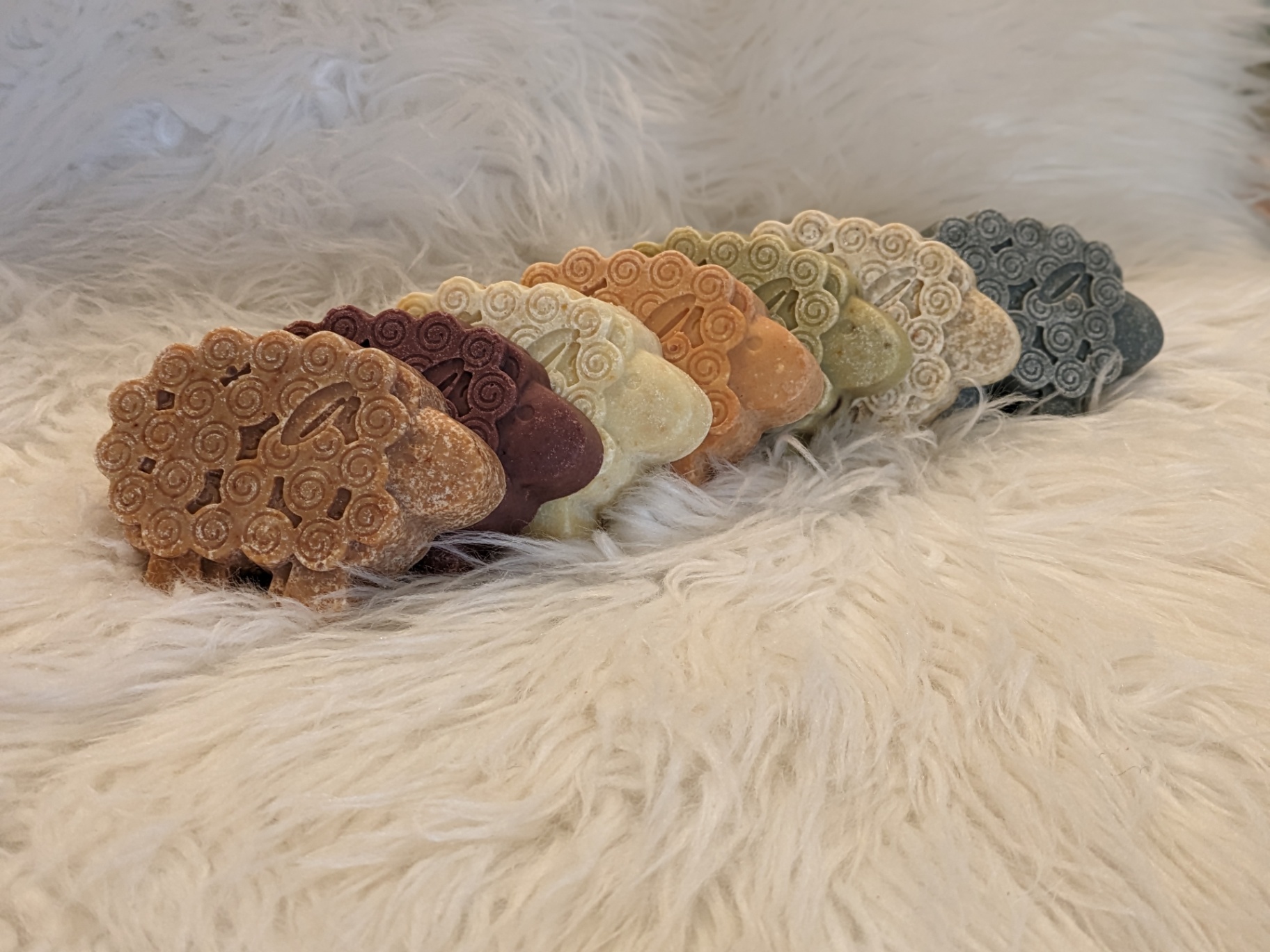
When we make our small-batch soap here at Scalise Family Sheep Farm, we use traditional cold-process methods that preserve more of the milk's beneficial compounds. The result is a bar that actually delivers on the promise of sheep milk's benefits for skin: not just a soap that has "sheep milk" listed somewhere on the ingredient label.
Putting It Into Practice
So how do you actually support your skin's microbiome with sheep milk? Here's our recommendation:
For daily cleansing, swap out your commercial soap for a sheep milk soap that uses real, farm-sourced milk. The Lavender Sheep Milk Soap is a customer favorite: lavender essential oil adds its own antimicrobial and calming properties to the mix.¹⁸
For targeted support, especially on dry patches, cracked hands, or irritated areas, follow up with a sheep milk skin balm. Our Frankincense Skin Balm combines the lipid-rich benefits of sheep milk with frankincense essential oil, which has been shown to have anti-inflammatory effects.¹⁹
The Bottom Line
Your skin isn't just a passive barrier: it's a living, breathing ecosystem that depends on the right balance of microorganisms to function properly. Commercial soaps loaded with synthetic detergents can disrupt this balance, leading to dryness, irritation, and chronic skin issues.
Farm-sourced sheep-milk soap offers a science-backed alternative. With its unique combination of prebiotic oligosaccharides, medium-chain fatty acids, bioactive peptides, and natural lactic acid, sheep milk provides exactly what your skin's microbiome needs to thrive.
Your skin's "second brain" will thank you.
References
- Grice, E. A., & Segre, J. A. (2011). The skin microbiome. Nature Reviews Microbiology, 9(4), 244-253.
- Byrd, A. L., Belkaid, Y., & Segre, J. A. (2018). The human skin microbiome. Nature Reviews Microbiology, 16(3), 143-155.
- Sanford, J. A., & Gallo, R. L. (2013). Functions of the skin microbiota in health and disease. Seminars in Immunology, 25(5), 370-377.
- Nakatsuji, T., & Gallo, R. L. (2012). Antimicrobial peptides: old molecules with new ideas. Journal of Investigative Dermatology, 132(3), 887-895.
- Dréno, B., et al. (2016). Microbiome in healthy skin, update for dermatologists. Journal of the European Academy of Dermatology and Venereology, 30(12), 2038-2047.
- Ananthapadmanabhan, K. P., et al. (2004). Cleansing without compromise: the impact of cleansers on the skin barrier and the technology of mild cleansing. Dermatologic Therapy, 17(s1), 16-25.
- Mukhopadhyay, P. (2011). Cleansers and their role in various dermatological disorders. Indian Journal of Dermatology, 56(1), 2-6.
- Park, Y. W., & Haenlein, G. F. (2021). Bioactive compounds in milk and dairy products. Wiley-Blackwell.
- Balthazar, C. F., et al. (2017). Sheep milk: physicochemical characteristics and relevance for functional food development. Comprehensive Reviews in Food Science and Food Safety, 16(2), 247-262.
- Huang, C. B., et al. (2011). Short- and medium-chain fatty acids exhibit antimicrobial activity for oral microorganisms. Archives of Oral Biology, 56(7), 650-654.
- Knox, S., & O'Boyle, N. M. (2021). Skin lipids in health and disease: A review. Chemistry and Physics of Lipids, 236, 105055.
- Włodarczyk, M., & Śliżewska, K. (2021). Efficiency of resistant starch and dextrins as prebiotics: A review of the existing evidence and clinical trials. Nutrients, 13(11), 3808.
- Superti, F. (2020). Lactoferrin from bovine milk: A protective companion for life. Nutrients, 12(9), 2562.
- Tang, S. C., & Yang, J. H. (2018). Dual effects of alpha-hydroxy acids on the skin. Molecules, 23(4), 863.
- Fredricks, D. N. (2001). Microbial ecology of human skin in health and disease. Journal of Investigative Dermatology Symposium Proceedings, 6(3), 167-169.
- Pullar, J. M., et al. (2017). The roles of vitamin C in skin health. Nutrients, 9(8), 866.
- Claeys, W. L., et al. (2013). Raw or heated cow milk consumption: Review of risks and benefits. Food Control, 31(1), 251-262.
- Cavanagh, H. M., & Wilkinson, J. M. (2002). Biological activities of lavender essential oil. Phytotherapy Research, 16(4), 301-308.
- Al-Yasiry, A. R. M., & Kiczorowska, B. (2016). Frankincense: therapeutic properties. Postępy Higieny i Medycyny Doświadczalnej, 70, 380-391.


