

For decades, the beauty industry operated under a "slash and burn" policy. If you had a breakout, you dried it out with harsh alcohols. If your skin looked dull, you scrubbed it with abrasive beads. The goal was to reach a state of "squeaky clean" purity. But as it turns out, that squeak was actually a cry for help from your skin’s most important defense system: the microbiome.
Today, the conversation has shifted. We aren’t just talking about "clear" skin; we are talking about resilient skin. This shift has led to the rise of microbiome-friendly skincare, a movement focused on nurturing the trillions of microscopic organisms that live on our skin surface. At Scalise Family Sheep Farm LLC, we’ve watched this trend unfold with a sense of "we told you so" (in the friendliest way possible). Why? Because the very ingredients we’ve used for years: specifically raw sheep milk: are scientifically designed by nature to support this delicate ecosystem.
Understanding the Skin Microbiome: Your Invisible Bodyguard
The skin microbiome is a complex community of bacteria, fungi, and viruses. According to research published in Nature Reviews Microbiology, this ecosystem plays a fundamental role in educating our immune system and protecting us against pathogens (Grice & Segre, 2011). When this balance is disrupted: a state known as dysbiosis: it can lead to conditions like eczema, acne, rosacea, and premature aging.
A healthy microbiome acts as a biological barrier. For example, Staphylococcus epidermidis, a "good" bacterium, produces antimicrobial peptides that inhibit the growth of "bad" bacteria like Staphylococcus aureus. When we use harsh, synthetic cleansers, we strip away these beneficial microbes, leaving the skin vulnerable and inflamed.

Why Sheep Milk is the Ultimate Microbiome Superfood
While goat milk and cow milk often get the spotlight, sheep milk is the quiet powerhouse of the dairy world. From a nutritional and chemical standpoint, it offers a profile that is uniquely suited for human skin health, particularly for those looking to maintain a healthy microbiome.
1. The Power of Lactic Acid: Gentle Exfoliation Meets Hydration
One of the key components of sheep milk is Lactic Acid, a naturally occurring Alpha Hydroxy Acid (AHA). In the world of dermatology, lactic acid is celebrated for its dual-action properties.
First, it acts as a gentle exfoliant. Unlike physical scrubs that can create micro-tears in the skin barrier, lactic acid dissolves the "glue" between dead skin cells, allowing them to shed naturally. Second, and perhaps more importantly for the microbiome, lactic acid is a powerful humectant. It helps the skin retain moisture by increasing the production of ceramides in the stratum corneum (Rawlings et al., 1996).
A hydrated environment with a slightly acidic pH (around 4.7 to 5.5) is the "Goldilocks zone" for beneficial bacteria. By providing a gentle source of lactic acid, our sheep milk soaps help maintain this acidic environment, known as the acid mantle, which prevents the overgrowth of harmful microbes.
2. The A2 Protein Advantage: Gentle for Sensitive Systems
The protein structure of milk matters more than most people realize. Most commercial cow milk contains A1 beta-casein, which has been linked to inflammatory responses in the body when digested. Sheep milk, however, contains primarily the A2 protein structure.
While most studies on A2 protein focus on gut health, the "gut-skin axis" is a well-documented phenomenon. Inflammation in the body often manifests on the skin. Furthermore, when applied topically, the A2 protein structure in sheep milk is significantly gentler and less likely to trigger the inflammatory markers associated with sensitive skin conditions. This makes it an ideal ingredient for those with compromised barriers who need to soothe their skin without disrupting their microbial balance.

3. Nutrient Density and Bioavailability
Sheep milk contains significantly higher concentrations of vitamins A, B, C, and E, as well as minerals like magnesium and zinc, compared to cow or goat milk. These nutrients are essential for skin repair and microbial health. Vitamin A (retinol), for instance, helps regulate cell turnover, while Vitamin E acts as a potent antioxidant, protecting the skin’s lipid barrier from oxidative stress: a major disruptor of the microbiome.
Farm-to-Skin: The Importance of Purity
In the quest for microbiome-friendly products, the source of the ingredients is just as important as the ingredients themselves. The modern skincare industry often relies on synthetic versions of natural compounds, which may contain preservatives or stabilizers that inadvertently harm beneficial bacteria.
At Scalise Family Sheep Farm LLC, we believe in "Farm-to-Skin" purity. Our Icelandic sheep graze on natural forage, ensuring that the milk used in our handcrafted balms and soaps is as nutrient-dense as possible.
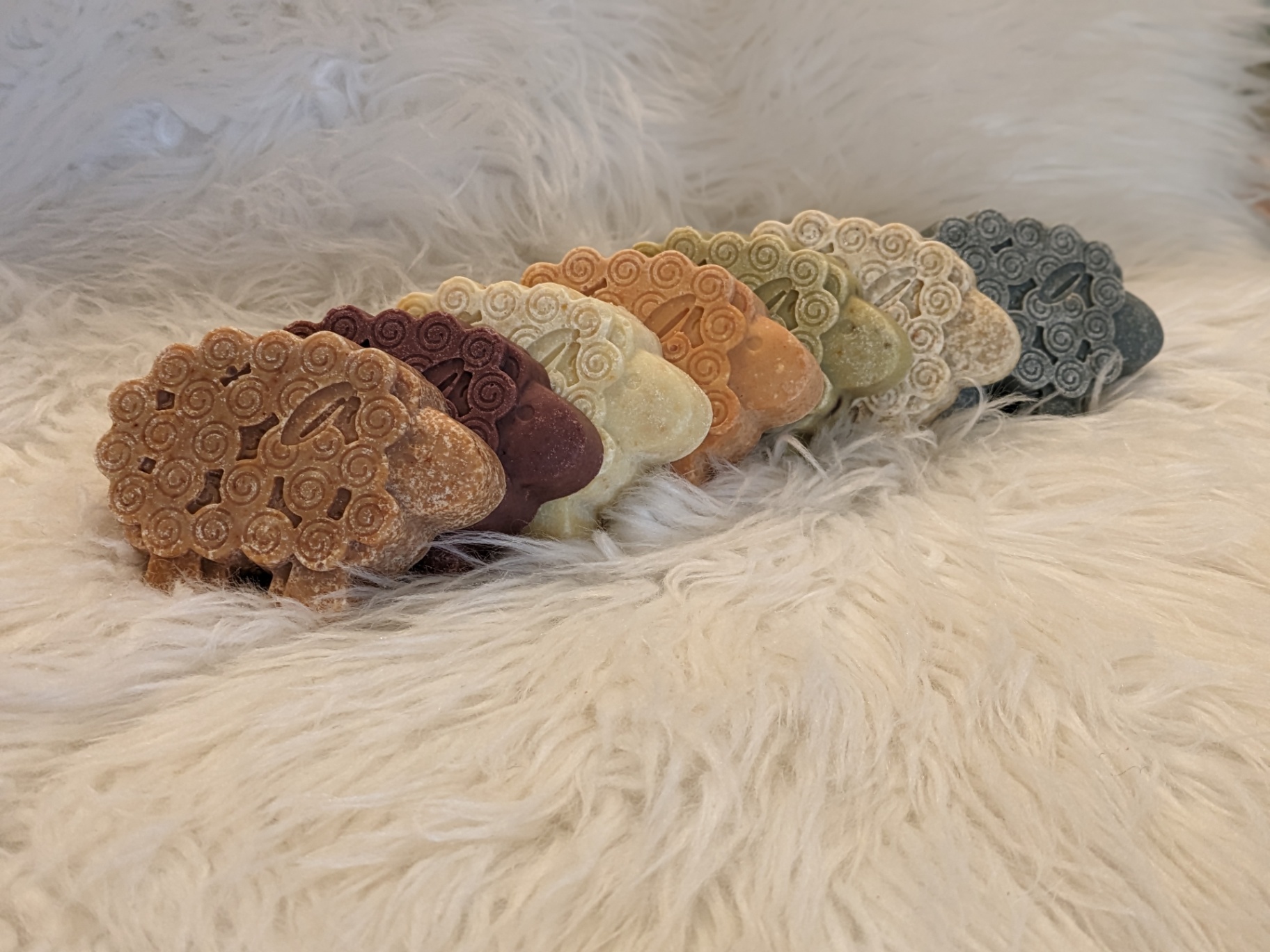
Icelandic sheep are a rare, ancient breed known for their hardiness and the exceptional quality of their milk. By keeping our processing minimal and our ingredient lists short, we ensure that the natural "probiotic" qualities of the milk remain intact. When you use our Frankincense Sheep Milk Soap, you aren't just cleaning your skin; you are feeding it.

How to Transition to a Microbiome-Friendly Routine
If you’re ready to stop stripping your skin and start supporting it, here is how you can incorporate sheep milk products into a microbiome-friendly routine:
- Ditch the Synthetic Detergents: Look for soaps made with saponified fats and oils rather than synthetic surfactants like SLS. Our Lavender Sheep Milk Soap provides a rich, creamy lather that cleanses without disrupting the lipid barrier.
- Moisturize with Purpose: Use balms that mimic the skin’s natural oils. Our Peony Skin Balm uses the fats from sheep milk to provide a protective layer that locks in moisture while allowing the skin to breathe.
- Be Patient: It takes about 28 days for your skin cells to turnover and for the microbiome to begin rebalancing. You might notice less redness and better moisture retention within the first week, but the long-term benefits of a healthy microbiome take time.
The Future of Skincare is Biological
The beauty industry is finally catching up to what small-scale farmers have known for generations: nature provides the best solutions. As we move further into 2026, the focus on the skin microbiome will only intensify. We are moving away from the "anti-bacterial" craze and toward a "pro-bacterial" future.
By choosing products that respect the skin's natural pH, provide essential nutrients, and avoid inflammatory proteins, you are doing more than just "washing your face." You are tending to a garden. And just like the pastures on our farm, when a garden is tended with care and natural ingredients, it flourishes.
Explore our full range of microbiome-friendly products on our products page and join the movement toward healthier, more resilient skin.
Academic References & Sources
- Grice, E. A., & Segre, J. A. (2011). The skin microbiome. Nature Reviews Microbiology, 9(4), 244-253. This study highlights the essential role microbes play in skin health and immune function.
- Rawlings, A. V., et al. (1996). Effect of lactic acid isomers on keratinocyte ceramide synthesis, stratum corneum lipid levels and keratinocyte proliferation. Archives of Dermatological Research, 288(7), 383-390. This research confirms the role of lactic acid in boosting skin hydration and barrier strength.
- Byrd, A. L., Belkaid, Y., & Segre, J. A. (2018). The human skin microbiome. Nature Reviews Microbiology, 16(3), 143-155. An updated look at how dysbiosis contributes to skin disease.
- Park, Y. W., & Haenlein, G. F. (2006). Handbook of Milk of Non-Bovine Mammals. Blackwell Publishing. This text provides the nutritional breakdown and mineral density of sheep milk compared to other dairy sources.
- Woodford, K. (2009). Devil in the Milk: Illness, Health and the Politics of A1 and A2 Milk. This work explores the inflammatory differences between A1 and A2 beta-casein structures.
- Krutmann, J. (2014). Pre- and probiotics for human skin. Journal of Dermatological Science, 75(2), 141-142. Discusses the topical application of dairy-derived nutrients for microbial health.


