

In an era dominated by synthetic laboratory formulations and complex industrial supply chains, a quiet revolution is taking place on the bathroom counters of discerning consumers. The "Farm-to-Skin" movement is more than just a marketing buzzword; it is a return to biologically compatible skincare that prioritizes nutrient density, environmental ethics, and the preservation of the skin’s delicate microbiome.
At Scalise Family Sheep Farm LLC, we believe that the most effective skincare doesn't come from a test tube, but from the synergistic relationship between high-quality livestock, healthy pastures, and meticulous artisanal processing. This guide explores the rigorous science behind farm-sourced ingredients and provides a roadmap for succeeding with a natural, farm-based regimen.
The Biological Superiority of Sheep Milk
While goat milk has long been a staple in natural skincare, sheep milk is emerging in the academic literature as a superior alternative for topical application. The efficacy of sheep milk in skincare is rooted in its unique lipid and protein profile.
Lipid Density and Absorption
Research indicates that sheep milk contains significantly higher concentrations of lipids: specifically triglycerides and polar lipids: than cow or goat milk (Park et al., 2007). These fats are crucial for maintaining the stratum corneum, the outermost layer of the skin. Unlike synthetic mineral oils which sit on top of the dermis, the fats in sheep milk are structurally similar to human sebum, allowing for deeper penetration and more effective delivery of fat-soluble vitamins.
Natural Alpha-Hydroxy Acids (AHAs)
Sheep milk is a potent source of lactic acid, a naturally occurring alpha-hydroxy acid. Academic studies have shown that lactic acid acts as a humectant, drawing moisture into the skin while simultaneously promoting the shedding of dead corneocytes (Mogosanu et al., 2015). This dual-action process improves skin texture without the inflammatory response often triggered by synthetic chemical peels.

Targeting Inflammatory Skin Conditions
For those suffering from eczema, psoriasis, or rosacea, farm-sourced skincare offers a "minimalist" intervention that reduces the risk of contact dermatitis associated with synthetic preservatives like parabens and phenoxyethanol.
The Microbiome Connection
The skin microbiome is a complex ecosystem of microorganisms that serves as a primary defense mechanism. Industrial soaps often utilize harsh surfactants (like Sodium Lauryl Sulfate) that strip these beneficial bacteria. In contrast, farm-sourced soaps, particularly those made with raw sheep milk, maintain a pH level that is closer to the skin’s natural "acid mantle" (typically between 4.5 and 5.5).
A study published in the Journal of Investigative Dermatology highlights that maintaining a healthy pH is critical for preventing the overgrowth of Staphylococcus aureus, a primary driver of eczema flares. By using sheep milk-based cleansers, users provide the skin with bioactive peptides that have demonstrated antimicrobial and antioxidant properties (Balthazar et al., 2017).

Botanical Synergies: Turmeric and Manuka Honey
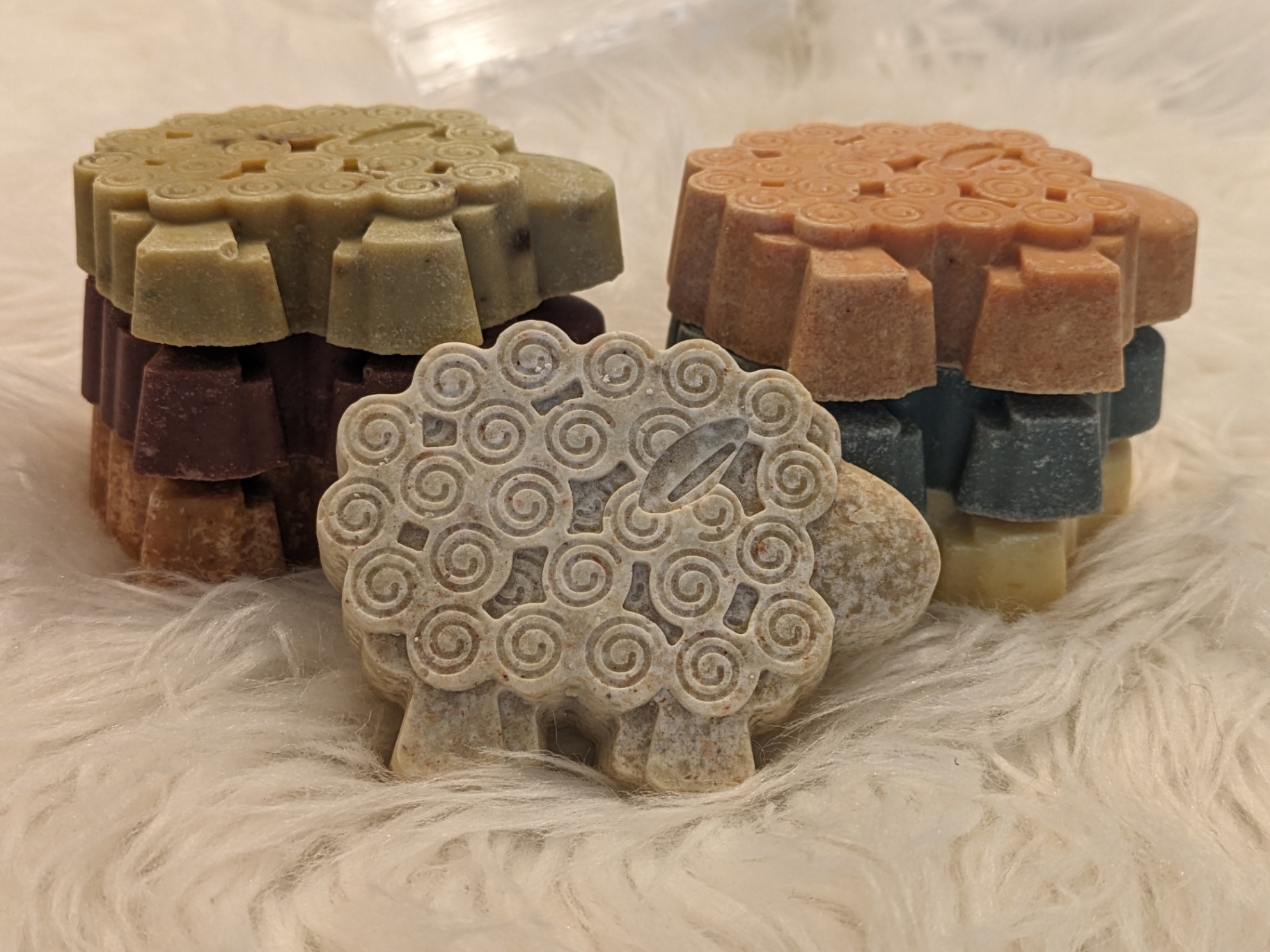
Many of our products at Scalise Family Sheep Farm LLC integrate botanical compounds to enhance the milk's natural benefits. For instance, our sheep milk soaps often feature Turmeric and Manuka honey.
- Turmeric (Curcumin): Peer-reviewed research suggests that topical curcumin can modulate inflammatory cytokines, making it a powerful tool for managing chronic skin inflammation (Vaughn et al., 2016).
- Manuka Honey: Known for its high Methylglyoxal (MGO) content, Manuka honey provides non-peroxide antibacterial activity, assisting in the healing of minor skin lesions and acne.
The Importance of the Icelandic Breed
Why do we specifically utilize Icelandic sheep for our skincare line? The answer lies in genetics and environmental adaptation. The Icelandic breed has remained largely unchanged for over a thousand years, preserving a high "solids" content in their milk. This translates to higher concentrations of:
- Vitamin A (Retinol): Essential for cellular turnover and collagen production.
- Vitamin E (Tocopherol): A lipid-soluble antioxidant that protects against oxidative stress and UV-induced damage.
- A2 Proteins: Unlike modern industrial dairy, our sheep produce milk that is naturally easier for the skin to recognize and process, minimizing the risk of allergic sensitivity.

Transitioning to a Farm-Sourced Routine
Success in skincare is defined by consistency and the quality of the "base" ingredients. If you are looking to overhaul your routine, we recommend a phased approach.
Step 1: The Cleanse
The most common mistake in skincare is over-cleansing. Most commercial soaps are actually synthetic detergents (syndets). Switch to a handcrafted sheep milk soap to cleanse without stripping the lipid barrier. Our soaps are produced using the cold-process method, which preserves the integrity of the vitamins and minerals within the milk.
Step 2: Targeted Moisture
For areas of extreme dryness or irritation, a dense balm is required. Our Rose Skin Balm utilizes farm-sourced fats and botanical oils to create an occlusive barrier. This is particularly effective for "slugging" (applying a thick layer of balm overnight) to repair a damaged skin barrier.
Step 3: Maintenance and Prevention
The farm-to-skin philosophy extends beyond topicals. Consider how your environment affects your skin. For example, the synthetic fragrances in laundry detergents and fabric softeners can be a major source of skin irritation. Using wool dryer balls is a simple way to reduce chemical exposure in your daily life.
The Science of Small-Batch Production
In industrial manufacturing, ingredients are often subjected to high-heat pasteurization and chemical homogenization, which can denature the very proteins and enzymes that make natural ingredients effective.
"Small-batch" is not just a term for artisanal charm; it is a necessity for nutrient density. By processing in small quantities, we can ensure that the bioactive components of the sheep milk remain intact. This mirrors the findings in food science where minimally processed whole foods retain a higher bioavailability of micronutrients compared to their ultra-processed counterparts.
Why Your Choice Matters: Ethics and Sustainability
When you choose products from a veteran-run, family business like Scalise Family Sheep Farm LLC, you are opting for a transparent supply chain.
- Pasture-Raised Integrity: Our sheep graze on natural forage, which directly impacts the fatty acid composition of their milk. Research shows that pasture-raised ruminants produce milk with higher levels of Omega-3 fatty acids and Conjugated Linoleic Acid (CLA), both of which are anti-inflammatory when applied to the skin.
- Reduced Carbon Footprint: By sourcing directly from the farm, we eliminate the massive carbon costs associated with global beauty conglomerates.

Conclusion: A Future Rooted in the Past
The ultimate guide to succeeding with farm-sourced skincare is to understand that your skin is a living organ, not a plastic surface. It requires nourishment, not just "treatment." By leveraging the complex biochemistry of sheep milk and the potency of botanical oils, you can achieve a level of skin health that synthetic products simply cannot replicate.
Explore our full collection and see the difference that a farm-to-skin approach can make for your complexion. For more information on our mission and our sheep, visit our About Us page or read more about why we chose sheep for our farm.
Academic References and Citations
- Balthazar, C. F., et al. (2017). "Sheep Milk: Physicochemical Characteristics and Therapeutic Potential." Journal of Dairy Science, Vol. 100, Issue 4.
- Mogosanu, G. D., et al. (2015). "Natural compounds used as cosmeceuticals: A review." International Journal of Pharmaceutics, Vol. 486.
- Park, Y. W., et al. (2007). "Physico-chemical characteristics of goat and sheep milk." Small Ruminant Research, Vol. 68.
- Vaughn, A. R., et al. (2016). "Effects of Turmeric (Curcuma longa) on Skin Health: A Systematic Review of the Clinical Evidence." Phytotherapy Research, Vol. 30, Issue 8.
- Proksch, E., et al. (2008). "The skin as a barrier: molecular mechanisms and clinical relevance." Experimental Dermatology, Vol. 17, Issue 12.


