

Hey there! Ben Scalise here from the Scalise Family Sheep Farm. If you’ve ever walked past a laundry room and caught a whiff of that heavy, floral, slightly "chemical" scent, you know exactly what traditional dryer sheets smell like. For a long time, we just accepted that as the smell of "clean." But out here on the farm, we tend to look at things a little differently. We like to know what’s going into our soil, our water, and: most importantly: what’s touching our skin.
Lately, it seems like a lot of folks are catching on. Did you know that nearly 50,000 people every month are searching for "wool dryer balls"? It turns out, people are tired of the waste and the mystery chemicals. They’re looking for efficiency, and they’re looking for a natural way to get the job done.
Today, I want to take a bit of a deep dive into the science behind these fuzzy little powerhouses. We’re going to talk about how they actually work (it’s not magic, it’s physics!), why they’re better for your health, and why the wool from our own Icelandic sheep makes such a massive difference.
The Physics of the "Clump": How Air Pockets Save You Money
If you’ve ever tossed a load of heavy towels into the dryer, you know the "clump" I’m talking about. Everything sticks together in one giant, damp ball, rotating in a heavy mass. This is the enemy of efficiency.
A 2021 study published in the journal Drying Technology (Tandfonline) looked closely at fabric and dryer sheet motion dynamics. When fabrics stick together, the hot air produced by your dryer just skims over the surface of the "clump." The moisture trapped in the middle has nowhere to go, which is why you often end up with a load that’s bone-dry on the outside and damp in the center.
This is where wool dryer balls come in. As they bounce around, they act as physical agitators. They wedge themselves between layers of clothing, lifting and separating the fabric. This creates what we call "air pockets."
By keeping the clothes separated, the hot air can circulate through the entire load, not just around it. The science shows that this mechanical separation can reduce drying time by up to 25%. If you’re doing several loads a week, that’s a lot of hours: and a lot of electricity: saved over the course of a year.

Chemical Coating vs. Physical Agitation
When you use a standard dryer sheet, you aren’t actually "softening" the fabric in a physical sense. What’s happening is chemical. Dryer sheets are coated in surfactants (usually quaternary ammonium compounds) and stearic acid (a type of fat). As the sheet heats up, that coating melts off and deposits a thin, waxy layer over your clothes.
That "softness" you feel is actually just a layer of lubrication. While it makes the fabric feel less scratchy, it also:
- Reduces Absorbency: This is why towels lose their ability to soak up water over time. They’re basically coated in wax!
- Irritates Skin: For folks with sensitive skin or eczema, those lingering fragrances and chemicals can be a nightmare.
- Pollutes Your Air: Dryers vent those chemical fragrances right out into the neighborhood.
Wool dryer balls take a completely different approach. They soften clothes through physical agitation. By gently "massaging" the fibers of your clothes as they tumble, they naturally loosen the stiffness without leaving a residue.
At Scalise Family Sheep Farm, we’re big believers in keeping things pure. It’s the same philosophy we use for our handcrafted sheep milk soaps. We believe your skin deserves better than a chemical cocktail, whether it’s coming from your soap or your bedsheets.
The Environmental Impact: Beyond the Energy Bill
We all want to save a few bucks on the utility bill, but the benefits of switching to wool go deeper than your wallet. Let’s talk about microfiber pollution.
A 2022 study in PLOS ONE highlighted a growing concern: tumble drying is a significant source of microfiber release into the environment. When fabrics are subjected to high heat for long periods, the fibers become brittle and break off, escaping through the dryer vent or ending up in our waterways.
Because wool dryer balls reduce drying time, they reduce the total "heat stress" your clothes endure. Shorter cycles mean less friction and less fiber breakage. Plus, unlike polyester-based dryer sheets that are tossed in the trash after one use, a good set of wool dryer balls can last for over 1,000 loads. That’s years of laundry without a single piece of waste going to the landfill.
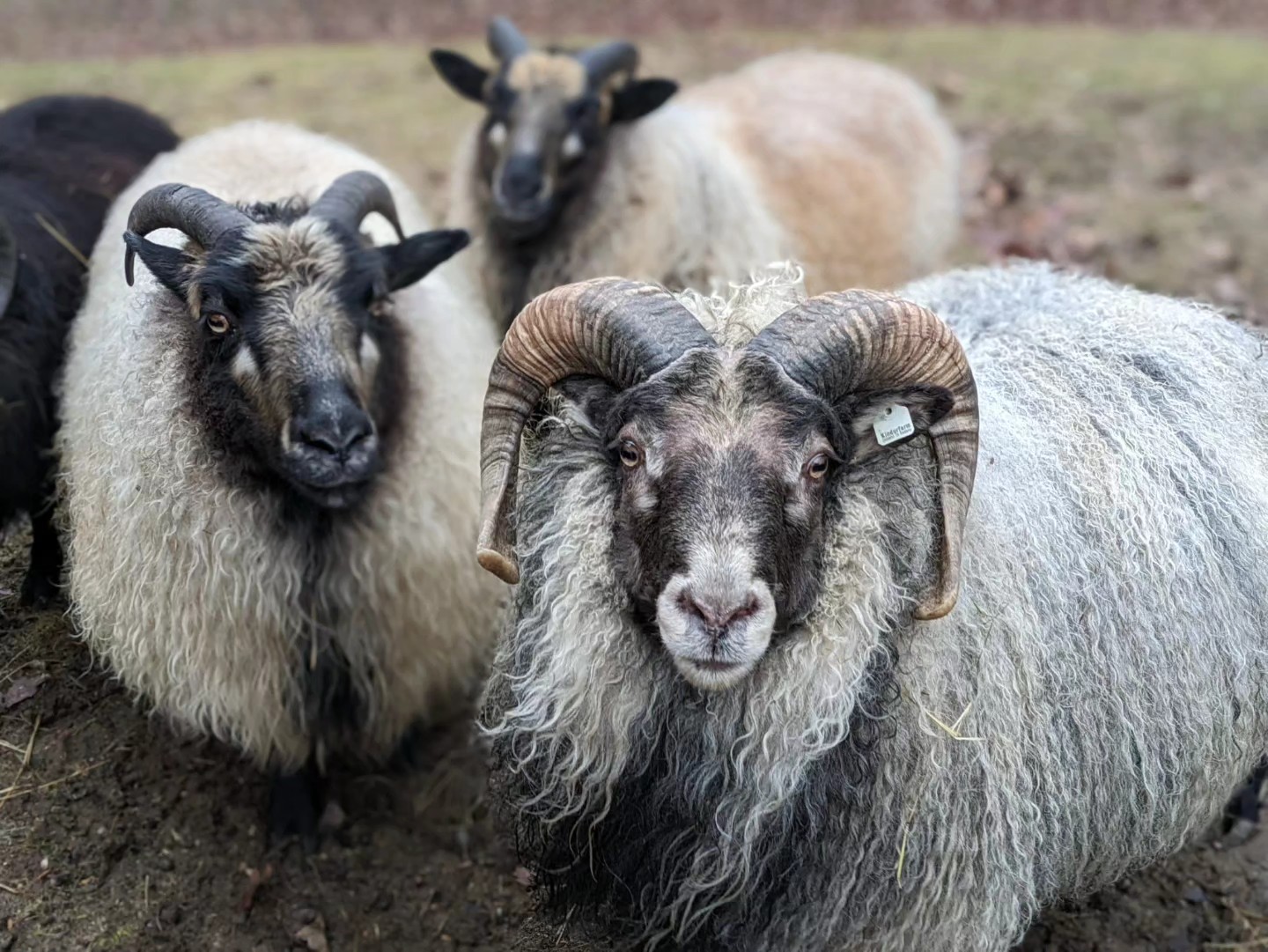
Why Icelandic Wool?
Now, I might be a little biased, but I think our Icelandic sheep produce some of the best wool in the world for this job. Icelandic sheep are a unique, ancient breed. Their fleece is "dual-coated," meaning it has a long, water-repellent outer layer (tog) and a fine, soft inner layer (thel).
When we felt that wool into a dryer ball, it creates a dense, durable, and slightly textured surface that is perfect for grabbing and separating laundry. These aren’t mass-produced in a giant factory; they are handcrafted with the same care we put into our family mission.
Because our wool is processed naturally, it retains a tiny bit of its natural lanolin. If you’ve read our post on lanolin in history, you know how incredible this substance is. While most of the lanolin is cleaned away during the felting process, the natural structure of the wool fiber remains intact, making our dryer balls more resilient and better at absorbing excess moisture during the early stages of the drying cycle.
How to Get the Most Out of Your Dryer Balls
Switching to wool dryer balls is pretty straightforward, but here are a few farm-tested tips to make them work even better:
- Don't Overload: For the balls to create those air pockets, they need room to move. If the dryer is packed to the gills, they’ll just get stuck in the middle.
- Use the Right Number: For small to medium loads, 3 balls usually do the trick. For those heavy-duty towel loads, toss in 6.
- Add Your Own Scent: If you miss the smell of "clean" laundry, just add a drop or two of high-quality essential oil (like lavender or lemon) to the balls. Let them sit for a few minutes before tossing them in so the oil doesn't spot your clothes.
- Static Control: Static usually happens when you over-dry your clothes. Since wool dryer balls speed up the process, try reducing your drying time settings. You’ll find you get soft, static-free clothes in a fraction of the time.

Final Thoughts from the Farm
At the end of the day, using wool dryer balls is about returning to a simpler, more efficient way of doing things. It’s a small change that has a big ripple effect: lower energy bills, fewer chemicals in your home, and less waste in our environment.
Whether you’re here because you’re a fan of our Icelandic sheep or you’re just looking for a way to make your laundry room a little more "green," we’re glad you’re looking into the science. It’s amazing what a little bit of wool and a lot of physics can do.
If you’re ready to ditch the dryer sheets and give our handmade wool dryer balls a try, your skin (and your wallet) will thank you. And while you're at it, feel free to check out our full collection of farm-fresh products. From our family to yours, happy laundering!
References and Further Reading
- Drying Technology Journal (2021). Fabric and dryer sheet motion dynamics: Impacts on energy efficiency and mechanical wear. Tandfonline.
- PLOS ONE (2022). Microfiber release from domestic clothes drying: An underestimated source of environmental pollution.
- Mason County PUD 3. Testing and Analysis of Wool Dryer Ball Efficiency in Residential Appliances.
- U.S. Department of Energy. Energy-Efficient Home Appliances and Laundry Best Practices.


