

If you step into the modern bathroom, you are likely greeted by an army of plastic bottles: a harsh foaming body wash packed with synthetic detergents, a separate liquid chemical exfoliant loaded with high-strength alpha-hydroxy acids, and a heavy post-shower lotion designed to patch up the dryness caused by the first two steps.
Enter the "skinimalism" movement: a growing cultural and dermatological rejection of 10-step routines in favor of streamlined, nutrient-dense self-care. But skinimalism is more than a minimalist aesthetic trend; it is a physiological necessity. Dermatological science increasingly demonstrates that over-cleansing and layering multiple synthetic formulations actively damage the outermost layer of your skin.
At Scalise Family Sheep Farm LLC, we raise our Icelandic sheep with a singular vision: to return skincare to its purest, most biologically compatible roots. Below, we examine the physiological toll of overworking your skin, how transepidermal water loss (TEWL) dictates skin health, and why a single bar of pure, handmade sheep milk soap from our collection can seamlessly replace three or more synthetic products in your daily routine.
The Physiological Toll: Stripping the Stratum Corneum
To understand why multi-step synthetic routines often backfire, we must look at the stratum corneum (SC): the outermost layer of the epidermis. Often described using a "brick-and-mortar" model, the SC consists of corneocytes (the "bricks") embedded within a lipid matrix (the "mortar") composed of ceramides, free fatty acids, and cholesterol.

Research in dermatological science highlights that the structural integrity of this lipid lamellar system is vital. When you wash with conventional, sulfate-heavy body washes or high-pH syndet bars, harsh surfactants strip away these essential native lipids. According to clinical evaluations on skin barrier function, lipid depletion directly compromises the epidermal barrier, triggering a cascade of negative effects:
- Spike in Transepidermal Water Loss (TEWL): TEWL is the passive diffusion of water from the dermis through the epidermis to the external environment. When the lipid mortar is eroded by synthetic detergents, TEWL increases sharply, leaving skin dehydrated, rough, and micro-fissured.
- Skin Microbiome Disruption: Commensal microorganisms residing on our skin: such as Staphylococcus epidermidis: rely on a balanced lipid environment and a slightly acidic surface pH. Harsh cleansers and synthetic antiseptics wipe out these beneficial microbes, which normally secrete sphingomyelinase to boost natural ceramide production and protect against inflammation.
- Compensatory Irritation: Stripped skin often reacts by either overproducing sebum (in acne-prone individuals) or experiencing severe chronic dryness, prompting consumers to buy more products (lotions, barrier creams, spot treatments) to fix the damage caused by the initial cleanser.
The 3-in-1 Powerhouse: How Pure Sheep Milk Soap Works
A truly traditional, cold-process handmade soap made with nutrient-dense farm-fresh milk operates entirely differently from industrial detergent bars. Instead of stripping the skin bare, a well-crafted sheep milk soap functions as a complete 3-in-1 shower essential.
1. Gentle, Non-Stripping Surfactant Cleansing
Traditional soap is created through saponification: joining natural plant oils with lye and nutrient-rich sheep milk. Unlike synthetic sodium lauryl sulfate (SLS) which aggressively denatures skin proteins, saponified oils combined with milk fats lift away dirt and excess sebum without dissolving the skin's structural proteins and essential lipids.
2. Natural Alpha-Hydroxy Acid (AHA) Mild Exfoliation
Chemical exfoliants found in liquid serums often use high concentrations of synthetic or aggressive acids that lower skin pH too rapidly, causing stinging and barrier breakdown. Sheep milk naturally contains lactic acid: a gentle, biocompatible AHA.
Skin microbes naturally secrete lactic acid to help regulate surface pH and hydration. The lactic acid present in sheep milk acts as a mild, buffering keratolytic agent. It encourages gentle cellular turnover without the harsh micro-tears of physical scrubs or the barrier-destroying potency of high-percentage chemical peels.
3. Deep Lipid Replenishment & Glycerin Retention
In industrial soap manufacturing, natural glycerin: a powerful humectant that draws moisture into the skin: is routinely stripped out and sold separately to be used in high-end commercial moisturizers.
In our small-batch, handcrafted Icelandic sheep milk soaps, 100% of the natural glycerin produced during saponification is retained in the bar. Furthermore, Icelandic sheep milk is exceptionally rich in short- and medium-chain fatty acids, proteins, and vitamins A, B, and D. As you cleanse, these natural butterfats deposit a micro-layer of nourishment onto the stratum corneum, actively reducing TEWL and locking in hydration before you even step out of the shower.
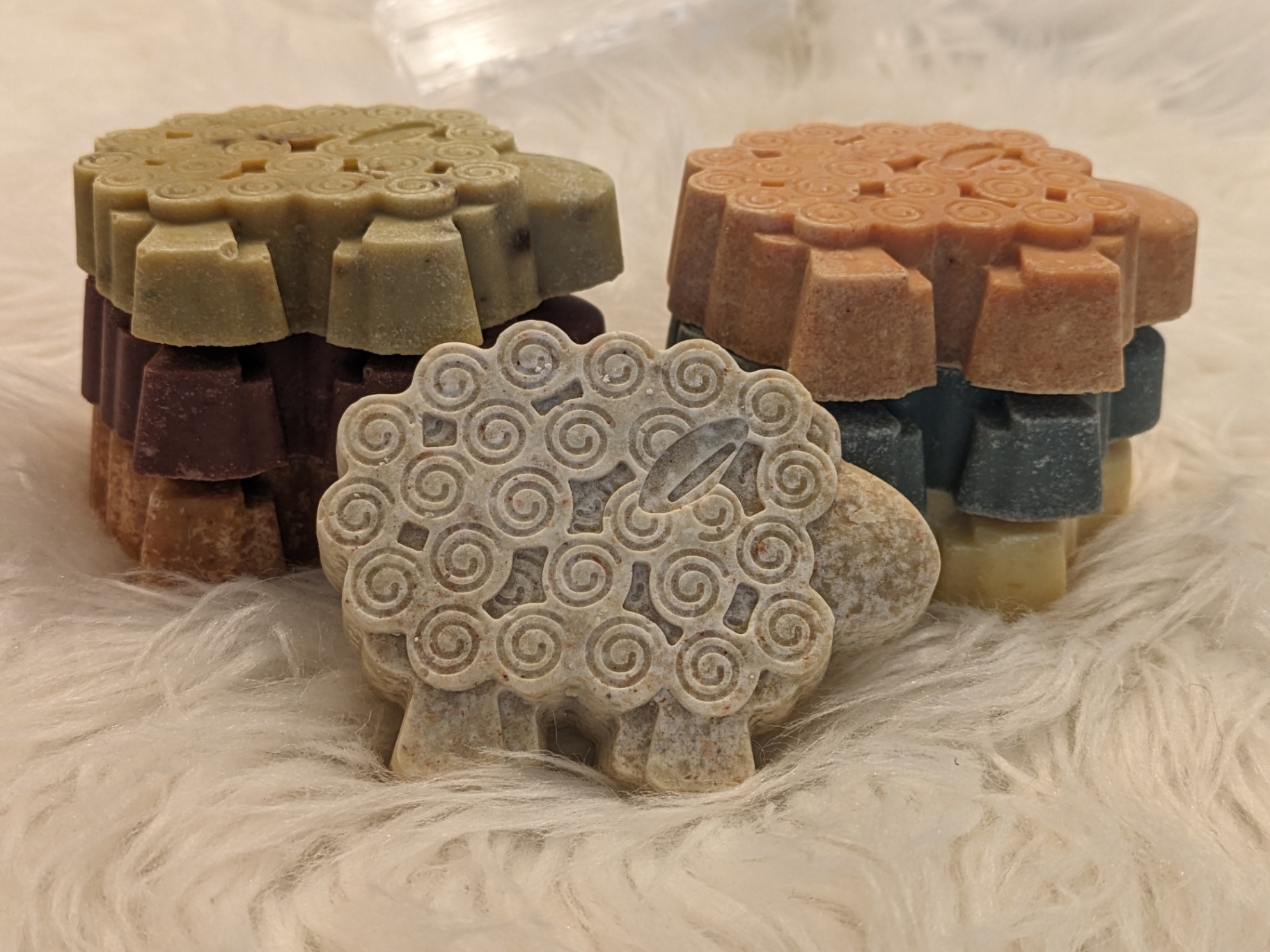
Comparing the Footprint: One Pure Bar vs. Three Synthetic Bottles
Switching to a minimalist routine doesn't just benefit your skin biology: it drastically lightens your environmental and financial footprint. Consider what an average multi-step shower regimen entails:
- Product 1: Synthetic Body Wash / Cleanser : Usually packaged in high-density polyethylene (HDPE) plastic, formulated with petroleum-derived surfactants, synthetic artificial colorants, and synthetic fragrances that can trigger contact dermatitis.
- Product 2: Liquid Chemical Exfoliant / Scrub : Often housed in complex pump bottles containing plastic microbeads or pulverized walnut shells that cause microscopic dermal abrasions.
- Product 3: Post-Shower Synthetic Lotion : Required to artificially restore moisture after the first two products strip your skin's natural barrier.
By contrast, a single bar of Scalise Family Sheep Farm soap: wrapped minimally or packaged in recyclable paper: replaces all three:
- It cleanses thoroughly yet gently.
- It gently exfoliates via natural lactic acid without disrupting epidermal pH.
- It moisturizes and conditions using farm-fresh sheep milk lipids and retained glycerin, making heavy synthetic lotions redundant for daily maintenance.
To explore the unique heritage behind our flock, read more on our family farming philosophy and discover the deep scientific skin benefits of our sheep milk.
The Scalise Family Commitment: Pure, Simple, Nutrient-Dense
As a veteran-owned, family-operated farm, our approach to agriculture and skincare is rooted in honesty and stewardship. We raise our Icelandic sheep right here on our pasture, managing the entire lifecycle from hoof to finished bar.

We do not use synthetic fragrances, artificial colorants, parabens, phthalates, or chemical detergents. Every batch of soap is handcrafted with patience, allowing the rich, vitamin-packed milk of our own flock to shine through. When you simplify your routine down to a single, high-integrity bar of soap, you stop fighting your skin's biology and start supporting it.
Frequently Asked Questions
Can a bar of soap really replace body lotion?
For many people with normal to mildly dry skin, the high butterfat content and naturally retained glycerin in sheep milk soap provide enough emollient conditioning that heavy post-shower body lotions become unnecessary. If you have severely compromised skin or eczema, you can pair your shower with one of our all-natural skin balms for targeted moisture locking.
Why is sheep's milk better for skin than cow's milk or water?
Sheep's milk contains significantly higher concentrations of total solids, butterfats, proteins, and essential minerals compared to cow or goat milk. These rich lipids create a denser, creamier lather that delivers deep nourishment and superior moisture retention without synthetic additives.
Is lactic acid in milk safe for sensitive skin?
Yes. Unlike concentrated, lab-synthesized chemical peels, the naturally occurring lactic acid in fresh sheep milk is buffered by amino acids and rich fats, making it exceptionally gentle and compatible with the skin's natural acid mantle.

Ready to embrace skinimalism and give your skin a break from synthetic overload? Explore our complete collection of all-natural handmade sheep milk soaps today, and experience what true farm-to-face skincare can do for your barrier health.
Academic References & Scientific Sources
- Ananthapadmanabhan KP, Moore DJ, Subramanyan K, Misra M, Meyer F. Cleansing without compromise: the impact of cleansers on the skin barrier and the technology of mild cleansing. Dermatologic Therapy. 2004;17 Suppl 1:16-25.
- Ananthapadmanabhan KP, Mukherjee S, Chandar P, et al. Effect of soaps and detergents on epidermal barrier function. Clin Dermatol. 2012;30(3):297-300. doi:10.1016/j.clindermatol.2011.08.021.
- Rawlings AV, Matts PJ. Stratum corneum moisturization at the molecular level: an update in relation to the dry skin cycle. J Invest Dermatol. 2005;124(6):1099-1110. doi:10.1111/j.0022-202X.2005.23744.x.
- Proksch E, Brandner JM, Jensen JM. The skin: an indispensable barrier. Exp Dermatol. 2008;17(12):1063-1072. doi:10.1111/j.1600-0625.2008.00786.x.
- Fluhr JW, Darlenski R, Surber C. Glycerol and the skin: holistic approach to its origin and functions. Br J Dermatol. 2008;159(1):23-34. doi:10.1111/j.1365-2133.2008.08643.x.
- Elias PM. Stratum corneum defensive functions: an integrated view. J Invest Dermatol. 2005;125(2):183-200. doi:10.1111/j.0022-202X.2005.23668.x.
- Grice EA, Segre JA. The skin microbiome. Nat Rev Microbiol. 2011;9(4):244-253. doi:10.1038/nrmicro2537.
- Byrd AL, Belkaid Y, Segre JA. The human skin microbiome. Nat Rev Microbiol. 2018;16(3):143-155. doi:10.1038/nrmicro.2017.157.
- Lambers H, Piessens S, Bloem A, Pronk H, Finkel P. Natural skin surface pH is on average below 5, which is beneficial for its resident flora. Int J Cosmet Sci. 2006;28(5):359-370. doi:10.1111/j.1467-2494.2006.00344.x.
- Korting HC, Braun-Falco O. The effect of detergents on skin pH and its consequences. Clin Dermatol. 1996;14(1):23-27. doi:10.1016/0738-081X(95)00107-N.
- Green BA, Yu RJ, Van Scott EJ. Clinical and cosmeceutical uses of hydroxyacids. Clin Dermatol. 2009;27(5):495-501. doi:10.1016/j.clindermatol.2009.06.023.
- Smith WP. Epidermal and dermal effects of topical lactic acid. J Am Acad Dermatol. 1996;35(3 Pt 1):388-391. doi:10.1016/S0190-9622(96)90608-7.
- Tang SC, Yang JH. Dual effects of alpha-hydroxy acids on the skin. Molecules. 2018;23(4):863. doi:10.3390/molecules23040863.
- Tupker RA, Pinnagoda J, Coenraads PJ, Nater JP. The transient and cumulative effect of sodium lauryl sulphate on the epidermal barrier assessed by transepidermal water loss: inter-individual variation. Acta Derm Venereol. 1990;70(1):1-5.
- Voegeli R. The effect of surfactants on the skin barrier and the role of mild cleansing. Skin Pharmacol Physiol. 2009;22 Suppl 1:1-8.
These references provide peer-reviewed support for the article's discussion of stratum corneum barrier structure, transepidermal water loss (TEWL), surfactant-related barrier disruption, the importance of skin-surface acidity for the microbiome, and the gentle exfoliating and hydration-related roles of lactic acid.


