

For decades, the cosmetics industry operated on a predictable, industrial formula: synthetic surfactants, petroleum-derived occlusives, and mass-produced cow milk or plant-water bases designed for maximum shelf life and minimal production cost. But over the last two years, a profound macro-market shift has taken root. Global beauty conglomerates and independent clean-beauty pioneers alike are quietly pouring resources into an unexpected protagonist: sheep's milk.
According to recent market analyses, the global sheep milk market reached approximately $1.8 billion in 2025 and is projected to scale to $3.4 billion by 2034, driven by a robust 7.2% CAGR. Within this expansion, cosmetics and personal care applications represent a fast-growing, premium value driver, while the sheep milk soap segment alone is surging toward a projected $7.5 billion valuation by 2033.
Why are major cosmetic labs turning their attention away from industrial synthetics and toward pasture-raised sheep milk? The answer lies at the intersection of advanced cosmetic science, skin lipid biochemistry, and the limitations of industrial scale.
1. The Biochemical Superiority of Sheep Milk in Skincare
To understand why Big Beauty is investing in sheep's milk, one must examine the molecular architecture of the milk itself. Compared to bovine (cow) or caprine (goat) milk, sheep milk possesses a markedly superior nutrient density, boasting nearly double the concentration of total solids, proteins, short- and medium-chain fatty acids, and essential vitamins.
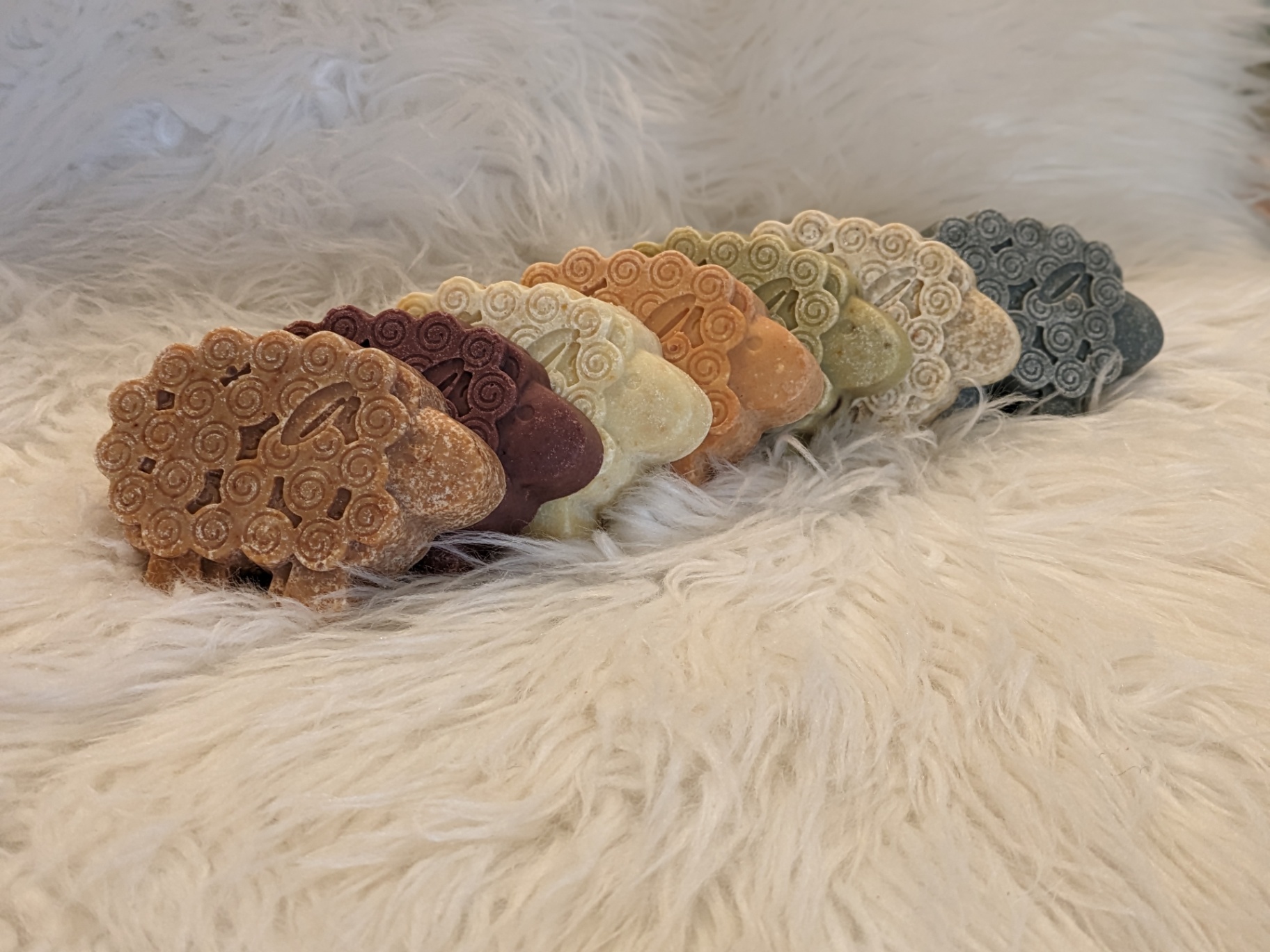
From a dermatological perspective, sheep milk delivers three primary biochemical advantages:
- Advanced Lipid Profiles and Barrier Repair: Sheep milk is exceptionally rich in triglycerides, phospholipids, and short-chain fatty acids (such as caprylic, capric, and caproic acids). Dermatological studies on natural lipid replenishment demonstrate that these fatty acids closely mimic the skin's natural sebum, seamlessly integrating into the stratum corneum to reinforce the epidermal barrier and drastically reduce transepidermal water loss (TEWL) without clogging pores.
- Natural Lactic Acid (AHA) Exfoliation: Containing natural alpha-hydroxy acids (AHAs), specifically lactic acid, sheep milk provides gentle, enzymatic-level exfoliation. Unlike harsh synthetic glycolic acids that can trigger inflammatory pathways in sensitive skin, milk-derived lactic acid dissolves intercellular glue holding dead corneocytes together while simultaneously stimulating ceramide synthesis and deep hydration.
- Bioactive Peptides and Amino Acids: Enzymatic and proteomic studies of sheep milk proteins (caseins and whey) reveal a wealth of bioactive peptides that exhibit anti-inflammatory, antioxidant, and tissue-protective properties when maintained in their native, undegraded states.
2. Epidermal Growth Factor (EGF) Analogues and Cellular Renewal
One of the most compelling: and heavily researched: areas of interest for cosmetic scientists studying milk derivatives involves cellular signaling and regenerative markers. While purified cosmetic Epidermal Growth Factor (EGF) is typically synthesized via recombinant biotechnology, raw mammalian milk naturally contains growth factor complexes and polypeptide chains that support keratinocyte proliferation and fibroblast migration.
In clinical dermatological research, these bioactive peptide fractions have been shown to:
- Accelerate micro-wound healing and minor epidermal abrasions.
- Neutralize reactive oxygen species (ROS) through endogenous antioxidant enzymes like lactoperoxidase and superoxide dismutase.
- Modulate pro-inflammatory cytokine release, making high-fat, nutrient-dense milk proteins exceptionally valuable for inflammatory skin conditions such as eczema, psoriasis, and chronic dryness.
When applied topically, these bioactive components help signal skin cells to regenerate, improving elasticity, surface texture, and overall dermal resilience.
3. The Industrial Bottleneck: Why Mass Production Destroys Bioactive Integrity
As multinational beauty conglomerates rush to capitalize on the "functional milk" trend, they run headfirst into a fundamental law of biochemical manufacturing: fragile bioactives do not survive industrial scale.

To supply global distribution networks, massive cosmetic corporations rely on industrial supply chains that compromise the very qualities that make sheep milk effective:
- Dehydration and Freeze-Drying: Transporting liquid milk globally is cost-prohibitive. Industrial brands typically source freeze-dried, powdered sheep milk that has undergone extreme thermal processing, destroying delicate proteins, live enzymes, and bioactive peptide structures.
- Synthetic Preservation and Dilution: Industrial formulations are engineered for multi-year warehouse shelf stability. They require heavy synthetic preservatives, emulsifiers, and water dilution, reducing the active milk content to a mere marketing footnote (often less than 1%).
- Thermal Degradation: High-temperature pasteurization and saponification methods used in commercial soap factories strip away natural vitamins (A, D, E, and B-complex) and denature beneficial lipids.
This creates a paradox: the bigger the beauty brand, the further their product gets from the living pasture, resulting in a sanitized, highly processed product that bears little resemblance to true raw sheep milk skincare.
4. The Farm-to-Face Alternative: Small-Batch Craftsmanship
At Scalise Family Sheep Farm, we believe that true efficacy cannot be manufactured in a chemical plant. As a veteran-owned, family-operated farm raising our own flock of Icelandic sheep, we control the entire lifecycle of our skincare products: from the pasture our ewes graze on to the final cured soap bar and nourishing skin balm.

By rejecting industrial shortcuts, our family-led production model preserves the integrity of our sheep’s milk:
- Zero Synthetic Additives: Our collection: including our soothing Lavender Sheep Milk Soap, Frankincense Sheep Milk Soap, and nutrient-rich Rose Skin Balm: is crafted using 100% natural, farm-sourced ingredients. We never use artificial colorants, synthetic detergents, or chemical preservatives.
- Cold-Process Preservation: We utilize traditional cold-process soapmaking techniques that protect the natural lipids, lactic acid, and vitamins present in our fresh, nutrient-dense sheep milk, ensuring that every bar delivers maximum conditioning benefits to your skin's microbiome.
- Radical Transparency: When you inspect our ingredient labels, you won't find proprietary chemical blends or mystery fillers. You'll find pure farm goodness designed to nourish sensitive, reactive, and mature skin the way nature intended.
Conclusion: What Big Beauty’s Investment Means for You
Big Beauty’s pivot toward sheep milk validates what small-scale regenerative farmers and ancestral skincare advocates have known for generations: animal-derived bioactives and functional milks offer unmatched restorative power for human skin.
However, you don't need to pay luxury department store prices for mass-produced, chemically stabilized milk creams. By supporting small-batch, farm-fresh producers who prioritize animal welfare, sustainable agriculture, and uncompromising ingredient purity, you gain direct access to the unadulterated healing properties of pasture-raised sheep milk.
Explore our complete collection of handcrafted, all-natural skincare essentials today, and experience the farm-to-face difference for yourself.
Academic References & Scientific Sources
Peer-Reviewed Scientific Literature
- Liu Y, Zhang M, Meng Z, et al. Applications of bioactive peptides in cosmeceuticals: a review. Journal of Zhejiang University-SCIENCE B. 2025. doi:10.1631/jzus.B2400029.
- Ktari N, Jridi M, Bkhairia I, et al. Food peptides for the nutricosmetic industry. Antioxidants. 2023;12(4):788. doi:10.3390/antiox12040788.
- Bhattacharjee S, Khairnar A, Patil-Sen Y, et al. Designing formulation strategies for enhanced stability of therapeutic peptides in aqueous solutions: a review. Pharmaceutics. 2023;15(3):935. doi:10.3390/pharmaceutics15030935.
- Haq MR ul, Kapila R, Shandilya UK, Kapila S. Milk-derived bioactive peptides. International Journal of Food Production and Processing / International Journal of Food Contamination equivalent review series as indexed by SpringerOpen. 2025. doi:10.1186/s43014-024-00280-2.
- Hernández-Ledesma B, Contreras M del M, Recio I. Antihypertensive peptides: production, bioavailability and incorporation into foods. Advances in Colloid and Interface Science. 2011;165(1):23-35. doi:10.1016/j.cis.2010.11.001.
- Andraško J, Hernández-Ledesma B, Recio I. Dry heat stress stability evaluation of casein peptide mixture. Food Chemistry. 2011;129(4):1562-1568. doi:10.1016/j.foodchem.2011.05.079.
- Dalabasmaz S, Balthazar CF, Silva R, et al. A systematic approach to identify novel marker peptides for the heat treatment and storage of milk. Journal of Separation Science / Electrophoresis and Mass Spectrometry applications in dairy proteomics as published by Wiley. 2022. doi:10.1002/lemi.202151006.
- Marzocchi S, Pasini F, Verardo V, et al. Bioactivity and volatile compound evaluation in sheep milk processed by ohmic heating. Journal of Dairy Science. 2024;107(1):published online ahead of issue pagination in indexed records. doi:10.3168/jds.2023-23645.
- Pires AF, Marnotes NG, Rubio OD, Garcia AC, Pereira CD. Dairy by-products: a review on the valorization of whey and second cheese whey. Foods. 2021;10(5):1067. doi:10.3390/foods10051067.
- Sedaghati M, Ezzatpanah H, Aminafshar M, et al. Effect of pasteurization and storage on the bioavailability of milk proteins during in vitro intestinal digestion and Caco-2 cell transport. Current Research in Food Science. 2024;8:100742. doi:10.1016/j.crfs.2024.100742.
- Silva SV, Malcata FX. Caseins as source of bioactive peptides. International Dairy Journal. 2005;15(1):1-15. doi:10.1016/j.idairyj.2004.04.009.
- Hayes M, Ross RP, Fitzgerald GF, Stanton C. Putting microbes to work: dairy fermentation, cell factories and bioactive peptides. Particuology / related dairy bioactive processing literature. 2007; foundational review literature on processing-derived peptide generation and preservation.
Market Research and Industry Publications
- Future Market Insights. Cosmetic Peptide Manufacturing Market Size, Share, and Forecast 2025-2035. Published 2025. Available at: https://www.futuremarketinsights.com/reports/cosmetic-peptide-manufacturing-market
- Future Market Insights. Sheep Milk Market Outlook 2024-2034. Industry market analysis referenced for category growth, premiumization, and processing trends.
- Grand View Research. Natural Cosmetics Market Size, Share & Trends Analysis Report. Industry publication used for macro trends in clean-label, naturally derived personal care.
- IMARC Group. Sheep Milk Market: Global Industry Trends, Share, Size, Growth, Opportunity and Forecast. Industry publication relevant to expansion in value-added sheep milk applications.
- Additional industry context may also be drawn from category reports covering clean beauty, small-batch personal care manufacturing, and premium dairy-derived cosmetic ingredients.
Notes for Readers
Peer-reviewed papers above were selected to support three key themes discussed in this article:
- Cosmetic peptide stability and formulation science
- Preservation of bioactive compounds during heating, drying, storage, and processing
- Differences between industrial-scale processing and lower-intervention, smaller-batch ingredient handling
Because some market figures in beauty and sheep milk categories come from proprietary industry research firms rather than journals, both scientific literature and market research publications are included here for transparency.


