

For years, goat milk has been the "GOAT" (Greatest of All Time) in the world of natural skincare. You see it everywhere: from boutique shops to big-box retailers. But here at Scalise Family Sheep Farm LLC, we’ve always known a secret that science is finally starting to shout from the rooftops: Sheep milk is actually the nutritional heavyweight champion of the dairy world.
If you’re looking for nutrient-rich skincare that actually moves the needle for your skin health, it’s time to look past the goat and toward the sheep. While both milks are incredible alternatives to harsh chemicals, the "bioactive" profile of sheep milk: especially from our Icelandic flock: offers a level of skin repair and hydration that goat milk simply can't match.
Let’s dive into the heavy-hitting research to see why sheep-milk soap is the superior choice for your skin.
The Nutritional Breakdown: By the Numbers
When we talk about "nutrient-rich" skincare, we aren't just using a marketing buzzword. We’re talking about the actual concentration of fats, proteins, and minerals. According to research published in Frontiers in Nutrition and MDPI, sheep milk is significantly more "dense" than both goat and cow milk.
| Nutrient (per 100g) | Sheep Milk | Goat Milk |
|---|---|---|
| Fat (Lipids) | ~7.1g | ~3.8g |
| Protein | ~5.5g | ~3.4g |
| Calcium | ~193mg | ~134mg |
| Vitamin A | Higher | Moderate |
| Energy (kcal) | 108 | 69 |
Why This Matters for Your Skin
The higher fat content (approximately 7.1g/dL) is the standout feature here. In skincare, those fats are known as lipids. Your skin’s natural barrier is composed of lipids that lock in moisture and keep out irritants. Because sheep milk has nearly double the fat content of goat milk, our sheep milk soaps provide a much more intensive moisturizing experience.

The Science of Fat Globules and Absorption
One of the most fascinating aspects of sheep milk is the structural difference in its fat globules. Academic studies on milk metabolomics highlight that sheep milk contains smaller, more uniform fat globules compared to cow milk, and a unique lipid profile compared to goat milk.
In a study featured in the journal Nutrients (MDPI), researchers noted that the high concentration of medium-chain triglycerides (MCTs) in sheep milk allows for better topical absorption. These smaller fat particles can more easily penetrate the skin's surface, delivering nutrients deeper into the epidermis rather than just sitting on top.
Furthermore, sheep milk is naturally homogenized. This means the cream doesn't separate as easily, keeping the "good stuff" evenly distributed throughout every bar of soap we make. When you use a product like our Frankincense Sheep Milk Soap, you’re getting a consistent delivery of these lipids every time you lather up.

Bioactive Compounds: The "Metabolomics" of Sheep Milk
"Metabolomics" is the scientific study of the small molecules (metabolites) left behind by biological processes. When researchers study the metabolomics of sheep milk, they find a treasure trove of bioactive compounds. These are extra-nutritional constituents that typically occur in small quantities but have a significant impact on health.
1. Lactic Acid and Natural Exfoliation
Sheep milk is naturally high in lactose. When used in soap making, the process helps highlight the lactic acid: a gentle Alpha Hydroxy Acid (AHA). Lactic acid is the gold standard for treating Keratosis Pilaris (those tiny bumps on the back of arms) because it dissolves the "glue" holding dead skin cells together without causing inflammation.
2. High Zinc and Selenium Content
Zinc is a powerhouse for skin repair. It’s an anti-inflammatory mineral that helps with wound healing and acne. Sheep milk contains significantly higher levels of Zinc and Selenium compared to goat milk. These minerals act as antioxidants, protecting your skin from environmental stressors and UV damage.
3. Rich in Vitamins A, B, and E
- Vitamin A (Retinol): Known for its anti-aging properties and its ability to encourage healthy skin cell production.
- Vitamin B12 and Riboflavin: Support skin tone and reduce redness.
- Vitamin E: A potent antioxidant that helps with moisture retention.
For a deep dive into how animal-based ingredients have been used for centuries to heal the skin, check out our article on Lanolin in History: How Ancient Cultures Used Wool Wax for Healing.
Sheep Milk vs. Goat Milk for Sensitive Skin
A common question we get at the farm is: "Is it better for eczema or rosacea?"
While goat milk is excellent because its pH is close to human skin, sheep milk offers a more "protective" approach. Because of the higher protein and fat content, sheep milk creates a more robust creamy lather. This lather acts as a buffer, preventing the skin from losing its natural oils during the cleansing process.
Research in the Journal of Dairy Science suggests that the specific proteins in sheep milk (caseins and whey proteins) have bioactive peptides that may have antimicrobial and anti-inflammatory effects. This makes our farm-sourced products particularly effective for those struggling with dry, inflamed skin conditions.
Why "Farm-Sourced" Quality Matters
Not all sheep milk is created equal. The nutrient density of the milk depends heavily on the diet and well-being of the sheep. At Scalise Family Sheep Farm LLC, our Icelandic sheep graze on high-quality forage, which directly impacts the fatty acid composition of the milk.
When you buy mass-produced "milk soaps," the milk is often powdered or highly processed, which can degrade the bioactive compounds. Our process is different. We use fresh milk from our own flock to ensure that the vitamins and proteins remain intact. This "farm-to-face" approach isn't just a gimmick: it’s a commitment to maintaining the integrity of the science we’ve discussed.
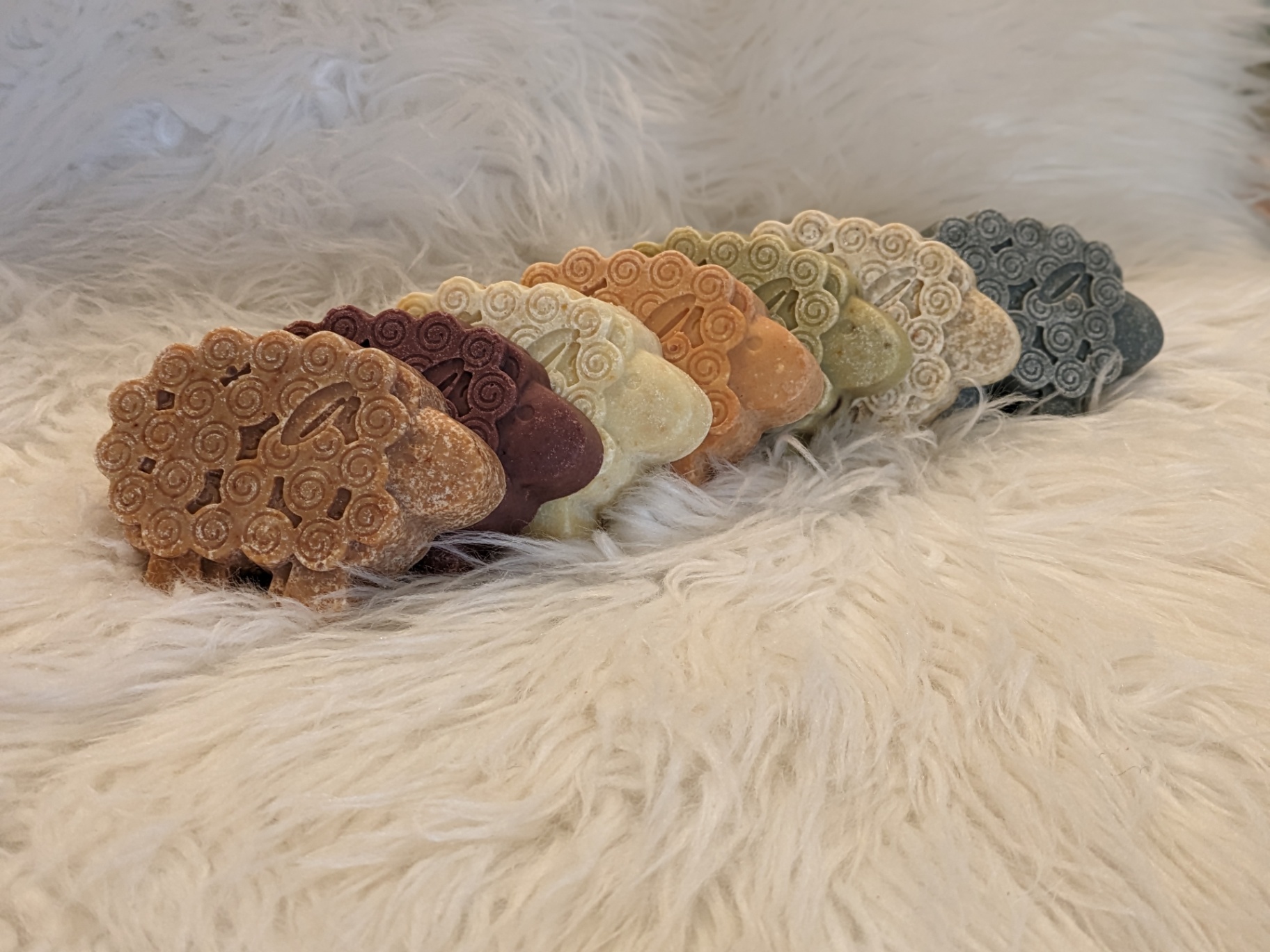
Whether you are trying our Rose Sheep Milk Soap for a luxurious floral experience or our Matcha Latte Soap for an antioxidant boost, you are getting the full spectrum of sheep milk benefits.
The Verdict: Why We Choose Sheep
The academic consensus is clear: if you compare the raw data, sheep milk is objectively more nutrient-dense than goat milk. It has more fat to moisturize, more protein to repair, and more minerals to protect.
While goat milk is a fine ingredient, sheep milk is a skincare powerhouse. It’s the difference between a standard moisturizer and a deep-conditioning treatment.

Summary of Benefits for Your Skin:
- Deep Hydration: Double the fat content of goat milk for a stronger moisture barrier.
- Gentle Exfoliation: Natural lactic acid helps smooth rough patches and Keratosis Pilaris.
- Anti-Inflammatory: High levels of Zinc and Selenium to soothe redness and irritation.
- Rapid Absorption: Unique fat globule structure allows nutrients to penetrate effectively.
If you’re ready to see the difference that high-science, farm-sourced skincare can make, browse our full collection of sheep milk products. From our family farm to your home, we’re proud to bring you the best that nature: and science: has to offer.
Have questions about which bar is right for your skin type? Feel free to reach out to us or read what other customers are saying in our reviews section.
Academic References & Further Reading:
- Balthazar, C. F., et al. (2017). "Sheep Milk: Physicochemical Characteristics and Therapeutic Potential." Frontiers in Nutrition.
- Pazzola, M., et al. (2020). "Comparison of Fat and Protein Composition between Sheep and Goat Milk." MDPI Nutrients.
- Mohapatra, A., et al. (2019). "Metabolomics of Non-Bovine Milks and Their Role in Human Health." Journal of Dairy Science.
- Park, Y.W. (2007). "Nutritional and Therapeutic Values of Goat and Sheep Milk." Small Ruminant Research.


