

If you’ve struggled with chronically dry skin, you know the cycle: you apply heavy lotions and expensive serums, only to feel that familiar tightness and itching return within hours. For many, the culprit isn't necessarily the environment: it’s the soap sitting in your shower. Most commercial cleansers are formulated to strip away oils, which is a disaster for anyone dealing with a compromised skin barrier.
At Scalise Family Sheep Farm LLC, we approach skincare from an agricultural and biological perspective. We don't just see soap as a cleaning agent; we see it as a delivery system for complex lipids and vitamins. If you are looking for a nutrient-rich sheep milk soap for dry skin, it is essential to understand why sheep milk: specifically from our Icelandic flock: is scientifically superior to the alternatives you've tried.
The Lipid Advantage: 7% Fat Content and Skin Barrier Restoration
The most critical factor in treating chronically dry skin (clinically referred to as xerosis) is the replenishment of the skin's lipid barrier. In a landmark study, "The Role of Moisturizers in Addressing Various Kinds of Dermatitis" (PMC 2018/2024 update), researchers highlighted that effective skincare must focus on lipid replenishment to restore the stratum corneum's integrity.
This is where sheep milk soap changes the game. While goat milk is often praised for its moisturizing properties, sheep milk contains roughly 6% to 7% butterfat content. This is nearly double the fat content of goat milk (which typically hovers around 3.5%).
When we craft our handmade sheep milk soap for sensitive skin, we retain all of that natural fat. During the saponification process, these fats create a "superfatted" bar. Instead of stripping your skin, the soap deposits a rich layer of medium-chain fatty acids (MCFAs) and triglycerides onto the skin's surface. These lipids mimic the skin’s natural sebum, reinforcing the barrier and preventing "trans-epidermal water loss" (TEWL).
The Icelandic Difference: CLA, Omegas, and Wild Forage
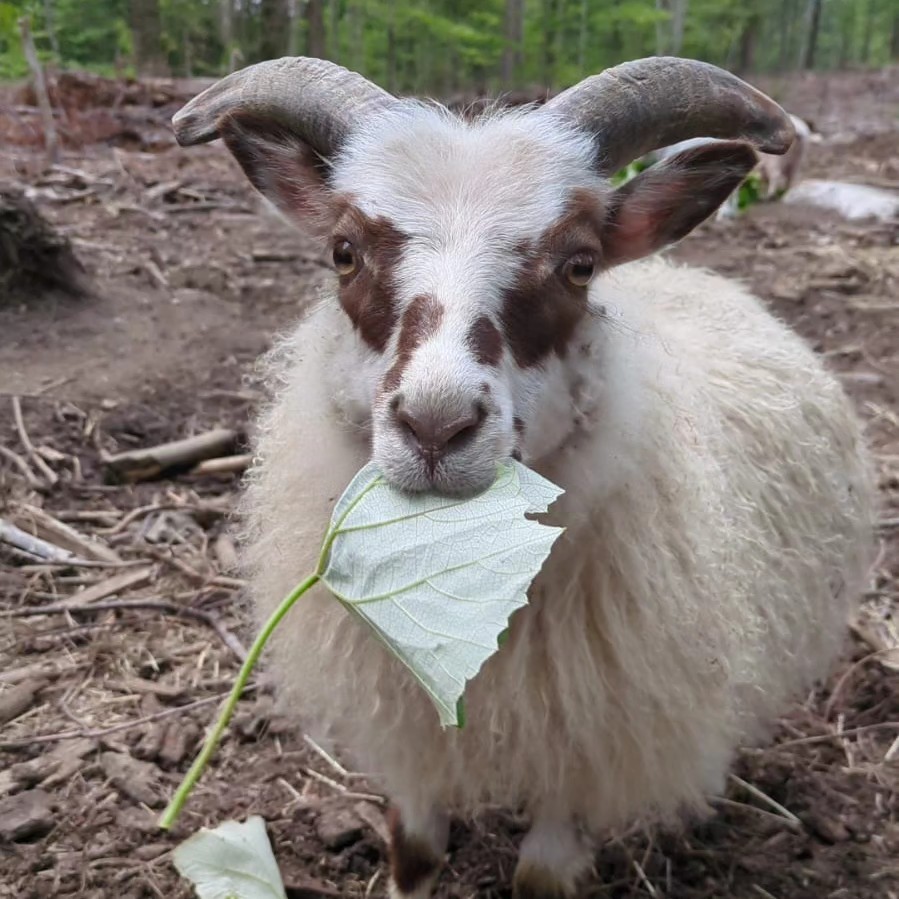
Not all sheep milk is created equal. The nutritional profile of the milk is a direct reflection of the animal’s diet and environment. Our Icelandic sheep graze on lush, natural pastures, a practice that significantly alters the chemical composition of the milk we use in our products.
According to research highlighted in The Drover's Daughter (2025), pasture-fed ruminants produce milk with significantly higher levels of Conjugated Linoleic Acid (CLA) and Omega-3 and Omega-6 fatty acids.
- CLA: Known for its potent anti-inflammatory properties, CLA helps soothe the redness and irritation associated with chronic dryness and dermatitis.
- Omegas: These essential fatty acids are the building blocks of healthy skin cells. They help maintain the fluidity of cell membranes, ensuring that your skin stays supple and resilient against environmental stressors.
When you use our Matcha Latte Soap or our specialty bars, you aren't just getting "milk." You are getting a concentrated dose of the Icelandic pasture, processed by our sheep into a bioavailable skin treatment.

A Vitamin Profile Built for Cellular Health
Chronically dry skin often suffers from a slow cellular turnover rate, leading to a buildup of dead, flaky skin cells that prevent moisture from penetrating. Sheep milk is naturally rich in two specific vitamins that address this: Vitamin A and Vitamin E.
1. Vitamin A (Natural Retinol)
Sheep milk contains high concentrations of Vitamin A. In the world of dermatology, Vitamin A is the precursor to retinol. It stimulates the production of new skin cells and encourages the shedding of old, dry ones. Unlike synthetic retinols which can be incredibly drying and irritating, the Vitamin A in our soap is delivered alongside high-fat lipids, making it a gentle, "natural exfoliating sheep milk soap" experience.
2. Vitamin E (The Antioxidant Shield)
Vitamin E is a fat-soluble antioxidant that is vital for protecting skin from oxidative stress. For those with dry skin, Vitamin E acts as a stabilizer for the skin's lipid layer. It neutralizes free radicals from UV exposure and pollution, preventing further damage to an already fragile skin barrier.
The Lactic Acid Mechanism: Gentle Bio-Exfoliation
One of the common mistakes people with dry skin make is using harsh physical scrubs to get rid of flakes. This causes micro-tears and worsens inflammation. Sheep milk contains natural Lactic Acid, an Alpha Hydroxy Acid (AHA).
Lactic acid is unique because it is a "humectant exfoliator." It works by breaking the bonds between dead skin cells, allowing them to wash away naturally, while simultaneously drawing moisture into the newly revealed skin. This dual-action is why our soaps leave your skin feeling smooth and "glowy" rather than raw and red.

Why "Handmade" and "Small-Batch" Actually Matter
In the mass-production soap industry, the most valuable part of the soap: glycerin: is often extracted and sold separately for use in expensive lotions. This leaves the consumer with a "detergent bar" that is harsh and drying.
As a veteran-owned natural skincare brand, we do the opposite. We use a traditional cold-process method that preserves every drop of naturally occurring glycerin. We then add even more sheep milk to ensure the final product is as nutrient-dense as possible.
Our bars, such as the Rose Sheep Milk Soap, are cured for weeks to ensure a hard, long-lasting bar that maintains its "thick, velvety lather" until the very last sliver.

Beyond the Bar: Total Skin Support
While our soap is the foundation of a healthy routine, chronically dry skin often requires a "sealant" to lock in the hydration provided by the milk. This is why we developed our line of skin balms. Products like our Frankincense Skin Balm utilize the same high-fat principles to provide a protective barrier for hands, elbows, and faces throughout the day.
Closing: This Isn't Just Soap; It's a "Skin Supplement"
If we’ve learned anything from our years on the farm, it’s that nature provides the most robust solutions. Sheep milk is a biological powerhouse, evolved to nourish and protect. When we transform that milk into soap, we aren't just creating a cleanser: we are creating a skin supplement.
By switching to a nutrient-rich sheep milk soap, you are giving your skin the lipids, vitamins, and acids it needs to heal itself from the inside out. Stop settling for soaps that strip your vitality. Experience the deep-moisture capability of Scalise Family Sheep Farm.
Explore our full range of soaps and skincare today and give your skin the robust hydration it deserves.
References and Academic Citations
- Noh, G. W., et al. (2018/2024 update). "The Role of Moisturizers in Addressing Various Kinds of Dermatitis." PubMed Central (PMC). This study details the necessity of lipid replenishment (Ceramides, Fatty Acids, and Cholesterol) in managing chronic skin dryness and barrier repair.
- The Drover's Daughter. (2025). "Nutritional Profiles of Icelandic Ruminants: The Impact of Pasture-Based Foraging on Milk Lipid Composition." A comprehensive review of how wild grazing increases CLA and Omega levels in Icelandic sheep milk.
- Journal of Dairy Science. "Comparative Analysis of Sheep, Goat, and Cow Milk: Mineral and Vitamin Concentrations." Highlighting the significantly higher levels of Vitamin A and B12 in sheep milk compared to other dairy sources.
- International Journal of Molecular Sciences. "Anti-Inflammatory and Skin Barrier Repair Effects of Topical Application of Some Plant and Animal Oils." Discussion on the role of triglycerides and MCFAs (found in high concentrations in sheep milk) in skin health.
- Dermatology Research and Practice. "The Humectant Properties of Alpha Hydroxy Acids in Topical Formulations." Specifically addressing Lactic Acid's role in treating xerosis.


