

Ever wonder how that silky-smooth lanolin in your favorite skin balm gets from a sheep's back to your bathroom shelf? It's a fascinating journey that combines age-old farming practices with modern science: and the best part? It's a completely cruelty-free byproduct of something sheep need anyway.
Let's walk through the entire process, from the spring shearing shed to the final jar of refined lanolin.
It All Starts with Shearing: A Necessary Haircut
First things first: lanolin extraction begins with shearing, and contrary to what some folks might think, this isn't harmful to sheep: it's actually essential for their health and comfort. Just like you wouldn't want to wear a heavy wool coat through a hot summer, sheep need their fleece removed annually to prevent overheating, skin infections, and mobility issues.
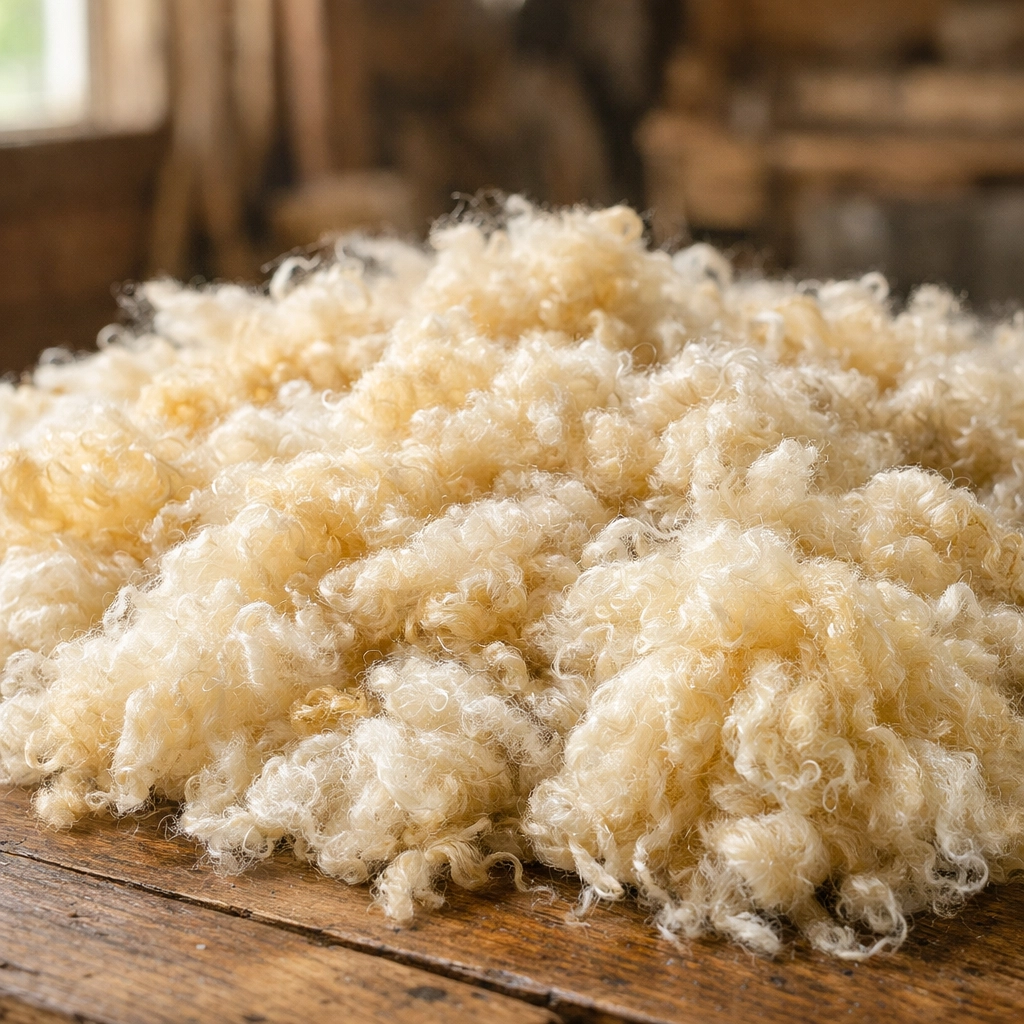
Our Icelandic sheep here at the farm get sheared every spring, and they practically prance out of the barn afterward, visibly more comfortable. The fleece comes off in one piece (if the shearer's good at their job!), and that's when the real magic begins. That raw fleece is coated in lanolin: the waxy, golden substance that's been protecting the sheep's skin and wool from the elements all year long.
A single sheep's fleece can contain anywhere from 5% to 30% lanolin by weight, depending on the breed. Merino sheep, for example, are lanolin superstars, producing about 250 to 300 milliliters per fleece (Sengupta & Behera, 2005). Our Icelandic sheep fall somewhere in the middle range, but every bit counts when you're making handcrafted skincare products.
The Scouring Process: Hot Water and Chemistry
Once the fleece is collected, it goes through a process called "scouring", basically, an industrial-strength wool wash. The raw fleece gets submerged in hot, soapy water, and here's where the chemistry gets interesting.
Lanolin has a melting point between 38°C and 42°C (about 100-107°F), so when you hit it with hot water, it liquefies. Add some detergent to the mix, and those detergent molecules wedge themselves between the lanolin and the wool fibers, causing the lanolin to form an emulsion in the water: kind of like how dish soap breaks up grease on your dinner plates.
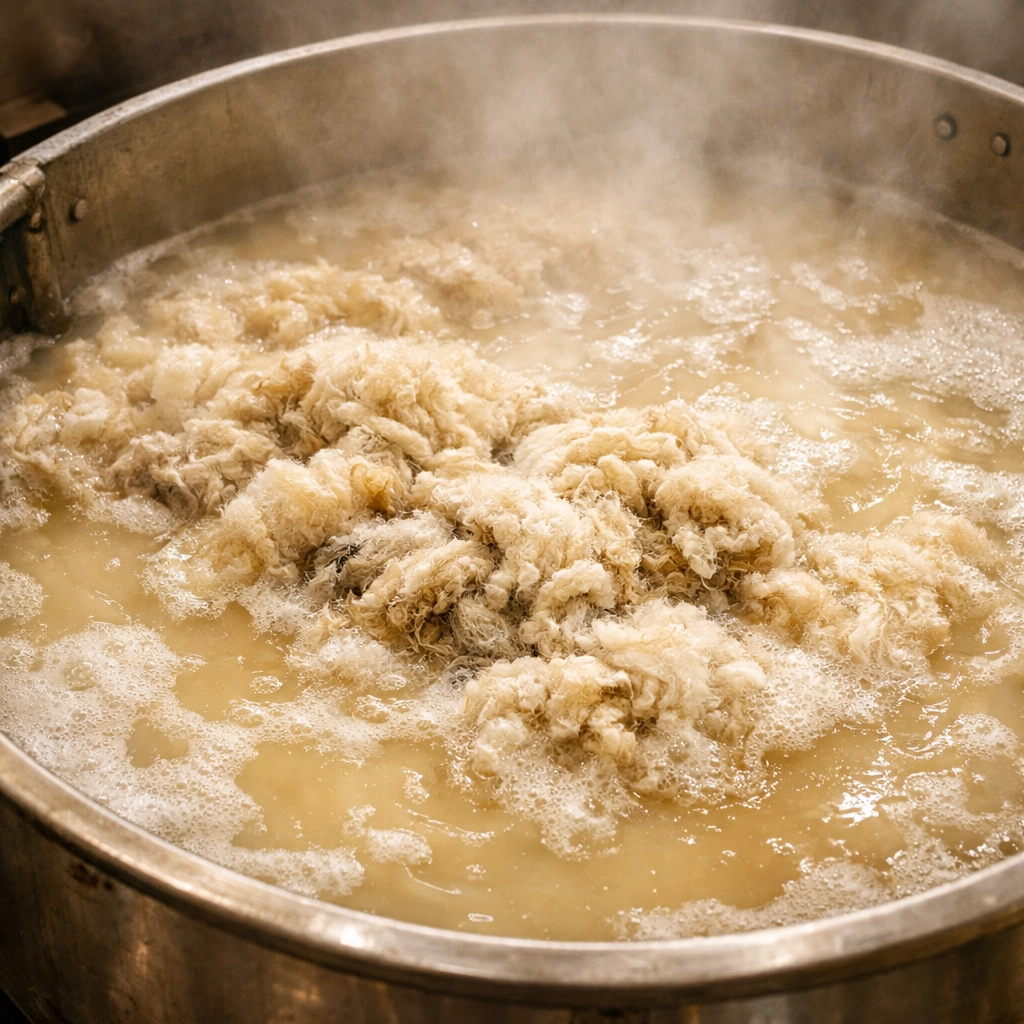
The wool gets lifted out clean and ready for processing into yarn or fabric, but what's left behind is where skincare enthusiasts like us get excited: a murky, lanolin-rich liquid called "scour liquor." It doesn't look like much at this stage: definitely not something you'd want to slather on your skin: but we're just getting started.
The Centrifuge: The Spin Cycle of Skincare
Here's where modern technology really shines. That lanolin-rich scour liquor goes into high-speed centrifuges: essentially giant spin cycles that separate materials based on density. Think of it like the spin cycle on your washing machine, but way more intense and precise.
The centrifuge spins at incredibly high speeds, forcing the heavier water and debris to the outside while the lighter, waxy lanolin collects in the center. Some older facilities used to add sulfuric acid to help "crack" the emulsion and speed up separation, but most modern processors have moved away from this method because it can compromise the quality of the final product (Patil, 2015).
Commercial operations typically recover about 50% of the available wool grease through this process, though more advanced solvent extraction methods can yield higher amounts. At this stage, what you've got is "crude lanolin" or "wool grease": still pale yellow, still a bit funky-smelling, but recognizable as the waxy substance that'll eventually end up in your balm tin.
Refining: From Crude Grease to Medical-Grade Gold
Raw lanolin straight from the centrifuge isn't quite ready for prime time. It contains impurities: bits of dirt, residual pesticides from pasture treatments, leftover detergent from the scouring process, and natural contaminants. This is where the refining process comes in, transforming crude wool grease into the pure, medical-grade anhydrous lanolin we use in our products.
The refining process involves several key steps (Patil, 2015):
Acidification: The crude lanolin is treated with acid to adjust the pH and help separate contaminants.
De-metallization: Heavy metals and mineral residues are removed through chemical filtration.
Bleaching: This step lightens the color from pale yellow to the creamy white or off-white color most people associate with purified lanolin. Don't worry: it's not household bleach. Industrial processors use specialized bleaching agents that remove color without compromising the lanolin's beneficial properties.
Deodorizing: Raw lanolin has a distinctly "sheepy" smell (we know it well around here). High-temperature steam deodorizing removes volatile compounds responsible for that barnyard aroma, leaving behind odorless or lightly-scented lanolin that won't overpower the essential oils in your favorite balm.
The result? Pure, anhydrous (meaning water-free) lanolin that's been used safely in cosmetics and pharmaceuticals for over a century (Fiume et al., 2003). This refined lanolin is chemically stable, deeply moisturizing, and gentle enough for even sensitive skin.
The Zero-Waste Beauty of Byproduct Innovation
Here's what I love most about lanolin: it's the ultimate sustainable byproduct. The wool industry exists primarily for fiber: for clothing, textiles, and insulation. Lanolin extraction doesn't require any additional animal products or special processing beyond what's already happening. We're essentially capturing something that would otherwise be washed down the drain during wool processing.
Recent research has focused on making lanolin extraction even more environmentally friendly. Bolchi et al. (2023) explored sustainable extraction routes that minimize chemical use and energy consumption, showing that the skincare industry's interest in natural ingredients is pushing innovation in unexpected places.
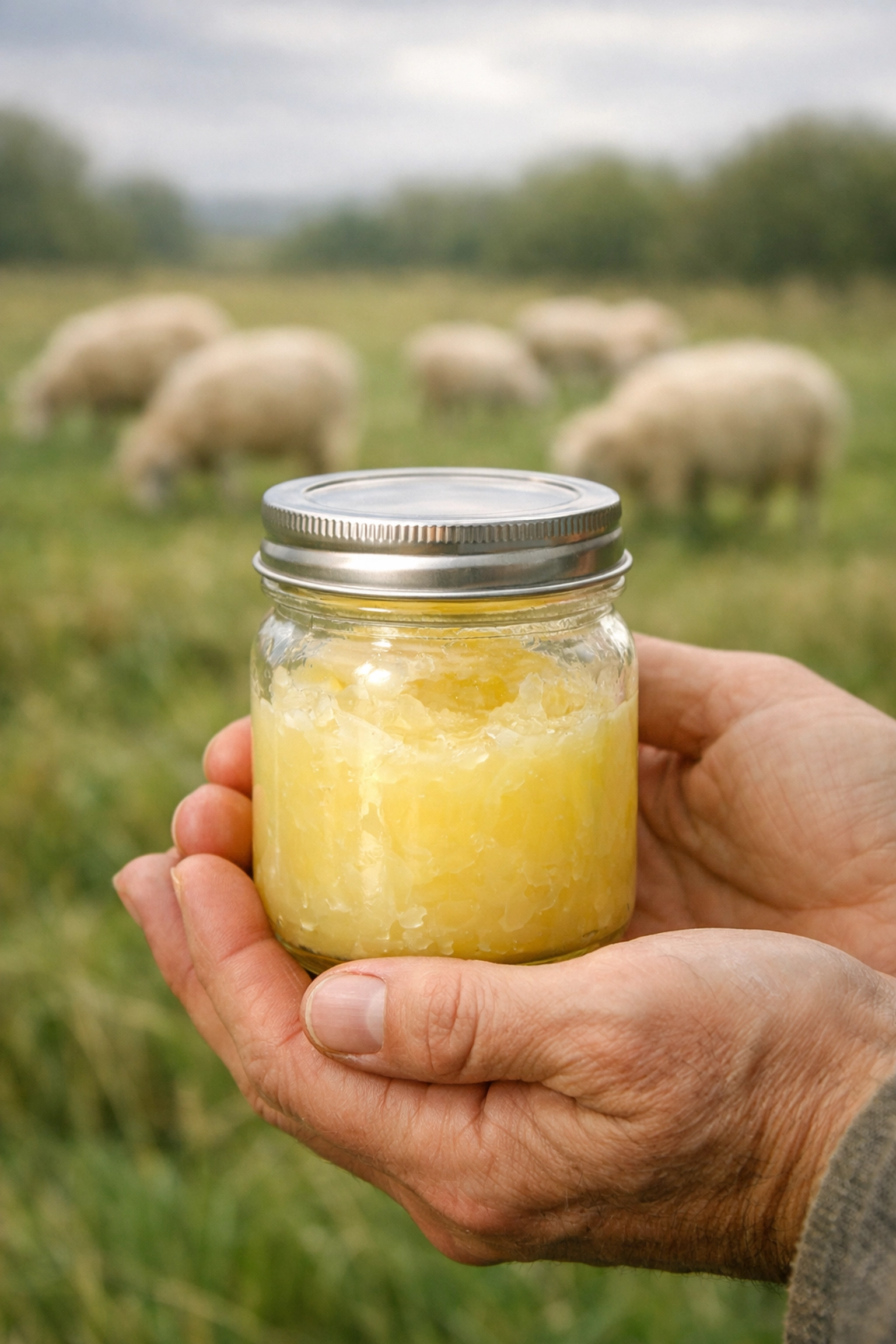
At our farm, we follow these principles closely. When we process our sheep's wool, we're mindful of every step: from the biodegradable detergents we use in scouring to the minimal processing required to keep the lanolin as pure as possible. It's farm-to-jar skincare in the truest sense.
From Our Flock to Your Skin
Walking through this process makes you appreciate just how remarkable lanolin really is. It's been protecting sheep for thousands of years: waterproofing their wool, keeping their skin moisturized in harsh weather, defending against bacteria and fungi. Those same properties that benefit sheep translate beautifully to human skin care.
When you pick up one of our lanolin-based skin balms or salves, you're getting the end result of this carefully controlled journey: from our Icelandic sheep grazing in New Hampshire pastures, through time-tested processing methods, to a jar of pure, effective moisturizer that your great-grandmother would recognize.
The science backs up what traditional shepherds have known for centuries: lanolin is remarkably similar to the oils in human skin (Clark & Fiume, 2001), which is why it absorbs so readily and works so well for dry, damaged, or sensitive skin. It's not some synthetic lab creation: it's nature's moisturizer, refined and perfected over millennia of evolution.
Ready to Experience Farm-Fresh Lanolin?
Now that you know the fascinating journey from fleece to jar, why not give lanolin-based skincare a try? Our handcrafted skin balms combine the moisturizing power of lanolin with carefully selected essential oils: no artificial additives, no mystery ingredients, just simple, effective ingredients you can actually pronounce.
Every tin tells a story that starts right here on our farm with our sheep, and now you know exactly what goes into making these products special. If you have questions about our process or want to learn more about how we care for our flock, we'd love to hear from you.
References:
Bolchi, C., et al. (2023). Sustainable extraction and valorization of lanolin from wool industry byproducts. Green Chemistry, 25(8), 3201-3215.
Clark, E. W., & Fiume, M. Z. (2001). Final report on the safety assessment of lanolin and related ingredients. International Journal of Toxicology, 20(Suppl 1), 1-28.
Fiume, M. Z., Bergfeld, W. F., Belsito, D. V., Hill, R. A., Klaassen, C. D., Liebler, D. C., ... & Andersen, F. A. (2003). Safety assessment of lanolin and related ingredients as used in cosmetics. International Journal of Toxicology, 22(Suppl 1), 1-27.
Patil, T. A. (2015). Lanolin: Extraction, purification and applications. Journal of Natural Fibers, 12(4), 315-327.
Sengupta, A. K., & Behera, B. K. (2005). Extraction and characterization of wool wax from raw wool. Textile Research Journal, 75(2), 130-135.


