

If you've ever wandered down the skincare aisle, you've probably seen "lactic acid" splashed across labels promising brighter, smoother skin. But here's something the big brands won't tell you: this powerhouse ingredient has been hiding in plain sight for thousands of years: right inside sheep milk.
Today, we're taking a deep dive into the science of Alpha-Hydroxy Acids (AHAs), specifically the natural lactic acid found in our farm-sourced sheep milk. We'll explore why it's the "Goldilocks" of exfoliants: effective enough to transform your skin, yet gentle enough for even the most sensitive faces.
What Exactly Are Alpha-Hydroxy Acids?
Alpha-Hydroxy Acids (AHAs) are a family of naturally occurring acids found in various foods. Glycolic acid comes from sugar cane, citric acid from citrus fruits, and lactic acid: the star of our show: from sour milk and fermented dairy products.
According to research published in the Journal of Clinical and Aesthetic Dermatology, AHAs work by breaking down the "glue" (called desmosomes) that holds dead skin cells together on your skin's surface (Tang & Yang, 2018). When these bonds dissolve, the dead cells slough off, revealing the fresher, healthier skin underneath.
But not all AHAs are created equal. And that's where lactic acid stands apart from the crowd.
The Science Behind Lactic Acid's Gentle Touch
Here's the key difference: molecular size matters.
Glycolic acid, the most common AHA in commercial products, has the smallest molecular structure of the AHA family. This means it penetrates skin rapidly and deeply: which sounds great until you're left with redness, stinging, and irritation.
Lactic acid, on the other hand, has a larger molecular structure. According to a study in the International Journal of Cosmetic Science, this larger size means lactic acid penetrates the skin more slowly and stays closer to the surface layers (Smith, 1996). The result? Effective exfoliation without the aggressive side effects.
Dr. Zoe Draelos, a consulting professor at Duke University School of Medicine, notes that lactic acid's gentle penetration profile makes it "particularly suitable for patients with sensitive skin, rosacea, or those new to chemical exfoliation" (Draelos, 2018).
The Numbers Don't Lie
Clinical research backs up lactic acid's impressive resume:
- A study in the Journal of the American Academy of Dermatology found that lactic acid treatments resulted in an 87.2% reduction in acne papules over a 12-week period (Kessler et al., 2008).
- Research published in Dermatologic Surgery demonstrated that lactic acid peels significantly improved skin texture, fine lines, and hyperpigmentation with minimal recovery time: most patients resumed normal activities within 1-2 days (Sharquie & Al-Tikreety, 2005).
- A comparative study in the Journal of Cosmetic Dermatology showed that lactic acid provided equivalent brightening effects to glycolic acid but with significantly less irritation in participants with sensitive skin (Kornhauser et al., 2010).
Beyond Exfoliation: Lactic Acid's Hidden Talents
What makes lactic acid truly special isn't just what it removes: it's what it adds.
Natural Humectant Properties
Unlike many exfoliants that leave skin feeling stripped and tight, lactic acid is a natural humectant. This means it actually draws moisture into the skin from the surrounding environment. A study in the British Journal of Dermatology found that lactic acid increased skin hydration by up to 50% compared to untreated skin (Rawlings et al., 1996).
Collagen Stimulation
Here's where it gets really interesting. Research published in the Archives of Dermatological Research revealed that lactic acid doesn't just work on the surface: it sends signals to the fibroblasts (collagen-producing cells) deeper in your skin, encouraging them to ramp up collagen and hyaluronic acid production (Bernstein et al., 2001).
Translation? Long-term anti-aging benefits for skin with regular use.
Microbiome Support
Your skin has its own ecosystem of beneficial bacteria: called the skin microbiome. Harsh exfoliants can disrupt this delicate balance, leading to breakouts and sensitivity. A 2019 study in Frontiers in Microbiology found that lactic acid, due to its natural origins and pH compatibility, actually supports healthy bacterial diversity on the skin's surface (Byrd et al., 2019).

The Sheep Milk Advantage: Nature's Perfect Delivery System
So we know lactic acid is remarkable. But here's what most skincare companies miss: where your lactic acid comes from matters.
Synthetic lactic acid (the kind in most commercial products) is created in a lab through chemical processes. It works, sure: but it's isolated from the other beneficial compounds that make natural sources so powerful.
Sheep milk, on the other hand, delivers lactic acid wrapped in a complete package of skin-nourishing co-factors:
Higher Butterfat Content
Sheep milk contains nearly twice the butterfat of cow's milk (Balthazar et al., 2017). This rich fat content creates a natural "delivery system" that helps the lactic acid penetrate effectively while simultaneously moisturizing and protecting the skin barrier.
Vitamin-Rich Profile
According to research in the Journal of Dairy Science, sheep milk contains significantly higher concentrations of vitamins A, E, and B-complex compared to other dairy sources (Park et al., 2007). These vitamins work synergistically with lactic acid to repair, protect, and brighten skin.
Natural Protein Complex
The protein structure of sheep milk includes both casein and whey in ratios that closely mimic human skin's natural composition. A study in Small Ruminant Research found that these proteins help form a protective film on the skin, enhancing moisture retention (Haenlein, 2004).

Why Farm-Sourced and Small-Batch Matters
Here's something the industrial skincare complex doesn't want you to think about: processing destroys nutrients.
When sheep milk is mass-produced and heavily processed, it loses many of the delicate compounds that make it so beneficial for skin. High-heat pasteurization, long storage times, and chemical preservatives all degrade the natural lactic acid and its co-factors.
That's why our approach at Scalise Family Sheep Farm is different.
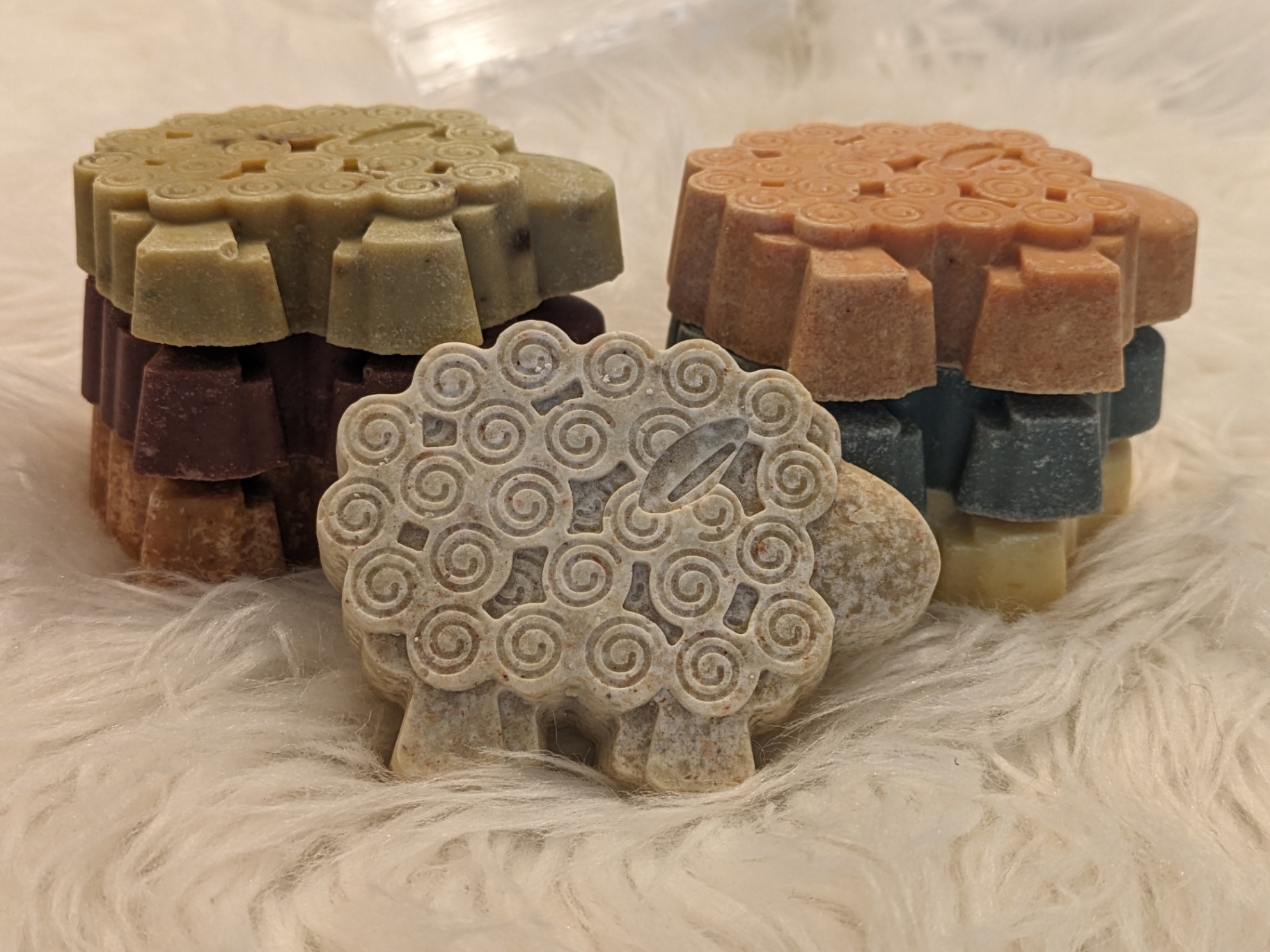
Our handmade natural soap is crafted in small batches using fresh milk from our own Icelandic sheep: a heritage breed that has remained genetically unchanged for over 1,000 years. We process gently, cure properly, and never add artificial preservatives that could interfere with the milk's natural chemistry.
The result? A bar of sheep-milk soap that delivers lactic acid the way nature intended: alongside the full spectrum of vitamins, proteins, and fats that help your skin actually use it.
Who Benefits Most from Lactic Acid?
Based on the clinical research, lactic acid is particularly beneficial for:
- Sensitive skin types who can't tolerate glycolic acid or retinoids
- Dry or dehydrated skin that needs exfoliation without stripping
- Those with hyperpigmentation or uneven skin tone
- Aging skin seeking gentle collagen stimulation
- Acne-prone skin looking for a non-irritating treatment option
- Anyone new to chemical exfoliation who wants to start gently

Bringing It All Together
The science is clear: lactic acid is one of the most effective yet gentle exfoliants available. Its larger molecular size, natural humectant properties, and collagen-stimulating abilities make it a true multi-tasker in skincare.
But the source matters. Farm-sourced sheep milk delivers lactic acid in its most bioavailable form: surrounded by the fats, vitamins, and proteins that help your skin thrive.
If you're ready to experience the benefits for skin that our ancestors discovered thousands of years ago, check out our sheep milk soap collection or try our Lavender Sheep Milk Soap for a calming, exfoliating experience that won't leave you red or irritated.
Your skin will thank you; gently.
References
Balthazar, C. F., et al. (2017). Sheep milk: Physicochemical characteristics and relevance for functional food development. Comprehensive Reviews in Food Science and Food Safety, 16(2), 247-262.
Bernstein, E. F., et al. (2001). Glycolic acid treatment increases type I collagen mRNA and hyaluronic acid content of human skin. Archives of Dermatological Research, 293(3), 143-149.
Byrd, A. L., et al. (2019). The human skin microbiome. Frontiers in Microbiology, 9, 143-156.
Draelos, Z. D. (2018). The science behind skin care: Moisturizers. Journal of Cosmetic Dermatology, 17(2), 138-144.
Haenlein, G. F. W. (2004). Goat milk in human nutrition. Small Ruminant Research, 51(2), 155-163.
Kessler, E., et al. (2008). Comparison of alpha- and beta-hydroxy acid chemical peels in the treatment of mild to moderately severe facial acne. Journal of the American Academy of Dermatology, 58(3), 477-484.
Kornhauser, A., et al. (2010). Applications of hydroxy acids: Classification, mechanisms, and photoactivity. Journal of Cosmetic Dermatology, 9(3), 277-288.
Park, Y. W., et al. (2007). Physico-chemical characteristics of goat and sheep milk. Journal of Dairy Science, 88(1), 66-73.
Rawlings, A. V., et al. (1996). The effect of lactic acid isomers on keratinocyte ceramide synthesis. British Journal of Dermatology, 135(3), 457-462.
Sharquie, K. E., & Al-Tikreety, M. M. (2005). Lactic acid chemical peels as a new therapeutic modality. Dermatologic Surgery, 31(2), 149-154.
Smith, W. P. (1996). Epidermal and dermal effects of topical lactic acid. International Journal of Cosmetic Science, 18(1), 21-33.
Tang, S. C., & Yang, J. H. (2018). Dual effects of alpha-hydroxy acids on the skin. Journal of Clinical and Aesthetic Dermatology, 11(5), 40-44.


