

If you’ve been hanging around the natural skincare world for more than five minutes, you’ve probably seen "sheep milk soap" popping up everywhere. It’s the new gold standard for anyone dealing with dry skin, eczema, or just someone who wants a shower experience that feels like a luxury spa day. But here’s the thing: not all sheep milk soaps are created equal.
As the owner of Scalise Family Sheep Farm LLC, I spend a lot of time with our Icelandic sheep. I know exactly what goes into their diet and, consequently, exactly what goes into the milk we use in our products. When we started making soap, we had one rule: use the milk fresh from the farm.
However, as I look around the market, I see a lot of "milk soaps" that aren't quite what they seem. Many big-brand "natural" soaps use powdered milk or synthetic milk proteins. You might wonder, "Does it really matter? Milk is milk, right?"
Actually, it matters a lot. Today, I want to pull back the curtain on why fresh sheep milk is the MVP of skincare and why powdered fillers just can't compete.
The Problem with the "Powdered Shortcut"
Running a farm is hard work. Milking sheep is a labor of love (and sometimes a test of patience). For large-scale soap manufacturers, using fresh milk is a logistical nightmare. It has to be kept cold, it has to be handled carefully, and it has a shelf life.
To get around this, many companies use sheep milk powder. It’s easy to store, it lasts forever, and it’s cheap. But to turn fresh, creamy milk into a dry powder, it has to go through a process called spray drying.
Spray drying involves exposing the milk to intense heat to evaporate the water content instantly. While this is great for shelf stability, it’s tough on the delicate nutrients that make sheep milk so beneficial for your skin in the first place. A 2025 review in Food & Function (Royal Society of Chemistry), “Unlocking the nutritional and bioactive potential of sheep milk,” highlights that fresh sheep milk contains a range of bioactive components (including growth factors and antimicrobial agents)—and that processing steps used to make milk powders can contribute to degradation or loss of sensitive nutrients/bioactives. In other words: turning milk into a shelf-stable powder often means you’re trading away some of the very “good stuff” people want sheep milk for in the first place. Heat-sensitive vitamins begin to break down, and the biological "liveness" of the milk is essentially extinguished.
When you use a soap made with powdered fillers, you’re basically getting a bar of standard soap with some "dead" milk dust mixed in. At Scalise Family Sheep Farm, we believe your skin deserves the real thing.

The Vitamin Vault: Why Fresh is Best
When we use fresh milk directly from our Icelandic flock, we are preserving a complex cocktail of vitamins that your skin craves. Because our milk isn't subjected to industrial heat-stripping, these vitamins remain intact and bioavailable.
Vitamin A (The Natural Retinol)
Fresh sheep milk is incredibly high in Vitamin A. In the skincare world, Vitamin A is the holy grail for anti-aging and acne prevention. It helps with cell turnover and keeps the skin’s surface smooth. When milk is powdered, a portion of this Vitamin A is lost to oxidation.
The B-Vitamin Complex
Sheep milk is a powerhouse of B-vitamins, including B12 and Riboflavin. These are essential for maintaining a healthy skin barrier. If you have sensitive skin that feels "tight" or gets red easily, B-vitamins are your best friend. They help your skin hold onto moisture and defend itself against environmental stressors.
Vitamin C (The Brightener)
Most people don't realize milk contains Vitamin C, but it does! However, Vitamin C is notoriously unstable. It’s one of the first things to go when milk is heat-processed into powder. By using fresh milk, we ensure that the natural brightening and collagen-supporting properties of Vitamin C actually make it into your shower.
Vitamin E (The Protector)
Vitamin E is a potent antioxidant that helps repair damaged skin tissue. In fresh sheep milk, it works in tandem with the fats to provide a protective layer on your skin long after you’ve rinsed off the suds.
Minerals and the "Glow" Factor
It’s not just about the vitamins. Fresh sheep milk is loaded with minerals like Calcium and Magnesium. According to various dermatological studies, Magnesium plays a crucial role in improving the skin’s overall appearance and reducing inflammation.
When milk is processed into a filler, the mineral balance can be disrupted. Fresh milk maintains a specific pH and mineral concentration that mimics the natural state of your skin. This is why our Frankincense Sheep Milk Soap feels so soothing: it’s not fighting against your skin’s chemistry; it’s supporting it.

Triglycerides: The Fat That Matters
This is where sheep milk really leaves cow and goat milk in the dust. Sheep milk has a much higher fat content than almost any other dairy source used in soap. Specifically, it is rich in triglycerides (fats).
In fresh milk, these fats are in their natural, emulsified state. When we stir that fresh milk into our soap fats (a process called saponification), these triglycerides contribute to a "super-fatted" bar. This means that even after the soap has done its job of cleaning, there are leftover fats that stay behind to moisturize your skin.
Powdered milk often has the fat removed (skimmed) before drying to prevent the powder from going rancid. Even if "whole milk powder" is used, the fats have been oxidized during the heating process. Oxidized fats don't have the same emollient properties as fresh ones. This is why "big brand" soaps often leave your skin feeling "squeaky" and dry, while a bar of Lavender Sheep Milk Soap leaves it feeling soft and supple.
The Science of Bioavailability
There’s an academic concept called "bioavailability", basically, it’s the measure of how much of a nutrient your body (or skin) can actually use.
This is where the “fresh from the farm” approach starts to matter in a way you can actually feel. The 2025 Food & Function review (Unlocking the nutritional and bioactive potential of sheep milk) emphasizes that sheep milk isn’t just “fat + protein”—it contains bioactive compounds (including growth factors and antimicrobial agents) that help explain why sheep milk gets so much attention in the first place. The catch is that those components are more meaningful when they’re preserved, and powdering/heat processing can reduce the potency of sensitive compounds.
And it’s not just theory—Small Ruminant Research has also pointed to sheep milk’s value as a bioactive-rich ingredient. A 2019 paper in Small Ruminant Research discussing sheep milk as a functional food highlights its antioxidant capacity and links those antioxidative components to anti-aging potential (because oxidative stress is one of the big drivers behind visible skin aging). That’s exactly why we’re picky about using fresh milk: we want the bar to start with the most intact, nutrient-dense, bioactive-rich ingredient possible—not a powdered “shortcut” that’s been processed for convenience.
Why Icelandic Sheep Milk?
You might be wondering why we specifically highlight our Icelandic flock. Icelandic sheep are a primitive breed, meaning they haven't been "over-bred" for industrial production. Their milk is naturally higher in solids and fats than many modern breeds.
Because we raise our sheep on natural forage here at Scalise Family Sheep Farm LLC, the milk they produce is a direct reflection of the land. It’s rich, it’s pure, and it’s packed with the nutrients I’ve been talking about. When we take that milk directly from the milking stand to the soap studio, we’re capturing a moment of peak nutrition.
How to Spot a "Fake" Milk Soap
If you’re out shopping and want to know if you’re getting the good stuff, take a look at the ingredient label.
- Check the Order: Ingredients are listed in order of prominence. If "Sheep Milk" is at the very end of a long list of chemicals, there’s probably not enough in there to do anything.
- Look for "Lac" or "Powder": If you see "Non-fat dry milk" or "Milk protein," you’re looking at a powder-based soap.
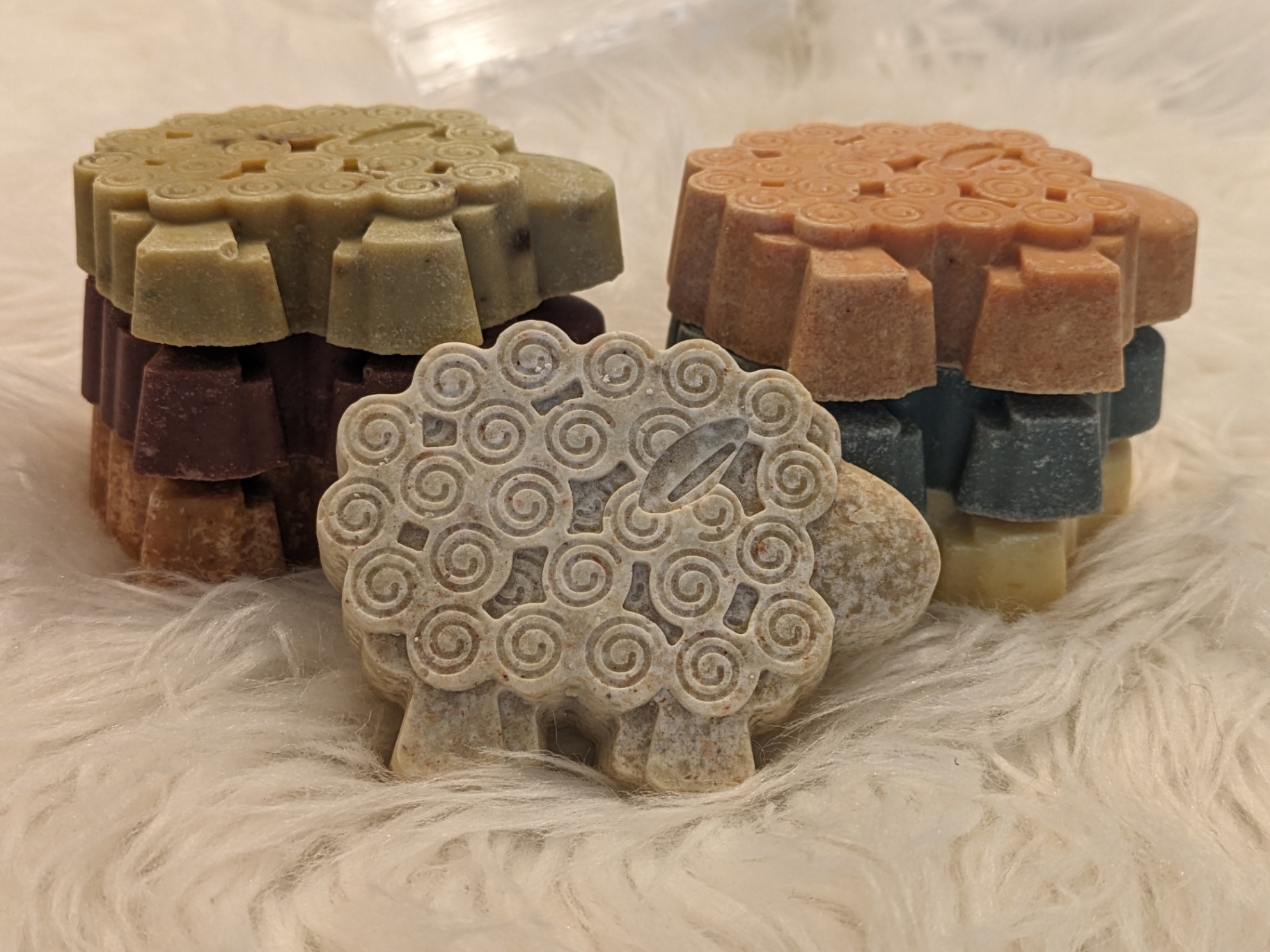
- The Color and Texture: Real, fresh-milk soap often has a creamy, off-white, or tan hue (unless natural botanicals like those in our Rose Sheep Milk Soap are added). It should feel dense and heavy, not like a light, airy piece of plastic.

Experience the Fresh Difference
At the end of the day, your skin is your largest organ. It absorbs what you put on it. Do you want it absorbing processed "milk dust" or fresh, nutrient-dense milk from a family farm that cares?
We invite you to feel the difference for yourself. Whether you’re looking for the calming scent of lavender or the refreshing kick of peppermint, our soaps are made with one goal in mind: keeping the "good stuff" in.
Ready to ditch the fillers? Check out our full range of fresh-milk soap scents here and give your skin the nourishment it actually needs.
References & Further Reading
- Song, Y. (2025). Unlocking the nutritional and bioactive potential of sheep milk: implications for food and health. Food & Function (Royal Society of Chemistry).
- Sheep milk: A pertinent functional food. (2019). Small Ruminant Research.
- Nutrient Degradation in Dairy Processing, Journal of Food Engineering.
- Impact of Spray Drying on Milk Proteins, Journal of Dairy Science.
- Bioavailability of Vitamins in Processed Dairy, International Dairy Journal.
- The Role of Magnesium and Calcium in Skin Barrier Function, Dermatological Research Quarterly.


