

Who would have thought that sheep and solar panels make such perfect partners? It might sound like an unlikely duo, but this innovative approach called "solar grazing" or "agrivoltaics" is revolutionizing both renewable energy and sustainable farming. Instead of using gas-powered mowers or chemical herbicides to maintain solar installations, forward-thinking energy companies are turning to our woolly friends to keep vegetation in check naturally.
This eco-friendly partnership addresses a critical challenge for solar farm operators while creating new opportunities for sheep farmers and delivering impressive environmental benefits. Let's explore how this sustainable solution is transforming landscapes across the country and why it's becoming the go-to method for vegetation management at solar installations.
The Vegetation Challenge at Solar Farms
Every solar farm faces the same fundamental challenge: keeping grass and weeds from growing too tall and blocking sunlight from reaching the panels. Overgrown vegetation can significantly reduce energy output, making regular maintenance essential for optimal performance. Traditional methods involve mechanical mowing with gas-powered equipment or applying herbicides to control plant growth.
However, these conventional approaches come with significant drawbacks. Gas-powered mowers consume fossil fuels, produce emissions, require regular maintenance, and can kick up rocks and debris that damage expensive solar panels. Chemical herbicides can harm local ecosystems, contaminate soil and groundwater, and pose risks to wildlife and pollinators.
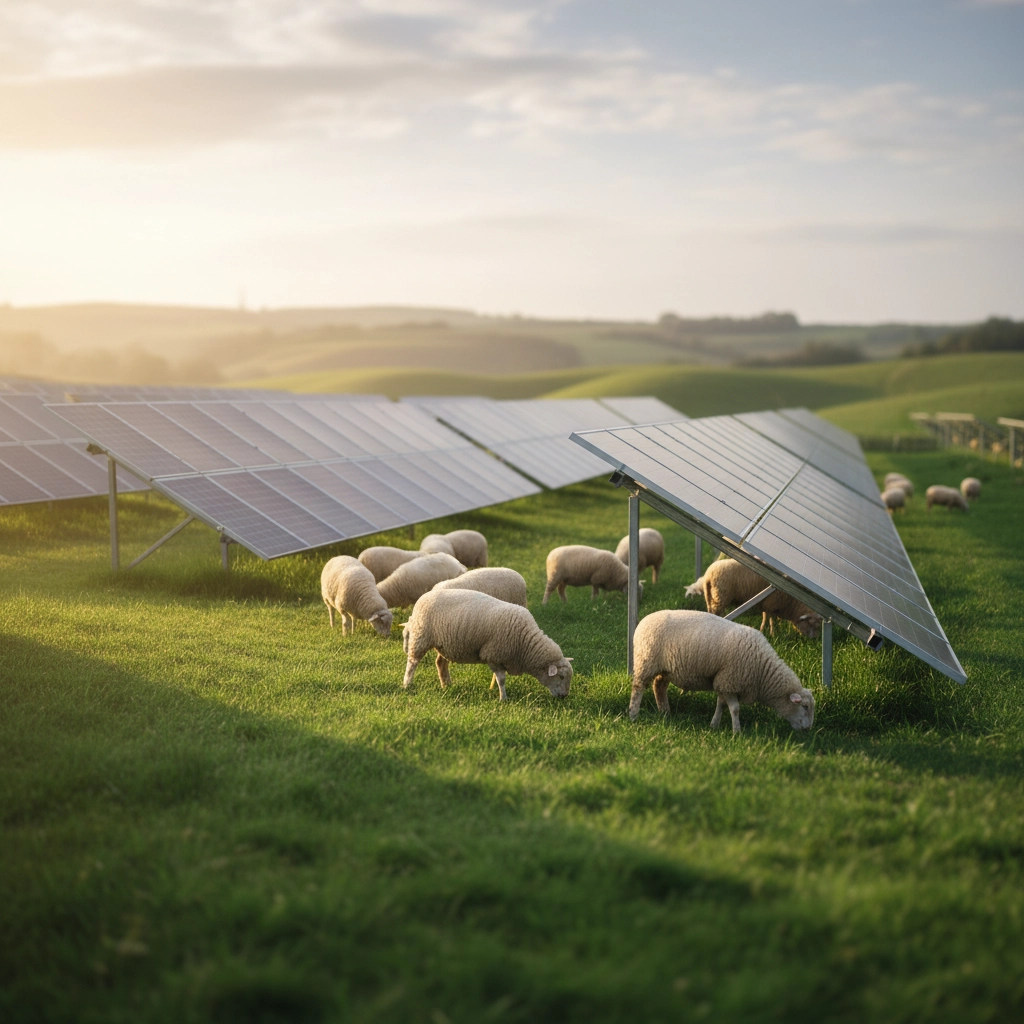
Enter sheep – nature's perfect lawn mowers. A single sheep can consume up to four pounds of grass per day and easily navigate underneath solar panels to reach vegetation in hard-to-access areas. Their compact size and natural grazing behavior make them ideal for maintaining the precise vegetation height needed around solar installations.
Environmental Benefits That Make a Difference
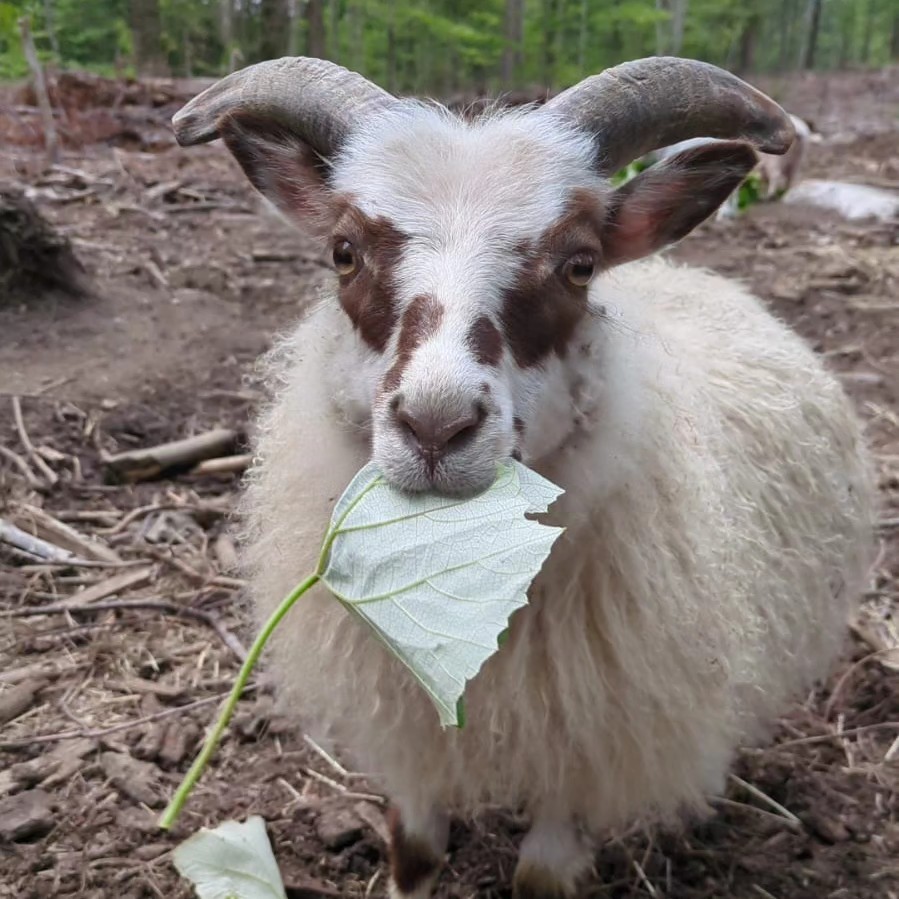
Solar grazing delivers remarkable environmental advantages that align perfectly with renewable energy's sustainability goals. Unlike mechanical mowers, sheep have a significantly lower carbon footprint and produce zero emissions during their "work." They don't require fuel, oil changes, or replacement parts that contribute to environmental waste.
Studies funded by the U.S. Department of Energy's National Renewable Energy Laboratory found that native vegetation grazed by sheep shows increased carbon capture and improved soil health through enhanced cycling of nutrients, carbon, and water. This natural process helps combat climate change by storing more carbon in the soil while maintaining healthy grassland ecosystems.
Sheep also promote biodiversity in ways that traditional mowing cannot. While mechanical equipment cuts everything down to the same height, sheep graze selectively, allowing native plants to mature and bloom. This selective grazing creates pollinator-friendly habitats that support bees, butterflies, and other beneficial insects essential for healthy ecosystems.
The elimination of herbicides is another major environmental win. Chemical treatments can persist in soil and water systems for years, potentially harming non-target species and disrupting natural ecological balance. Sheep naturally fertilize the soil through their manure, enriching it with organic matter rather than contaminating it with synthetic chemicals.
Economic Advantages for Everyone Involved
The financial benefits of solar grazing create win-win situations for both energy companies and farming operations. Solar farm operators can significantly reduce operational costs by eliminating expenses for mowing equipment, fuel consumption, labor, and machinery maintenance. Research shows that modern shepherds are achieving strong financial returns through this practice, making it economically viable for all parties involved.
Enel North America demonstrated the scale of this opportunity by deploying over 6,000 sheep across eight Texas solar plants covering more than 10,100 acres – nearly 75% of Manhattan's area – in what was announced as the largest U.S. solar grazing agreement. The American Solar Grazing Association estimates that approximately 100,000 acres of solar sites are currently being grazed across the United States, with numbers growing rapidly.
For sheep farmers, solar grazing opens up new revenue streams and provides access to high-quality grazing land that might otherwise be unavailable. Many solar installations are located on previously agricultural land, allowing farmers to continue productive use of these areas while supporting renewable energy development.
The partnership strengthens local economies by creating collaborations between energy companies and agricultural producers. Rather than outsourcing maintenance to distant contractors, solar developers can work directly with nearby farms, keeping economic benefits within local communities.
Sheep Welfare Benefits Under Solar Panels
Contrary to what some might assume, sheep actually thrive in solar farm environments. The panels provide valuable shade and shelter that improves animal welfare, particularly during hot summer days. This shade can even reduce sheep water consumption, making the grazing more efficient and sustainable.
Solar installations offer additional benefits including high-quality perimeter fencing and 24-hour surveillance cameras that enhance farm security. The controlled access and monitoring systems help protect flocks from predators and theft, providing peace of mind for farmers.
Partial shading from solar panels contributes to moisture retention in pastures, improving resilience to climatic extremes like droughts or excessive heat. Studies show that land maintained by sheep at solar farms actually performs better than traditional pastures, with higher productive potential due to these improved growing conditions.

Soil Health and Long-Term Sustainability
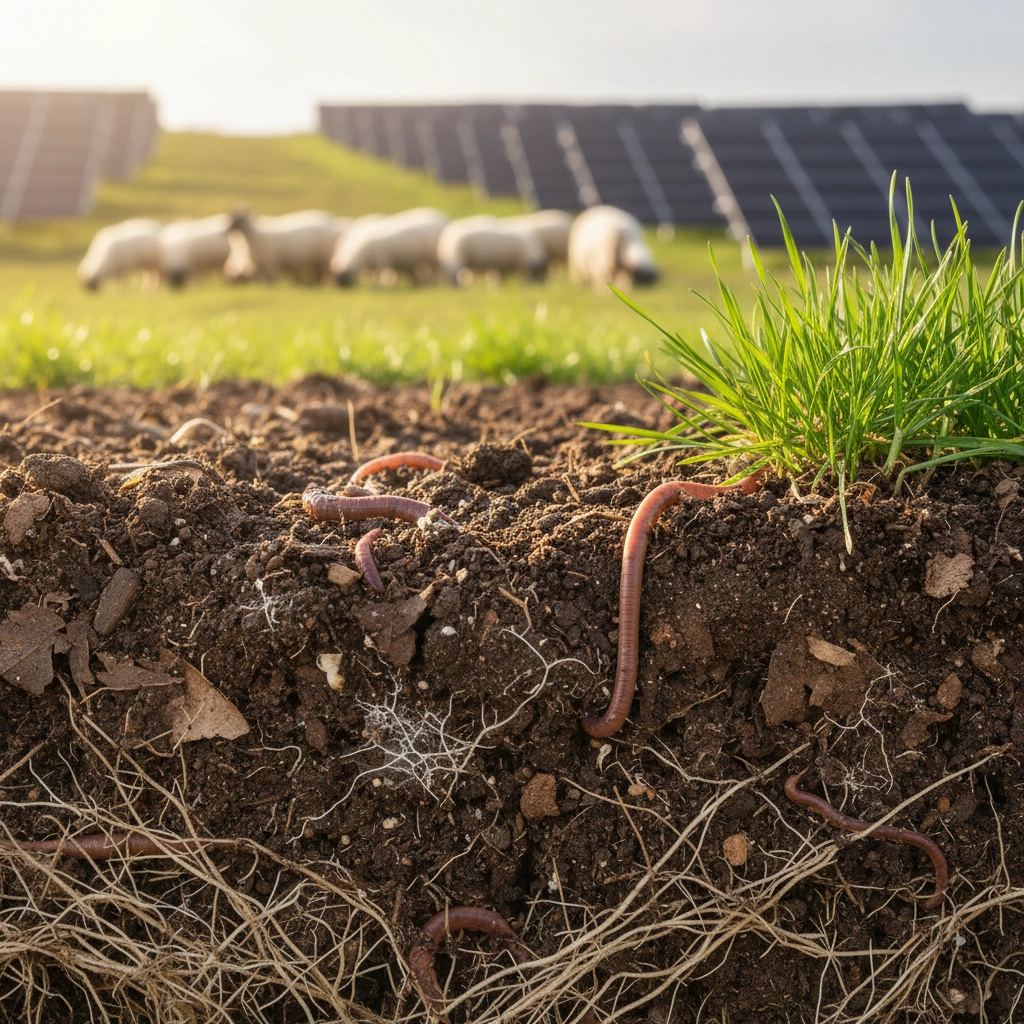
One of the most significant long-term benefits of solar grazing is its positive impact on soil health. Sheep contribute to improved soil structure through natural aeration as they move across the land. Their hooves create small indentations that help with water infiltration and retention, reducing erosion and improving the land's ability to absorb rainfall.
The organic matter from sheep manure enriches soil with essential nutrients, creating a natural fertilization cycle that supports healthy plant growth. This biological process eliminates the need for synthetic fertilizers while building soil organic content over time.
Enel's existing solar grazing program has demonstrated over 200% improvement in organic matter at some sites, showcasing the dramatic soil health benefits possible through this approach. By preventing any single plant species from dominating the landscape, sheep help maintain balanced ecosystems essential for long-term land health.
Real-World Success Stories and Growing Adoption
The practice has gained tremendous momentum, particularly in states like Texas, which has tripled its sheep population through agrivoltaics initiatives. Professional shepherds like Rafael Lara in Canada manage nearly 2,000 acres using more than 3,000 sheep, demonstrating the impressive scalability of this approach.
Research comparing small-scale family farms with 200-kilowatt systems to large industrial solar farms with 465-megawatt networks confirms the economic viability across different scales. This flexibility makes solar grazing accessible to both utility-scale developments and smaller community solar projects.
On average, solar farms require one to five sheep per acre to maintain optimal vegetation levels, making the resource requirements predictable and manageable for both energy developers and farming partners.
The Future of Sustainable Land Management
Solar grazing represents more than just an innovative maintenance solution – it's a practical example of how different industries can collaborate to maximize both economic and environmental benefits. As demand for renewable energy continues growing, this eco-friendly partnership offers a template for sustainable development that supports multiple land uses simultaneously.
The combined benefits of clean energy generation and sustainable agriculture create value that extends far beyond simple vegetation management. By preserving agricultural livelihoods while advancing renewable energy goals, solar grazing helps build community support for clean energy projects and demonstrates that environmental protection and economic development can work hand in hand.
This partnership proves that sometimes the best solutions are the simplest ones. While technology continues advancing at breakneck speed, there's something satisfying about solving modern challenges with natural, time-tested approaches. Sheep have been managing grasslands for thousands of years – now they're helping power our sustainable energy future too.
References:
- Macknick, J., Hartmann, H., Barron-Gafford, G., Beatty, B., et al. (2022). The 5 Cs of Agrivoltaic Success Factors in the United States (NREL/TP-6A20-83566). National Renewable Energy Laboratory. https://docs.nrel.gov/docs/fy22osti/83566.pdf
- Barron-Gafford, G. A., Pavao-Zuckerman, M. A., Minor, R. L., et al. (2019). Agrivoltaics provide mutual benefits across the food–energy–water nexus in drylands. Nature Sustainability, 2, 848–855. https://doi.org/10.1038/s41893-019-0364-5
- U.S. Department of Energy, Office of Energy Efficiency & Renewable Energy (EERE). (2022). New Reports Highlight Best Practices of Combining Solar Energy and Agriculture. https://www.energy.gov/eere/solar/articles/new-reports-highlight-best-practices-combining-solar-energy-and-agriculture
- Ates, S., Louhaichi, M., Heath, P., & Riggs, W. (2021). Herbage Yield, Lamb Growth and Foraging Behavior in an Agrivoltaic Production System. Frontiers in Sustainable Food Systems, 5, 659175. https://www.frontiersin.org/articles/10.3389/fsufs.2021.659175/pdf
- Brown-Brandl, T. M., Eigenberg, R. A., & Nienaber, J. A. (2020). Photovoltaic panels as shading resources for livestock. Journal of Cleaner Production, 258, 120536. https://www.sciencedirect.com/science/article/pii/S0959652620305989
- Al-Dawood, A., et al. (2024). Effects of shade on the behaviour and physiology of sheep in a temperate climate. Applied Animal Behaviour Science. https://www.sciencedirect.com/science/article/pii/S0168159124000339
- Oregon State University. (2021). Combining solar panels and lamb grazing increases land productivity, study finds. https://news.oregonstate.edu/news/combining-solar-panels-and-lamb-grazing-increases-land-productivity-study-finds
- Enel North America. (2024). Enel announces largest U.S. solar grazing contract. Press release. https://www.enelnorthamerica.com/about-us/newsroom/search-press/press/2024/08/solar-grazing
- American Solar Grazing Association (ASGA). (2025). Graze a Million: Scaling solar grazing to one million acres by 2035. https://solargrazing.org/graze-a-million/
- Kochendoerfer, N., & Thonney, M. L. (2021). Grazing Sheep on Solar Sites in New York State: Opportunities and Challenges. Cornell University. https://solargrazing.org/wp-content/uploads/2021/02/Solar-Site-Sheep-Grazing-in-NY.pdf
- Li, R. (2025). Financial analysis of agrivoltaic sheep: Breeding and auction lamb business models. Applied Energy. https://www.sciencedirect.com/science/article/pii/S0306261924024413
- National Renewable Energy Laboratory. (2025). Agrivoltaics: Solar Market Research & Analysis. https://www.nrel.gov/solar/market-research-analysis/agrivoltaics
- Penn State Extension. (2023). Sheep Grazing to Maintain Solar Energy Sites in Pennsylvania. https://extension.psu.edu/sheep-grazing-to-maintain-solar-energy-sites-in-pennsylvania/
- National Renewable Energy Laboratory. (2025). Combining Solar Energy With Agriculture (Text Version). https://www.nrel.gov/news/video/nrels-agrivoltaics-research-combining-solar-energy-with-agriculture-text
- Enel North America. (2025). Behind America’s Largest Solar Grazing Agreement. https://www.enelnorthamerica.com/about-us/newsroom/search-stories/stories/2025/07/largest-solar-grazing-agreement


