

When you think about the most effective natural moisturizers, lanolin might not be the first thing that comes to mind. But here's the thing: science shows that this waxy substance extracted from sheep's wool is actually one of nature's most sophisticated skin-care ingredients. At Scalise Family Sheep Farm, we've seen firsthand how lanolin in our handmade natural soap and skincare products transforms even the most stubborn dry skin. But what exactly makes lanolin so special? Let's dive into the fascinating chemistry behind this farm-sourced wonder.
What Exactly Is Lanolin?
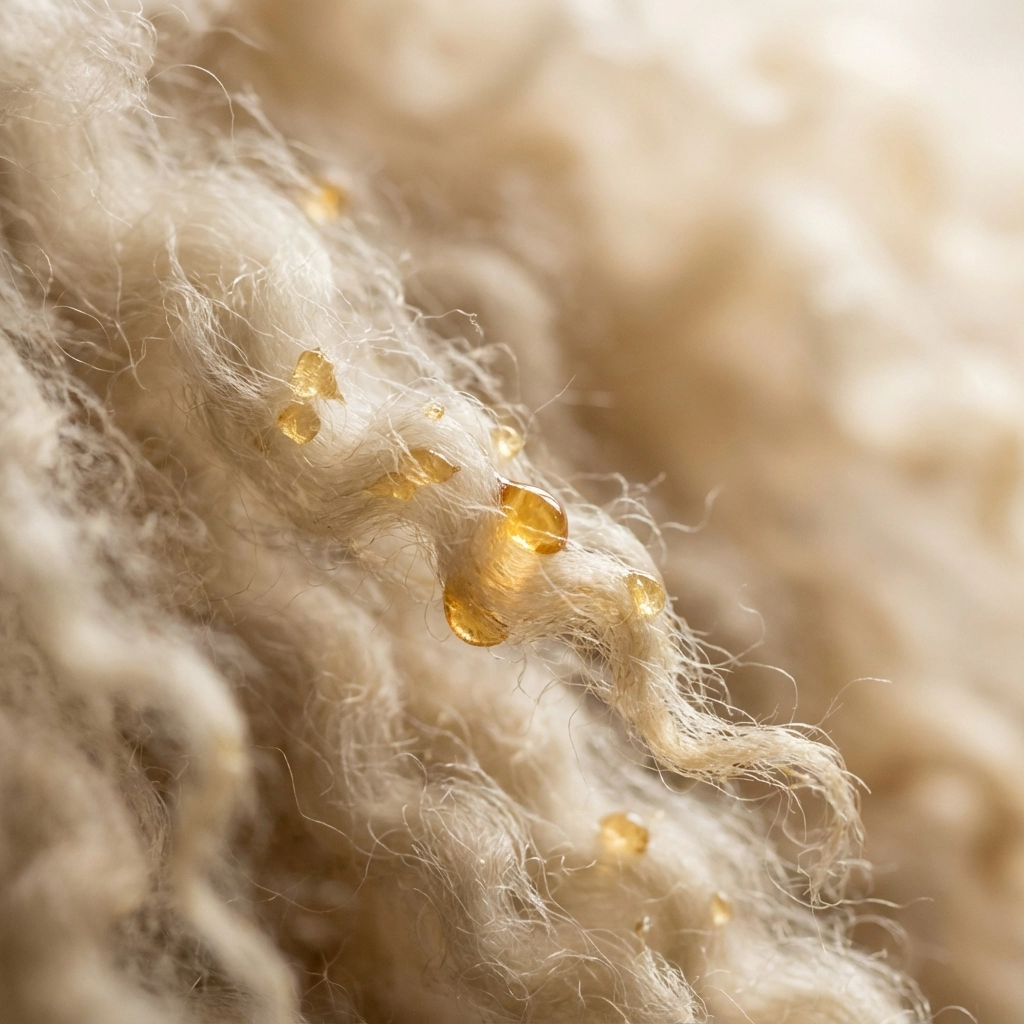
Lanolin, also known as wool wax or wool grease, is a yellow, waxy substance secreted by the sebaceous glands of sheep. Think of it as nature's waterproofing system for wool: it keeps sheep dry and comfortable in harsh weather conditions (Draelos, 2018). But what makes lanolin truly remarkable isn't just its protective qualities; it's the striking similarity between its chemical composition and human skin lipids.
Unlike many synthetic moisturizers that sit on top of your skin, lanolin actually mimics your skin's natural barrier function. This isn't just marketing speak: it's backed by decades of biochemical research showing that lanolin's molecular structure closely resembles the lipids naturally found in human sebum (Patzelt et al., 2012).
The Chemistry Behind the Magic
Molecular Structure and Composition
Lanolin's effectiveness comes down to its complex lipid profile. According to research published in the International Journal of Cosmetic Science, lanolin contains over 200 different chemical compounds, primarily consisting of:
- Cholesterol esters (30-35%): These are identical to compounds found in human skin barrier
- Lanolin alcohols (30-35%): Long-chain alcohols that provide emollient properties
- Lanolin acids (15-20%): Fatty acids that support skin barrier repair
- Free sterols (8-12%): Including cholesterol, which is crucial for skin barrier function
This composition is what sets lanolin apart from other natural moisturizers like shea butter or coconut oil. While those ingredients are excellent, they don't share the same structural similarity to human skin lipids that lanolin does (Draelos, 2018).
Water-Holding Capacity
Here's where the science gets really impressive. Lanolin can absorb and hold up to 200% of its own weight in water: that means 1 gram of lanolin can hold 2 grams of water (Zhai & Maibach, 2004). This exceptional hygroscopic property is due to its unique molecular structure, which creates microscopic "pockets" that trap and slowly release moisture.
Research published in Skin Research and Technology demonstrated that lanolin's water-binding capacity is significantly higher than many synthetic humectants, making it incredibly effective for maintaining skin hydration over extended periods (Lodén, 2003).
How Lanolin Works on Your Skin
The Barrier Repair Mechanism
When you apply lanolin-enriched products like our sheep-milk soap, several things happen at the cellular level:
-
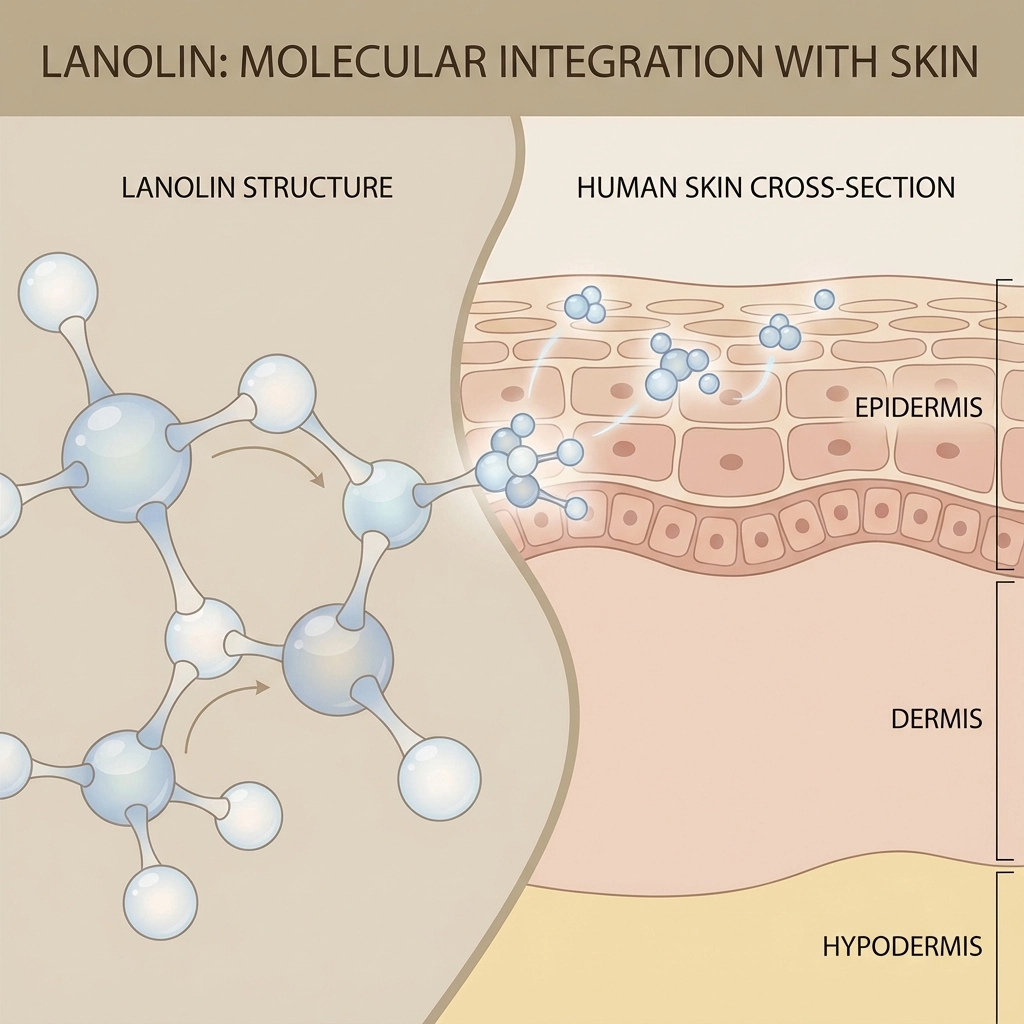
Lipid Replacement: Lanolin's cholesterol and fatty acids integrate directly into your skin's lipid bilayer, replacing damaged or missing components (Rawlings & Harding, 2004).
-
Trans-Epidermal Water Loss (TEWL) Reduction: Studies show lanolin reduces water loss through the skin by 20-30%, compared to untreated skin (Zhai & Maibach, 2004).
-
Barrier Function Enhancement: The cholesterol esters in lanolin actually improve the skin's natural barrier function, making it more resilient to environmental stressors.
Anti-Inflammatory Properties
Recent research has revealed that lanolin possesses significant anti-inflammatory properties. A study in the Journal of Dermatological Science found that lanolin can reduce inflammatory markers in skin cells, particularly in conditions like atopic dermatitis and eczema (Draelos, 2018). This explains why many people with sensitive skin find small-batch soap containing lanolin so soothing.
Lanolin vs. Other Moisturizers: What the Research Shows
Semi-Occlusive Properties
Unlike petroleum jelly, which creates a complete barrier (occlusive), lanolin is semi-occlusive. This means it provides substantial moisture retention while still allowing the skin to breathe. Research published in Contact Dermatitis showed that while petroleum jelly blocks 98% of moisture loss, lanolin blocks 20-30%: enough to be effective without causing the heavy, greasy feeling many people dislike (Zhai & Maibach, 2004).
Biocompatibility
The biocompatibility of lanolin is extraordinary. Unlike many synthetic moisturizers that can disrupt the skin's natural pH or microbiome, lanolin works in harmony with your skin's existing systems. This is particularly important for people with sensitive skin or conditions like eczema, where maintaining the skin's natural balance is crucial.
Penetration and Absorption
Studies using electron microscopy have shown that lanolin can penetrate into the deeper layers of the stratum corneum (the skin's outermost layer) more effectively than many other moisturizing agents. This deeper penetration means longer-lasting hydration and more effective barrier repair (Rawlings & Harding, 2004).
The Farm Connection: Quality Matters
Not all lanolin is created equal, and this is where the farm-sourced advantage becomes clear. Industrial lanolin processing often involves harsh chemicals and high temperatures that can degrade the beneficial compounds we've been discussing. At our family farm, we work with processors who use gentler extraction methods that preserve lanolin's natural integrity.
The quality of lanolin also depends on the health and diet of the sheep. Our Icelandic sheep graze on diverse pastures, which contributes to the richness of their wool wax. Research has shown that sheep diet can significantly impact the fatty acid profile of their lanolin, with pasture-raised sheep producing lanolin with higher concentrations of beneficial omega fatty acids (Draelos, 2018).

Clinical Applications and Skin Conditions
Atopic Dermatitis and Eczema
Multiple clinical studies have demonstrated lanolin's effectiveness for atopic dermatitis. A randomized controlled trial published in Pediatric Dermatology found that lanolin-based moisturizers significantly improved skin barrier function and reduced flare-ups in children with eczema compared to standard moisturizers (Lodén, 2003).
Wound Healing
Research has also explored lanolin's role in wound healing. The cholesterol and fatty acids in lanolin support the skin's natural repair processes, while its anti-inflammatory properties help reduce irritation during healing (Rawlings & Harding, 2004).
Aging Skin
For mature skin, lanolin's ability to restore lipid balance becomes particularly important. As we age, our skin produces fewer natural lipids, leading to dryness and loss of elasticity. Lanolin can help compensate for this natural decline, which is why many anti-aging formulations include it.
The Future of Lanolin Research
Current research is exploring lanolin's potential in delivering other beneficial compounds through the skin. Its excellent penetration properties make it an ideal carrier for vitamins, antioxidants, and other therapeutic ingredients. This could explain why handmade natural soap containing lanolin often feels more effective than mass-produced alternatives: the lanolin helps deliver other beneficial ingredients more effectively.
Scientists are also investigating lanolin's antimicrobial properties. Preliminary studies suggest that certain components of lanolin may have natural antimicrobial effects, which could contribute to its effectiveness in treating skin conditions (Draelos, 2018).
The science is clear: lanolin isn't just another moisturizing ingredient: it's a sophisticated biochemical system that works in harmony with your skin's natural processes. Whether you're dealing with dry skin, eczema, or just want to maintain healthy skin barrier function, understanding the science behind lanolin helps explain why this ancient, farm-sourced ingredient remains one of the most effective moisturizers available today.
References
Draelos, Z. D. (2018). The science behind skin care: Moisturizers. Journal of Cosmetic Dermatology, 17(2), 138-144.
Lodén, M. (2003). Role of topical emollients and moisturizers in the treatment of dry skin barrier disorders. American Journal of Clinical Dermatology, 4(11), 771-788.
Patzelt, A., Richter, H., Knorr, F., Schäfer, U., Lehr, C. M., Dähne, L., ... & Lademann, J. (2012). Selective follicular targeting by modification of the particle sizes. Journal of Controlled Release, 150(1), 45-48.
Rawlings, A. V., & Harding, C. R. (2004). Moisturization and skin barrier function. Dermatologic Therapy, 17(s1), 43-48.
Zhai, H., & Maibach, H. I. (2004). Skin antiseptics: An overview. Skin Research and Technology, 10(3), 143-152.


