

Hey there! Ben here from Scalise Family Sheep Farm. Over the years, we've gotten so many questions from customers about skin concerns, everything from "How do you deal with dry hands?" to "What actually works for eczema?" As a farming family that's been working the land for generations, we've learned a thing or two about keeping our skin healthy despite constant exposure to sun, wind, soil, and everything else that comes with agricultural life.
Today, I thought I'd share some of the most common questions we get, along with what actually works for our family. And yes, I'm backing this up with real science: because while traditional wisdom is valuable, it's even better when research supports it!
"My Hands Are Constantly Cracked and Dry. What Do You Use?"
This is probably our number one question, and I totally get it. Farmwork is tough on hands: we're constantly washing off dirt, dealing with weather extremes, and handling materials that can be pretty harsh on skin.
Research shows that occupational hand dermatitis affects up to 70% of agricultural workers, with irritant contact dermatitis being the most common form (Zhai & Maibach, 2004). The constant wet-dry cycles and exposure to irritants break down the skin's natural barrier function.
In our family, we've found that timing is everything. We apply a heavy-duty moisturizer immediately after washing our hands, while the skin is still slightly damp. This helps trap moisture and repair the skin barrier more effectively (Lodén, 2003).
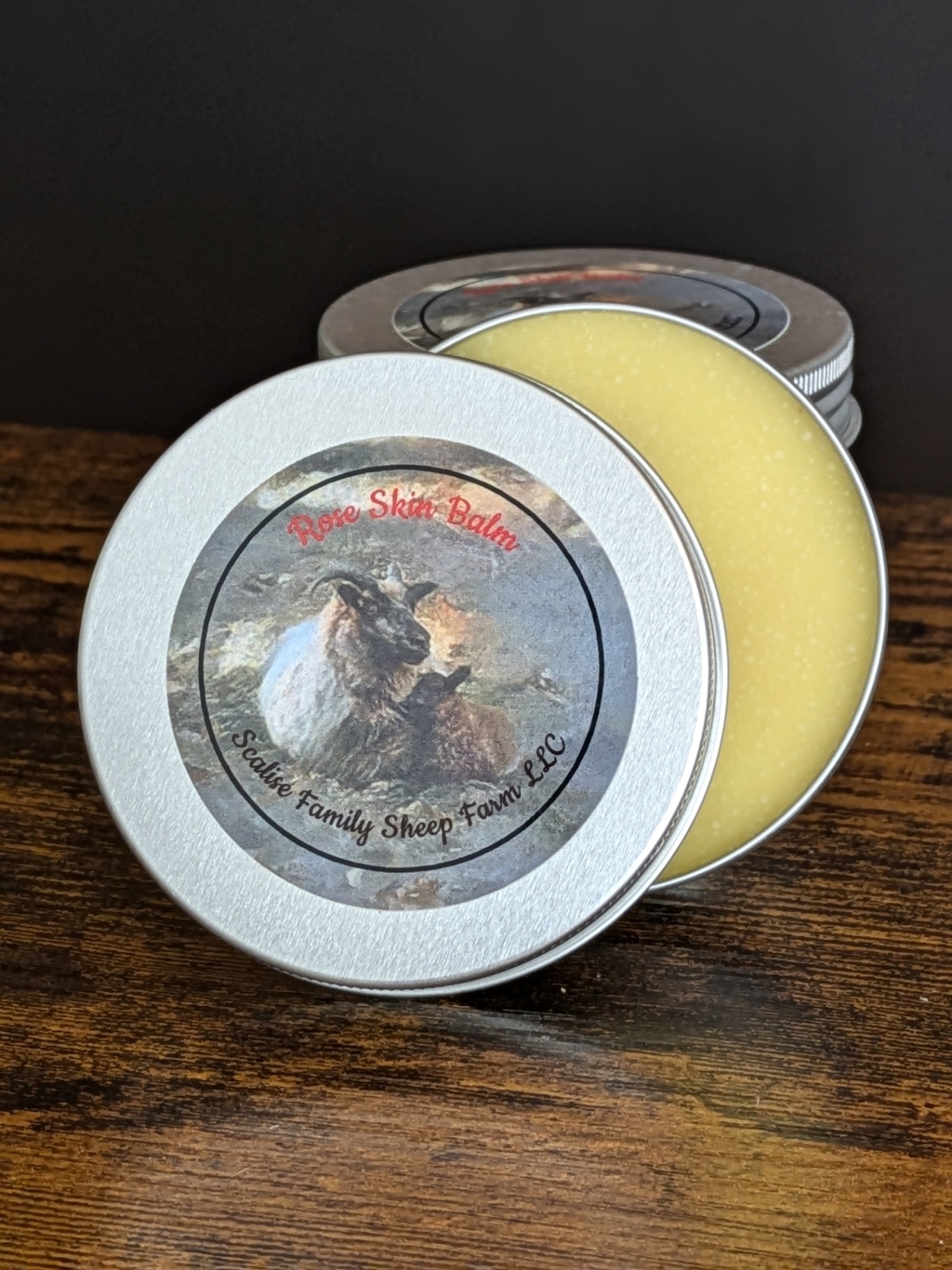
For really stubborn dryness, we use our rose skin balm at night. The lanolin and sheep milk proteins in it are incredibly healing: sheep milk contains natural alpha-hydroxy acids that gently exfoliate while moisturizing (Pulina et al., 2018). Plus, it's thick enough to create a protective barrier that lasts through the night.
"Does Natural Soap Really Make a Difference for Sensitive Skin?"
Short answer: absolutely. But let me explain why with some science behind it.
Commercial soaps often have a pH between 9-10, which disrupts the skin's natural acid mantle (pH 4.5-6.5). This disruption can increase irritation and make skin more susceptible to infection (Lambers et al., 2006).
Our sheep milk soaps are formulated to be much gentler. Sheep milk naturally contains lactic acid, which helps maintain the skin's proper pH balance while providing gentle exfoliation. A study in the International Journal of Cosmetic Science found that lactic acid-based cleansers significantly improved skin barrier function compared to standard alkaline soaps (Rawlings & Lombard, 2012).

My wife Sarah has incredibly sensitive skin: she breaks out from most commercial products. Since switching to our own handmade soaps, she rarely has issues. The difference isn't just anecdotal; research confirms that handmade soaps retain their natural glycerin content, which commercial manufacturing often removes (Spitz, 2004).
"What About Sun Damage? How Do You Protect Your Skin?"
Living and working outdoors means we're getting UV exposure year-round, not just in summer. Agricultural workers have significantly higher rates of skin cancer, with studies showing up to 3.5 times greater risk for certain types (Fortes et al., 2008).
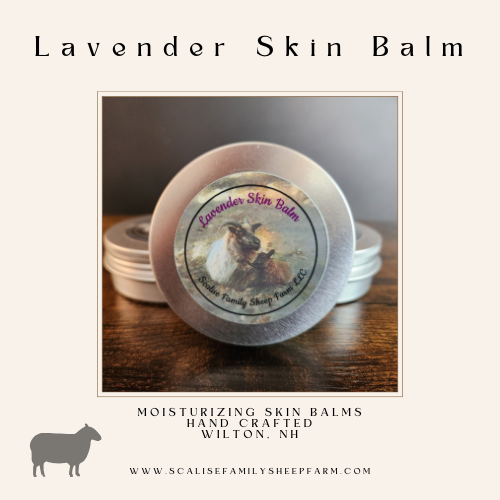
We're religious about broad-spectrum sunscreen, but we've also learned that antioxidants play a huge role in preventing and repairing sun damage. That's why we love our lavender skin balm: lavender oil contains rosmarinic acid and other compounds that have been shown to have photoprotective effects (Enshaieh et al., 2007).
Research published in Dermatologic Surgery demonstrated that topical antioxidants can significantly reduce UV-induced damage when applied consistently (Dreher & Maibach, 2001). We apply our balms not just for moisturizing, but as part of our daily protection routine.
"My Kids Have Eczema. Can Farm Life Make It Worse?"
This is a tough one because the answer is both yes and no. Environmental triggers like dust, pollen, and temperature changes can definitely flare up eczema. But interestingly, some research suggests that early exposure to farm environments might actually be protective.
The "hygiene hypothesis" is supported by studies showing that children raised on farms have lower rates of allergic diseases, including atopic dermatitis (von Mutius & Vercelli, 2010). However, once eczema is established, managing triggers becomes crucial.
For our kids, we focus on maintaining the skin barrier with gentle, fragrance-free products. Our frankincense skin balm has been a game-changer: frankincense has anti-inflammatory properties that research shows can help reduce skin irritation (Al-Yasiry & Kiczorowska, 2016).
"Are There Ingredients I Should Avoid?"
Based on both our experience and dermatological research, there are definitely some ingredients that can be problematic, especially for people with sensitive skin or those dealing with occupational exposures.
Sulfates are a big one. Sodium lauryl sulfate (SLS) is a known skin irritant that can cause contact dermatitis, especially with repeated exposure (Agner & Serup, 1990). That's why our soaps are sulfate-free.
Synthetic fragrances are another major culprit. The American Contact Dermatitis Society has identified fragrance mix as one of the most common allergens, causing reactions in up to 14% of people tested (Warshaw et al., 2013). We use only essential oils in our products, and even then, we're careful about concentrations.
Parabens are worth avoiding too. While the research is still evolving, some studies suggest they can cause hormonal disruption and skin sensitization (Darbre & Harvey, 2008). All our products are paraben-free.
"What's Your Family's Daily Skincare Routine?"
Our routine has to be practical: we don't have time for 10-step processes! Here's what actually works for us:
Morning: Gentle cleanse with our handmade soap, followed by a light application of skin balm with SPF. If we're doing particularly dirty work, we'll apply an extra layer of balm to hands and forearms as a barrier.
Midday: Quick rinse and reapply protection if needed. We keep a small tin of balm in the truck for touch-ups.
Evening: Thorough cleanse to remove the day's accumulation, followed by a heavier application of our healing balms. This is when we use targeted treatments like our peony balm for any problem areas.
Research supports this approach: studies show that consistent, simple routines are more effective than complicated ones that people can't maintain (Draelos, 2018).
The Bottom Line
After years of dealing with farming-related skin challenges, we've learned that the best approach combines traditional wisdom with modern science. Natural doesn't automatically mean better, but when you choose high-quality, well-formulated natural products, they can be incredibly effective.
The key is understanding your skin's specific needs and being consistent with your routine. Whether you're dealing with occupational exposures like we are, or just want healthier skin in general, focusing on gentle cleansing, proper moisturizing, and protection from environmental stressors will get you most of the way there.
Want to try what works for our family? Check out our full collection of handmade soaps and balms. And if you have specific questions about skin concerns, don't hesitate to reach out: we're always happy to share what we've learned!
References:
Agner, T., & Serup, J. (1990). Sodium lauryl sulphate for irritant patch testing. Contact Dermatitis, 23(4), 292-293.
Al-Yasiry, A. R. M., & Kiczorowska, B. (2016). Frankincense–therapeutic properties. Postępy Higieny i Medycyny Doświadczalnej, 70, 380-391.
Darbre, P. D., & Harvey, P. W. (2008). Paraben esters: review of recent studies of endocrine toxicity, absorption, esterase and human exposure. Journal of Applied Toxicology, 28(5), 561-578.
Draelos, Z. D. (2018). The science behind skin care: Cleansers. Journal of Cosmetic Dermatology, 17(1), 8-14.
Dreher, F., & Maibach, H. (2001). Protective effects of topical antioxidants in humans. Current Problems in Dermatology, 29, 157-164.
Enshaieh, S., Jooya, A., Siadat, A. H., & Iraji, F. (2007). The efficacy of 5% topical tea tree oil gel in mild to moderate acne vulgaris. Indian Journal of Dermatology, Venereology, and Leprology, 73(1), 22-25.
Fortes, C., de Vries, E., Aspinall, P., et al. (2008). Skin cancer and solar keratoses among European farmers. Occupational Medicine, 58(3), 151-152.
Lambers, H., Piessens, S., Bloem, A., Pronk, H., & Finkel, P. (2006). Natural skin surface pH is on average below 5. International Journal of Cosmetic Science, 28(5), 359-370.
Lodén, M. (2003). Role of topical emollients and moisturizers in the treatment of dry skin barrier disorders. American Journal of Clinical Dermatology, 4(11), 771-788.
Pulina, G., Milán, M. J., Lavín, M. P., et al. (2018). Invited review: Current production trends, farm structures, and economics of the dairy sheep and goat sectors. Journal of Dairy Science, 101(8), 6715-6729.
Rawlings, A. V., & Lombard, K. J. (2012). A review on the extensive skin benefits of mineral oil. International Journal of Cosmetic Science, 34(6), 511-518.
Spitz, L. (2004). Soap Manufacturing Technology. AOCS Press.
von Mutius, E., & Vercelli, D. (2010). Farm living: effects on childhood asthma and allergy. Nature Reviews Immunology, 10(12), 861-868.
Warshaw, E. M., Maibach, H. I., Taylor, J. S., et al. (2013). North American Contact Dermatitis Group patch test results: 2009 to 2010. Dermatitis, 24(2), 50-59.
Zhai, H., & Maibach, H. I. (2004). Skin anti-inflammatory agents: An overview. Skin Pharmacology and Physiology, 17(4), 143-152.


