

If you've got sensitive skin, you've probably spent way too much time (and money) trying to find the perfect soap that won't leave you looking like a tomato. Maybe you've heard that milk-based soaps are gentler, but now you're stuck choosing between sheep milk and goat milk options. Don't worry: we're breaking down everything you need to know to make the right choice for your skin.
Both sheep milk and goat milk soaps have gained serious popularity in the natural skincare world, and for good reason. They're both packed with nutrients that can help soothe irritated skin, but they work in slightly different ways. Let's dive into what makes each one special and help you figure out which might be your skin's new best friend.
What Makes Sheep Milk Soap So Special?
Sheep milk soap is like the quiet overachiever in the milk soap family. While it might not get as much attention as goat milk soap, it's absolutely loaded with skin-loving benefits that make it perfect for people dealing with sensitive skin.
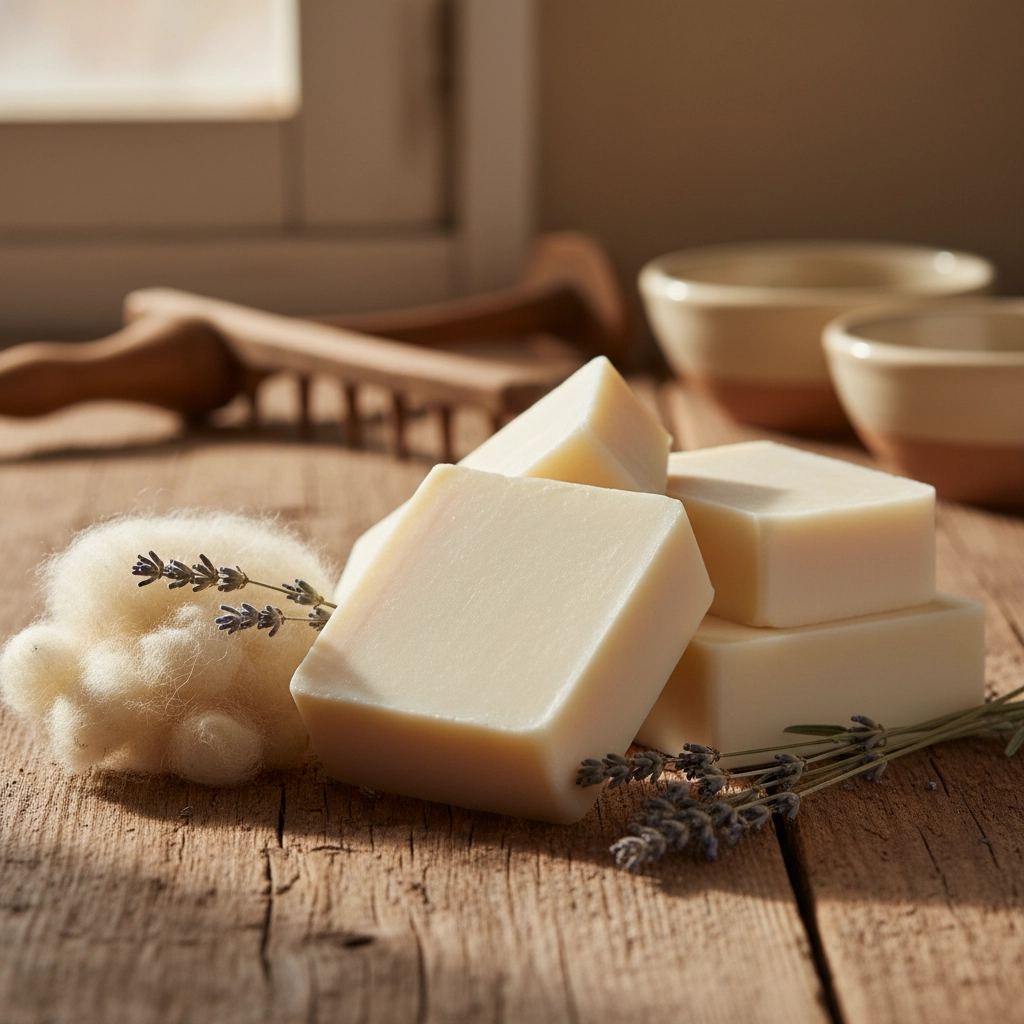
The biggest standout feature? Nutrient density. Sheep milk contains twice the nutrient concentration you'll find in goat milk. We're talking about higher levels of vitamins A, B, and E, plus essential minerals like calcium, phosphorus, potassium, and magnesium. Your skin basically gets a multivitamin every time you wash.
Here's something that might surprise you: sheep milk has a higher fat content than goat milk: we're talking 6% or more compared to goat milk's less than 4%. This translates directly into better moisturizing power. If your sensitive skin tends to be on the dry side, this extra fat content creates a protective barrier that helps lock in moisture long after you've finished washing.
The protein content is another win for sheep milk. With twice as much protein as goat milk, it helps repair and strengthen your skin barrier: which is crucial if you're dealing with sensitivity issues. A stronger skin barrier means better protection against irritants and environmental stressors.
What really sets sheep milk apart for sensitive skin is its less acidic nature. The higher lactose content and balanced pH create a gentler cleansing experience that's less likely to cause irritation. It's naturally anti-inflammatory, which means it can actually help calm down existing irritation while you're cleaning your skin.
Why Goat Milk Soap Has Such a Great Reputation
Goat milk soap has been the poster child for sensitive skin care for years, and there are some really solid reasons why. The biggest selling point is its pH compatibility with human skin: it's remarkably close to our skin's natural pH level, which helps maintain that all-important protective acid mantle.

This pH match isn't just a nice-to-have feature; it's genuinely important for sensitive skin. When you use products that are too alkaline (like many commercial soaps), they can disrupt your skin's natural balance and lead to irritation, dryness, and even breakouts. Goat milk soap helps maintain your skin's natural equilibrium.
The lactic acid content in goat milk soap provides gentle exfoliation without the harshness of physical scrubs or strong chemical exfoliants. This means it can help brighten your complexion and remove dead skin cells while being kind to sensitive skin. Over time, this gentle exfoliation can help improve your skin's texture and appearance.
Goat milk soap is particularly impressive when it comes to specific skin conditions. Research and user experiences consistently show it can help with eczema, psoriasis, rosacea, and dermatitis. The anti-inflammatory properties help reduce redness and irritation, while the moisturizing components help repair damaged skin barriers.
Head-to-Head Comparison: The Numbers Don't Lie
Let's get specific about how these two soaps actually stack up against each other:
Moisturizing Power: Sheep milk wins here with its higher fat content (6%+ vs <4%). If intense hydration is your main concern, sheep milk soap provides more long-lasting moisture.
pH Balance: Goat milk takes the lead with its closer match to human skin pH. This makes it less likely to cause immediate irritation upon use.
Nutrient Concentration: Sheep milk comes out ahead with twice the overall nutrient density, giving your skin more vitamins and minerals per wash.
Gentle Exfoliation: Goat milk soap provides natural exfoliation through lactic acid, while sheep milk soap focuses more on nourishment without the exfoliating component.
Protein Content: Sheep milk contains significantly more protein, which is crucial for skin barrier repair and maintenance.
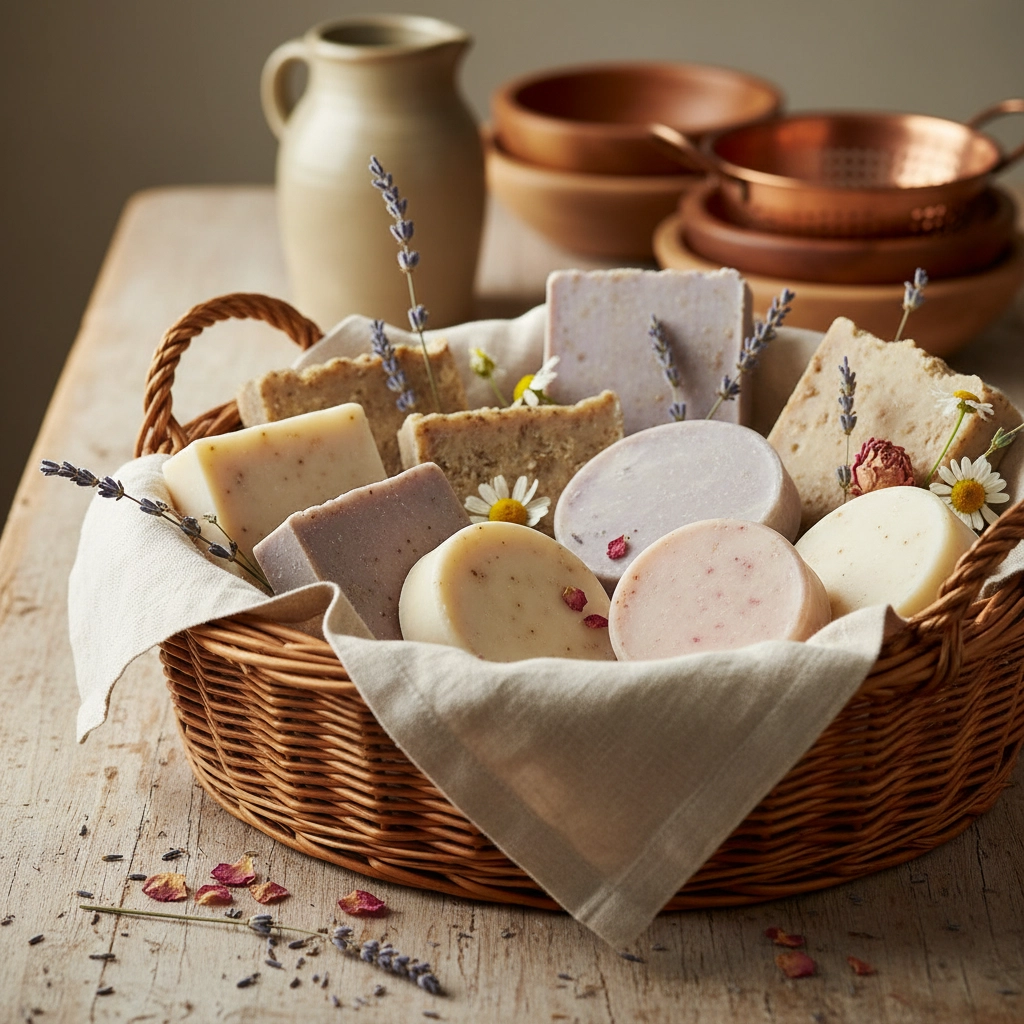
Which One Should You Choose?
The answer really depends on what your sensitive skin needs most. Here's how to think about it:
Go with sheep milk soap if:
- Your sensitive skin is also very dry or dehydrated
- You want maximum moisturizing power in your cleanser
- You prefer less acidic formulations
- Your main goal is intense nourishment and hydration
- You're dealing with extremely sensitive skin that reacts to most products
If you're looking for high-quality sheep milk soap options, you might want to check out varieties like lavender sheep milk soap or rose sheep milk soap that combine the benefits of sheep milk with soothing essential oils.
Choose goat milk soap if:
- You have sensitive skin that's also prone to occasional breakouts
- You want gentle exfoliation along with cleansing
- You're dealing with specific conditions like rosacea or dermatitis
- You prefer products that closely match your skin's natural pH
- Your sensitive skin tolerates mild acids well
The Real-World Test
Here's the thing about sensitive skin: what works for one person might not work for another, even if they have similar symptoms. The only way to know for sure which milk soap will work best for you is to try them both.
Start with small sample sizes if possible, and introduce only one new product at a time. Use the soap for at least a week (unless you experience immediate irritation) to see how your skin responds. Pay attention not just to how your skin feels immediately after washing, but also how it looks and feels throughout the day.
Some people find that they can alternate between the two types depending on their skin's current needs. For example, you might use sheep milk soap during dry winter months when you need extra moisture, then switch to goat milk soap during warmer weather when gentle exfoliation becomes more important.
Beyond the Basics: What to Look for in Quality Milk Soaps
Regardless of whether you choose sheep milk or goat milk soap, there are some quality indicators to keep in mind:
Look for soaps that list milk as one of the first ingredients: this ensures you're getting enough milk content to actually benefit your skin. Avoid soaps with long lists of synthetic additives, especially if you have sensitive skin. The simpler the ingredient list, the better.
Consider the additional ingredients too. Essential oils like lavender or frankincense can provide extra soothing benefits, while ingredients like charcoal might be too intense for very sensitive skin types.
The Bottom Line
Both sheep milk and goat milk soaps offer genuine benefits for sensitive skin, but they excel in different areas. Goat milk soap edges ahead for overall compatibility with sensitive skin due to its pH balance and gentle exfoliating properties, making it particularly good for those dealing with multiple skin concerns or specific conditions like eczema or rosacea.
However, if your primary need is intense hydration and nourishment for very dry, sensitive skin, sheep milk soap's superior fat content and nutrient density make it the stronger choice. The less acidic formulation can be especially beneficial for people whose skin reacts poorly to even mildly acidic products.
Remember, the "best" soap for sensitive skin is the one that works for your specific skin. Both options are gentle, nourishing, and designed with sensitive skin in mind: you really can't go wrong with either choice. The key is understanding what your skin needs most and choosing accordingly.


