

If you've been curious about sheep milk soap but weren't sure where to start, you're in the right place! We get tons of questions from folks who are intrigued by this luxurious, all-natural skincare option. Whether you're dealing with sensitive skin, looking for better moisturizing properties, or just want to try something new and natural, we've got you covered with answers to the most common questions about sheep milk soap.
What exactly is sheep milk soap?
Sheep milk soap is a premium skincare product made using fresh sheep's milk as the primary fat ingredient in the soap-making process. Unlike traditional soaps that can be harsh and stripping, sheep milk soap incorporates the natural fats and nutrients from sheep's milk to create a gentle, moisturizing cleansing bar that actually nourishes your skin while it cleans.
The milk serves as both a nourishing ingredient and the essential fat component needed for soap making through a process called saponification. At our farm, we use fresh milk from our own Icelandic sheep flock, ensuring the highest quality and freshest ingredients possible.
What are the main benefits of sheep milk soap for my skin?
Sheep milk soap is packed with skin-loving benefits that you just won't find in regular store-bought soap. Here's what makes it special:
Intense Hydration: The high fat content (around 6%) provides deep moisture that keeps your skin soft and supple long after you've dried off.
Natural Exfoliation: Sheep milk contains lactic acid, a gentle alpha-hydroxy acid that naturally removes dead skin cells and brightens your complexion without harsh scrubbing.
Nutrient Powerhouse: It's loaded with vitamins A, B, and E, plus essential minerals like calcium, phosphorus, potassium, and magnesium that help revitalize tired skin and support healthy cell regeneration.
Anti-Inflammatory Properties: The natural compounds in sheep milk help reduce redness, irritation, and dryness, making it perfect for problem skin areas.
Skin Barrier Support: Essential fatty acids help strengthen your skin's natural moisture barrier, keeping irritants out and moisture in.
How does sheep milk soap compare to goat milk soap?
This is one of our most asked questions! While goat milk soap has gotten a lot of attention, sheep milk soap actually has some significant advantages:
Double the Nutrients: Sheep milk contains twice the nutrient concentration found in goat milk, with approximately 6% fat content compared to goat milk's less than 4%. That means almost twice the moisturizing benefits for your skin.
Higher Protein Content: Sheep milk has twice as much protein as goat milk, along with higher levels of vitamins A, B, and E, and essential minerals.
Less Acidic: Sheep milk is less acidic than goat milk and contains more lactose, making it even gentler and less irritating: perfect for sensitive skin types.
Richer Lather: The higher fat and protein content creates a thicker, more velvety lather that feels luxurious while leaving your skin incredibly soft.
Is sheep milk soap suitable for sensitive skin?
Absolutely! Sheep milk soap is actually ideal for sensitive skin types. Here's why:
Hypoallergenic: It's gentle and naturally hypoallergenic, making it suitable for all skin types, including the most sensitive.
Balanced pH: The pH level is much closer to your skin's natural pH compared to traditional soaps, which makes it way less harsh and drying.
Anti-Inflammatory: The natural soothing properties make it perfect for people dealing with eczema, psoriasis, or dermatitis.
Non-Irritating: Because sheep milk is less acidic than other milk types, it's particularly gentle for those who react poorly to more acidic products.

How do I use sheep milk soap?
Using sheep milk soap is just like using any other soap, but you'll definitely notice the difference! Simply wet your skin, apply the soap, work up a rich lather, and rinse thoroughly. For best results, use it daily during your regular shower or bath routine.
Pro tip: Some of our sheep milk soaps come with felted wool wrapping, which creates a built-in washcloth that gently exfoliates while producing an incredibly creamy lather. The felted wool also makes the soap last longer and gives you better grip so it won't slip from your hands!
What makes sheep milk soap different from regular soap?
The difference is night and day! Here's what sets sheep milk soap apart:
Superior Moisturizing: The 6%+ fat content provides exceptional hydration that regular soaps just can't match.
Better pH Balance: Traditional soaps are often alkaline with high pH levels that can break down your skin's natural oil layer and cause irritation. Milk-based soaps have a pH much closer to your skin's natural level.
Natural Nutrients: The concentrated vitamins, minerals, and proteins create a powerhouse of nutrition for your skin that standard soaps simply cannot provide.
Built-in Exfoliation: The natural lactic acid provides gentle exfoliation without needing harsh additives or chemicals.
Can sheep milk soap help with anti-aging?
Yes! While it's not a fountain of youth, sheep milk soap does have some impressive anti-aging properties:
Lactic Acid Benefits: The natural lactic acid is an alpha-hydroxy acid that can help reduce the appearance of fine lines and wrinkles when used regularly.
Age Spot Fading: It can help fade age spots while being gentle enough for sensitive skin.
Vitamin Powerhouse: Rich in vitamin E and B-complexes, which nourish the skin and help prevent premature aging.
Cell Regeneration: The vitamins and minerals help regenerate skin cells and improve skin elasticity for a more youthful appearance.
Gentle Exfoliation: Regular use reveals smoother, more radiant skin by removing dead skin cells naturally.
How long does sheep milk soap last?
When stored properly, handcrafted sheep milk soap can last 12-18 months. To maximize its lifespan:
- Keep it in a cool, dry place away from direct sunlight
- Use a soap dish with drainage to keep it from sitting in water
- Allow it to air dry between uses
- Store unused bars in a cool, dry place
The natural ingredients mean there are no harsh preservatives, so proper storage is key to maintaining quality and effectiveness.
How is sheep milk soap made on your farm?
At Scalise Family Sheep Farm, we take pride in our traditional soap-making process. We start with fresh milk from our own Icelandic sheep, which is known for its exceptional quality and high nutrient content. Our sheep graze on natural pastures, ensuring the healthiest, most nutrient-rich milk possible.
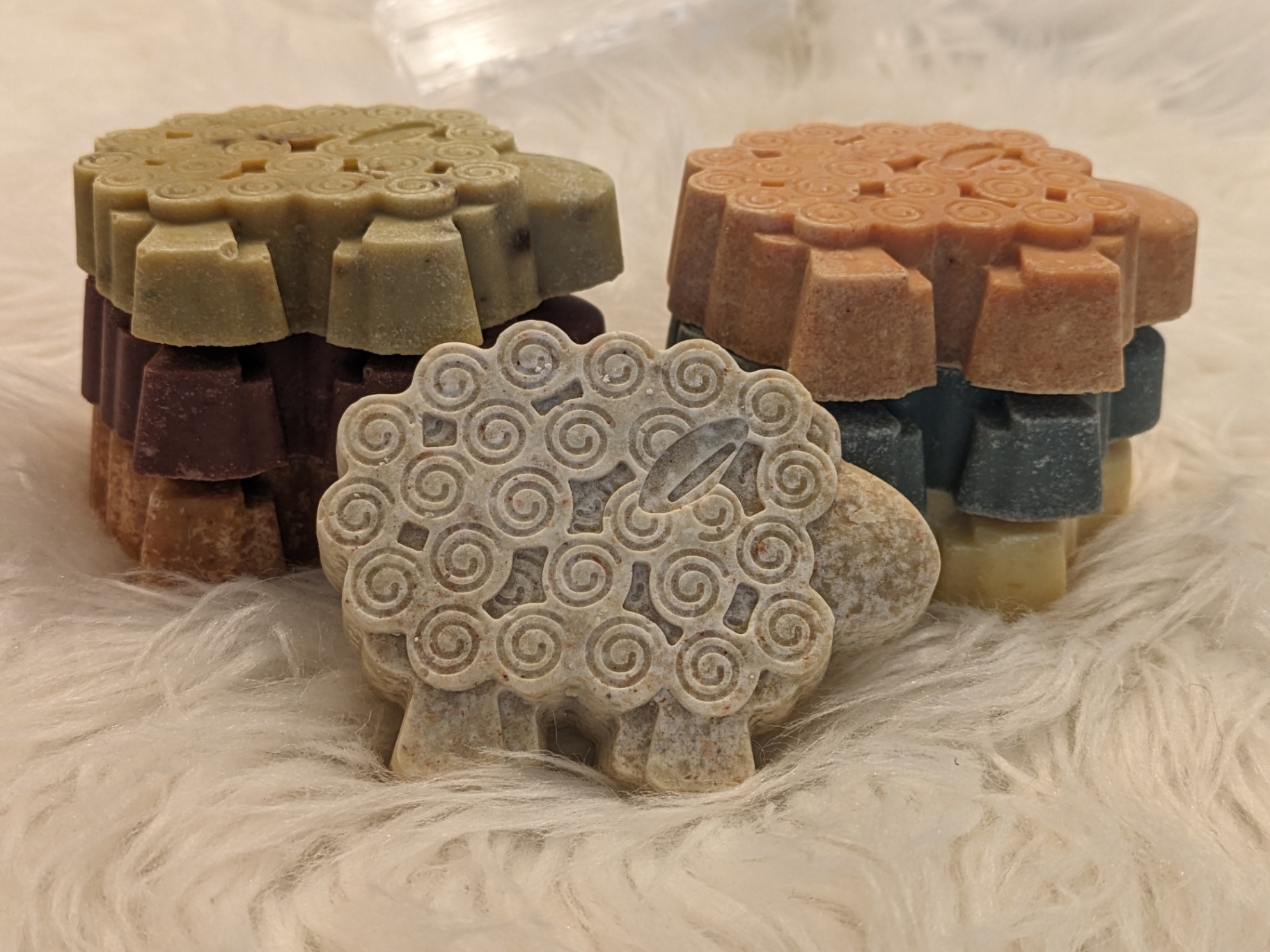
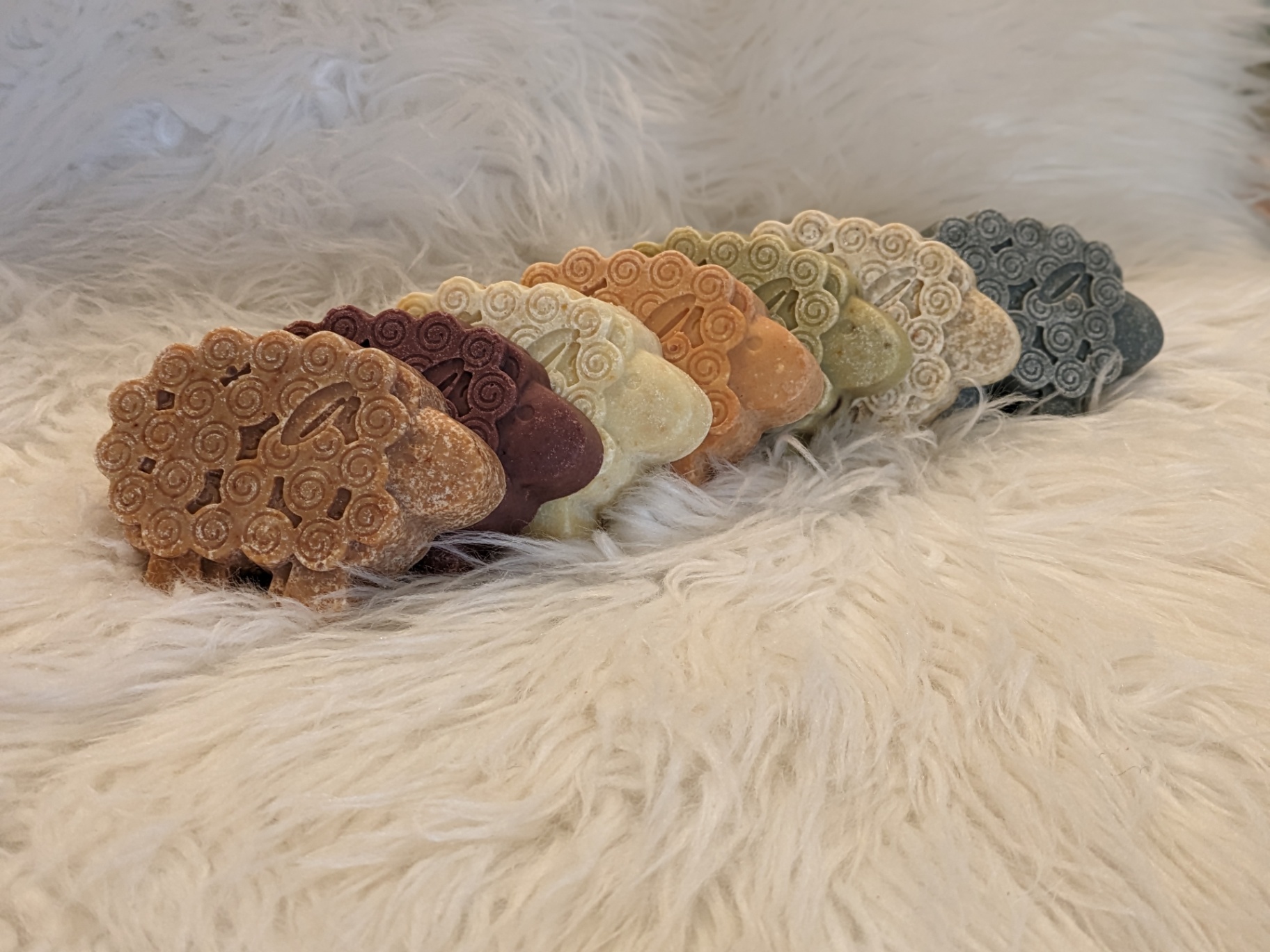
We use the cold-process method, which preserves all the beneficial properties of the sheep milk. Each bar is carefully crafted by hand, shaped into our signature sheep design, and cured for several weeks to create the perfect bar. We never use artificial colors, harsh chemicals, or synthetic fragrances: just pure, natural ingredients that your skin will love.
Are there any specific skin conditions that benefit from sheep milk soap?
Sheep milk soap can be particularly beneficial for several skin conditions:
Eczema and Dermatitis: The anti-inflammatory properties and gentle pH help soothe irritated, inflamed skin.
Dry Skin: The high fat content provides intense moisture that lasts.
Psoriasis: The gentle exfoliation from lactic acid can help with flaky skin without irritation.
Acne-Prone Skin: The antibacterial properties help cleanse without over-drying, which can actually make acne worse.
Mature Skin: The nutrients and gentle exfoliation help with skin renewal and elasticity.
Of course, if you have serious skin conditions, it's always best to consult with your dermatologist before making any changes to your skincare routine.
Why choose sheep milk soap from a family farm?
When you choose sheep milk soap from a family farm like ours, you're getting something truly special. We know our sheep individually, control every step of the process from pasture to packaging, and take pride in creating a product that we'd be happy to use on our own families.
You're also supporting sustainable, ethical farming practices and getting the freshest, highest-quality ingredients possible. Plus, you can feel good knowing exactly where your soap comes from and how it's made.
Ready to experience the difference sheep milk soap can make for your skin? Check out our collection of handcrafted sheep milk soaps and discover why so many people are making the switch to this luxurious, natural skincare option!
References:
- Park YW, Juárez M, Ramos M, Haenlein GFW. Physico-chemical characteristics of goat and sheep milk. Small Ruminant Research. 2007;68(1–2):88–113. https://www.sciencedirect.com/science/article/abs/pii/S0921448806002549
- Mayer HK, Fiechter G. Physical and chemical characteristics of sheep and goat milk in Austria. International Dairy Journal. 2012;24(1):57–63. https://www.sciencedirect.com/science/article/pii/S0958694611002573
- Li S, Delger M, Dave A, Singh H, Ye A. Seasonal Variations in the Composition and Physicochemical Characteristics of Sheep and Goat Milks. Foods. 2022;11(17):1737. https://mdpi-res.com/d_attachment/foods/foods-11-01737/article_deploy/foods-11-01737-v3.pdf
- Moatsou G, Sakkas L. Sheep milk components: Focus on nutritional advantages and biofunctional potential. Small Ruminant Research. 2019. https://www.sciencedirect.com/science/article/pii/S0921448819301294
- Caroprese M, Ciliberti MG, Albenzio M, Marino R, Santillo A, Sevi A. Role of antioxidant molecules in milk of sheep. Small Ruminant Research. 2019. https://www.sciencedirect.com/science/article/pii/S0921448819301312
- Paszczyk B, Tońska E, Łuczyńska J. Health‑promoting value of cow, sheep and goat milk and yogurts. Mljekarstvo. 2019;69(3):182–192. https://hrcak.srce.hr/clanak/323315
- Lambers H, Piessens S, Bloem A, Pronk H, Finkel P. Natural skin surface pH is on average below 5, which is beneficial for its resident flora. International Journal of Cosmetic Science. 2006;28(5):359–370. https://onlinelibrary.wiley.com/doi/10.1111/j.1467-2494.2006.00344.x
- Schmid‑Wendtner M‑H, Korting HC. The pH of the skin surface and its impact on the barrier function. Skin Pharmacology and Physiology. 2006;19(6):296–302. https://doi.org/10.1159/000094670
- Skin Cleansing without or with Compromise: Soaps and Syndets. 2022. https://pmc.ncbi.nlm.nih.gov/articles/PMC8954092/
- Smith WP. Epidermal and dermal effects of topical lactic acid. Journal of the American Academy of Dermatology. 1996;35(3 Pt 1):388–391. https://www.jaad.org/article/S0190-9622(96)90602-7/abstract
- Ditre CM, Griffin TD, Murphy GF, Sueki H, Telegan B, Johnson WJ, Yu RJ, Van Scott EJ. Effects of alpha‑hydroxy acids on photoaged skin: a pilot clinical, histologic, and ultrastructural study. Journal of the American Academy of Dermatology. 1996;34(2):187–195. https://pubmed.ncbi.nlm.nih.gov/8642081/
- The roles of pH and concentration in lactic acid‑induced stimulation of epidermal turnover. PubMed (NIH). https://pubmed.ncbi.nlm.nih.gov/9648571/
- Prestes PS, de Oliveira MMM, Leonardi GR. Randomized clinical efficacy of superficial peeling with 85% lactic acid versus 70% glycolic acid. Anais Brasileiros de Dermatologia. 2013;88(6):900–905. http://www.scielo.br/pdf/abd/v88n6/0365-0596-abd-88-06-0900.pdf
- Lei D, Liu D, Zhang J, Zhang L, Man M‑Q. Benefits of topical natural ingredients in epidermal permeability barrier. Frontiers in Physiology. 2024. https://www.frontiersin.org/journals/physiology/articles/10.3389/fphys.2023.1275506/full
- Skin Barrier Function: The Interplay of Physical, Chemical, and Immunologic Properties. Frontiers in Medicine. 2023. https://pmc.ncbi.nlm.nih.gov/articles/PMC10706187/
- Talpur FN, Bhanger MI, Memon NN. Milk fatty acid composition of indigenous goat and ewe breeds from Sindh, Pakistan. Food Chemistry. 2009;112(3):629–635. https://www.sciencedirect.com/science/article/pii/S0889157508001749
- American Academy of Dermatology Association. Soap or cleanser: Which is best for your skin? Accessed 2025. https://www.aad.org/public/everyday-care/skin-care-basics/care/soap-or-cleanser
- U.S. Food & Drug Administration. Soap. Accessed 2025. https://www.fda.gov/cosmetics/cosmetic-products/soap
- U.S. Food & Drug Administration. Shelf Life/Expiration Dating of Cosmetics. Accessed 2025. https://www.fda.gov/cosmetics/cosmetics-labeling-claims/shelf-life-expiration-dating-cosmetics
- DermNet New Zealand. Alpha hydroxy acids. Accessed 2025. https://dermnetnz.org/topics/alpha-hydroxy-acids


