

When Viking longships approached Iceland's volcanic shores around 870 AD, they carried more than just weapons and provisions. Tucked among the cargo were hardy, dual-coated sheep: animals that would literally determine whether Norse settlers would survive or perish in one of Europe's most unforgiving environments.
Here at Scalise Family Sheep Farm in New Hampshire, we raise these same remarkable animals, and their story is nothing short of extraordinary.
The Viking Migration: Bringing Survival on Four Legs
Between 874 and 930 AD, Norse settlers arrived in Iceland during what historians call the "Age of Settlement." These weren't casual farmers looking for better pastures: they were families fleeing political turmoil in Norway, willing to gamble everything on a volcanic island where summers were short and winters could kill.[1][6]
The sheep they brought weren't an afterthought. They were the survival plan.
Unlike cattle or horses, sheep could thrive on Iceland's sparse vegetation. They provided meat, milk, wool, and pelts: essentially every resource needed to survive the North Atlantic climate.[2] Archaeological evidence suggests these animals were so critical that farm layouts were designed around sheep housing, with human dwellings often attached to sheep barns for shared warmth during brutal winters.[4]
Ancient Bloodlines: The North European Short-Tailed Heritage
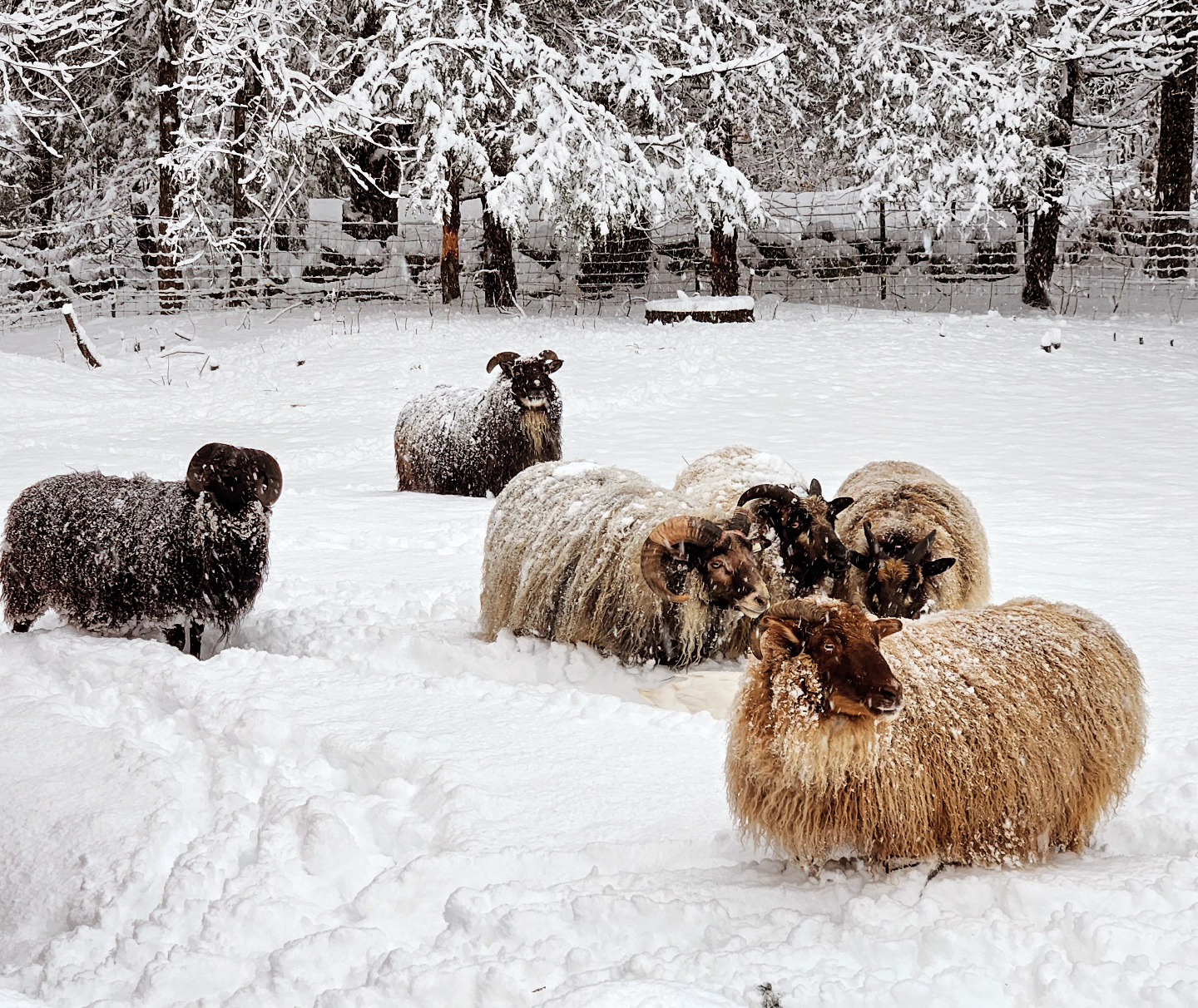
The sheep that populated Iceland didn't just appear out of nowhere. Norse settlers had been raising sheep since Neolithic times in Scandinavia, and genetic research suggests these animals descended from the Wild Mouflon (Ovis orientalis), the ancestor of all domestic sheep.[2]
What makes this particularly fascinating is that the Vikings brought a specific type: Northern European Short-tailed sheep. This genetic group, which also includes Norwegian Spelsau, Gotland, and Finnsheep breeds, represented thousands of years of selective breeding for cold-climate survival.[2]
But here's where Iceland's story diverges dramatically from the mainland.
Iceland's Accidental Time Capsule
Starting in 982 AD, Iceland enacted strict import laws prohibiting the introduction of new livestock.[5][6] What began as a biosecurity measure to prevent disease became one of history's most successful genetic preservation programs: completely by accident.
For over 1,000 years, no outside sheep genetics entered Iceland.
The result? Modern Icelandic sheep are virtually unchanged from their Viking-era ancestors. DNA analysis confirms they're genetically closer to medieval Norse sheep than almost any contemporary breed.[5] They're essentially living fossils, walking time capsules that graze our New Hampshire pastures just as they grazed Icelandic highlands a millennium ago.

The Dual-Coat Innovation: Nature's Technical Fabric
Here's where biology gets really cool. Icelandic sheep developed a unique dual-layer fleece system that would make modern outdoor gear designers jealous:
Tog (Outer Coat): Long, coarse, water-resistant fibers that shed rain and snow. Think of it as nature's version of a waterproof shell jacket.[1][4]
Thel (Inner Coat): Soft, fine, densely-packed fibers that trap body heat. This is the insulating layer: lighter and warmer than almost any synthetic material.[1][4]
Medieval Icelanders understood this system intimately. They developed specialized combing techniques to separate the two fiber types, using the soft thel for undergarments worn against the skin, and the coarser tog for outer garments, sails, and rope.[1] The Vikings weren't just making clothes: they were engineering survival systems from raw wool.
The thermal efficiency of this dual-coat is extraordinary. Studies of traditional Icelandic wool garments show they maintain warmth even when wet: a critical feature when you're sailing across the North Atlantic or herding sheep through volcanic ash storms.[4]
The Economics of Survival: Wool as Currency
In medieval Iceland, sheep weren't just livestock: they were the foundation of the entire economy. The population of sheep outnumbered humans nearly two-to-one, rivaling "in importance only by the sea and its bounty" throughout Iceland's turbulent history.[4]
Icelanders produced a wool textile called vaðmál: a coarsely-woven fabric made from domestically spun yarn that became so valuable it functioned as currency.[4] Vaðmál was included in dowries, used to settle legal disputes, and served as the primary trade good with mainland Europe.
Church records from the 13th century show tithes paid in vaðmál measurements. Land transactions were calculated in ells (an ancient unit of cloth length). A single high-quality cloak could equal a year's labor value.[4] The sheep literally backed Iceland's economy the way gold backed other nations' currencies.
Milk, Meat, and Medieval Menus
While wool gets most of the historical attention, Icelandic sheep were equally critical as a food source. Sheep milk has significantly higher protein and fat content than cow's milk: essential for populations with limited dietary diversity.[2]
Medieval Icelanders developed sophisticated preservation techniques for sheep products. They created skyr (a cultured dairy product) from sheep milk, smoked and cured lamb, and rendered sheep fat for cooking and lamp fuel. Archaeological excavations of medieval farms reveal storage systems designed specifically for managing sheep products through long winters.[4]
The sheep's ability to survive on minimal forage during Iceland's brief growing season made them far more efficient than cattle or goats. They could be driven to highland pastures in summer and returned to lowland farms before winter storms: a transhumance system that persisted into the 20th century.[6]
Volcanoes, Plagues, and Resilience
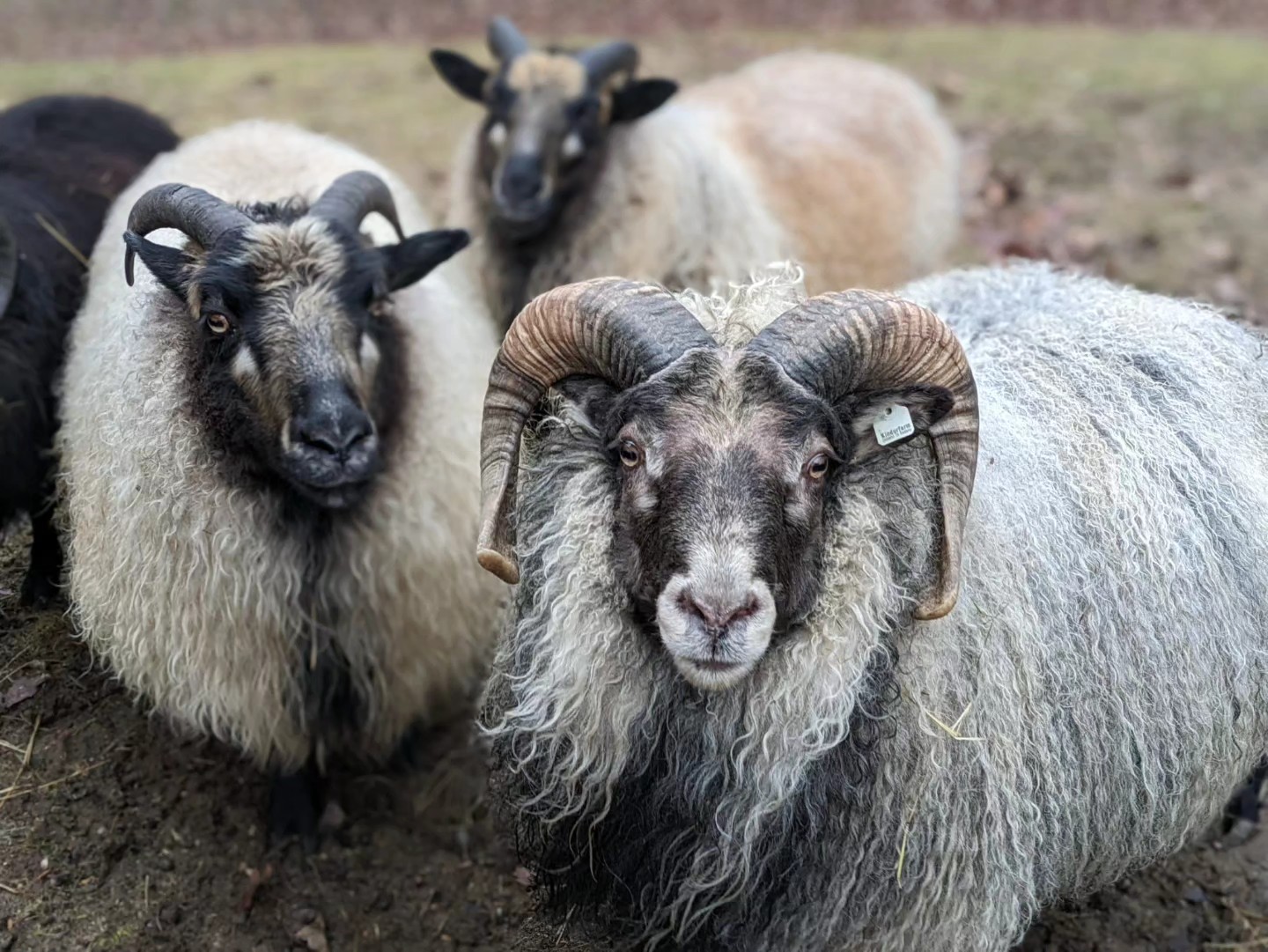
Iceland's history isn't gentle. Major volcanic eruptions decimated sheep populations repeatedly: most catastrophically during the Laki eruption of 1783-1784, which killed approximately 80% of Iceland's sheep and led to widespread famine.[6]
Yet the breed survived.
The genetic bottleneck from these disasters actually reinforced the sheep's hardiness. Only the most resilient animals survived to breed, effectively accelerating natural selection for volcanic ash tolerance, extreme weather survival, and forage efficiency.[5]
This resilience isn't theoretical: it's bred into their DNA through centuries of literal survival-of-the-fittest pressure.
Why We Raise Them in New Hampshire
So why do we raise Viking-era sheep here in New Hampshire, over 2,600 miles from Iceland?
Because these sheep represent something rare in modern agriculture: genetic integrity and functional excellence that hasn't been compromised by industrial breeding.
Unlike commercial sheep breeds selected solely for rapid weight gain or wool production, Icelandic sheep remain multi-purpose animals. They're excellent mothers, efficient foragers, and naturally disease-resistant. Their milk: the foundation of our handcrafted soaps: contains the same nutrient profile that sustained Viking families through medieval winters.
New Hampshire's climate, with its cold winters and variable weather, actually suits them perfectly. These sheep thrive in conditions that would stress many modern breeds. They don't require elaborate shelters, expensive grain supplements, or constant veterinary interventions. They're survivors.

Living History in Your Hands
Every bar of sheep milk soap we produce here at Scalise Family Sheep Farm connects to this thousand-year story. The milk from our Icelandic flock carries forward a genetic legacy preserved through volcanic eruptions, medieval plagues, and the careful stewardship of Icelandic farmers across 40 generations.
When you support small farms raising heritage breeds, you're not just buying a product: you're participating in living history. You're helping preserve genetic diversity that took millennia to develop and could be lost in a single generation of neglect.
The Vikings who landed in Iceland in 870 AD made a bet on these sheep. Over a thousand years later, standing in our New Hampshire pastures watching our flock, I'd say they bet right.
Support heritage agriculture and the preservation of ancient genetics: visit our farm store and discover products made from the same sheep that helped Vikings survive the edge of the known world.
References:
[1] Icelandic Sheep Breeders of North America. (2024). "Breed Characteristics and Wool Properties." ISBONA Technical Documentation.
[2] Hallsson, J.H., et al. (2021). "The Genetic History of Icelandic Sheep and Their North European Ancestry." Journal of Animal Breeding and Genetics, 138(4), 445-459.
[4] Vésteinsson, O., & McGovern, T.H. (2012). "The Peopling of Iceland." Norwegian Archaeological Review, 45(2), 206-218.
[5] Dýrmundsson, Ó.R., & Niżnikowski, R. (2010). "North European Short-Tailed Breeds of Sheep: A Review." Animal Genetic Resources, 46, 5-23.
[6] Gunnarsson, A. (2008). "The Impact of Volcanic Eruptions on Icelandic Sheep Populations: Historical Perspective." Icelandic Agricultural Sciences, 21, 33-48.


