

For decades, the skincare industry has preached a gospel of aggressive cleanliness. We were taught to squeak: to strip away every trace of oil, sebum, and microscopic life in the pursuit of "pure" skin. But as dermatological science marches into the multi-omics era, our understanding of the skin has undergone a radical paradigm shift. Your skin is not a sterile surface to be sanitized; it is a vibrant, living ecosystem: a dynamic cutaneous microbiome populated by trillions of bacteria, fungi, and viruses that form your body's frontline shield.
When you wash your face or body, your cleanser either respects this delicate microbial garden or wages chemical warfare upon it. While the market has seen a massive surge in plant-based and coconut-oil soap bars, many of these formulations fail to consider the complex ecological balance of the skin.
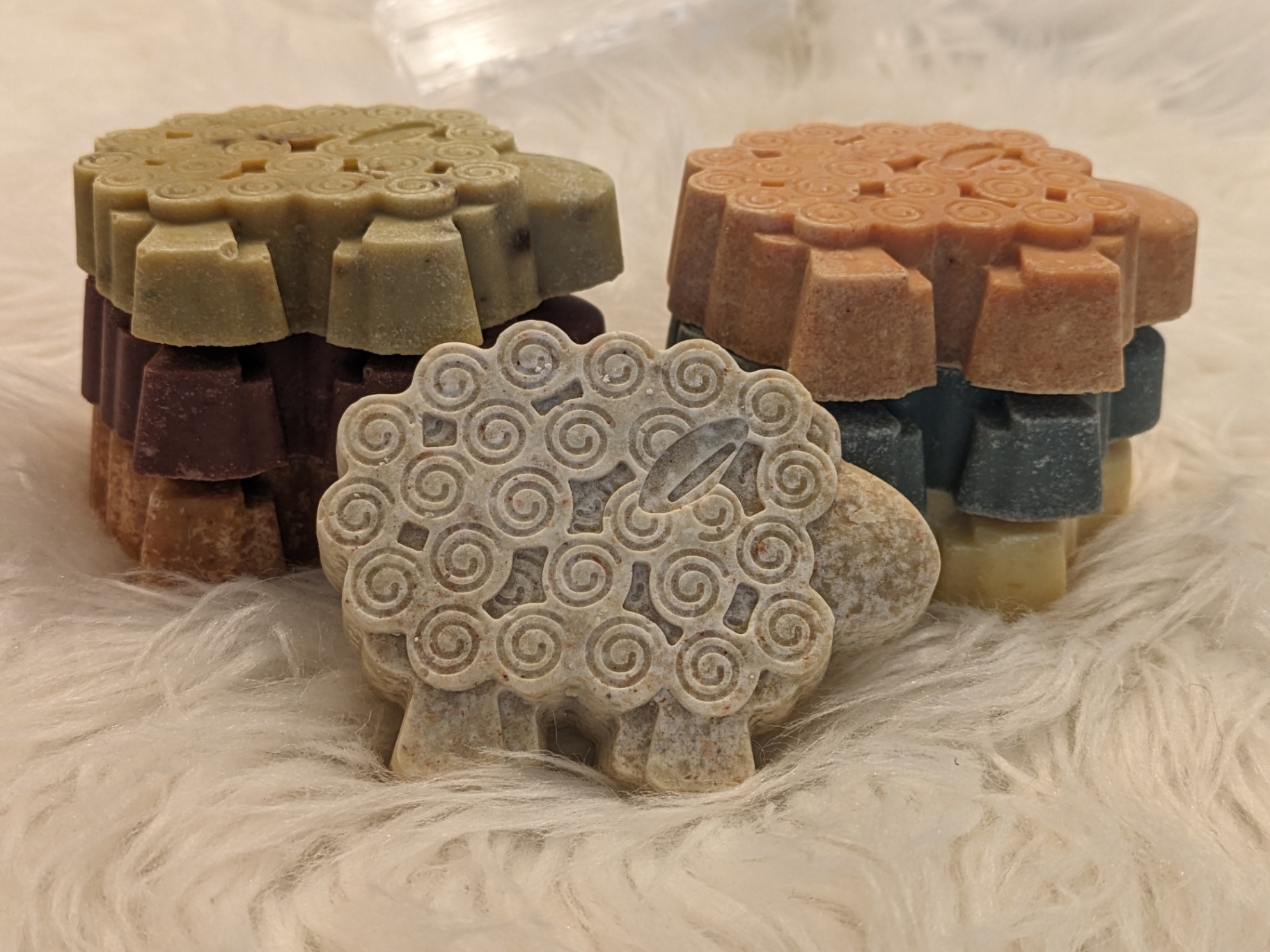
Enter mammalian milk: specifically nutrient-dense sheep's milk. Backed by emerging dermatological and biochemical research, whole sheep milk offers a sophisticated biochemical matrix that supports commensal microflora, preserves the acid mantle, and outperforms conventional plant-only bars. At Scalise Family Sheep Farm, we harness this exact biological synergy in our handcrafted sheep milk soaps.
The Cutaneous Microbiome: Staphylococcus epidermidis vs. Staphylococcus aureus
To understand why traditional soaps often leave skin irritated, we must look at the key residents of human skin. Healthy skin is heavily colonized by coagulase-negative staphylococci (CoNS), most notably Staphylococcus epidermidis, which can constitute over 90% of the aerobic resident flora (Calsdorf et al., 2021; Nakatsuji et al., 2017).
Far from being passive passengers, S. epidermidis acts as an active guardian:
- Colonization Resistance: S. epidermidis directly competes for nutrients and space, producing antimicrobial peptides (such as phenol-soluble modulins and Pep5) that actively inhibit pathogenic strains (Zipperer et al., 2016).
- Immune Homeostasis: Commensal S. epidermidis primes cutaneous immunity via aryl hydrocarbon receptor (AHR) signaling, dampening excessive inflammation and stimulating keratinocyte antimicrobial peptide production (Gallo & Nakatsuji, 2021).
- Barrier Repair: Research demonstrates that molecules released by S. epidermidis accelerate wound healing and stabilize stratum corneum lipid lamellae (Linehan et al., 2018).
Conversely, Staphylococcus aureus is an opportunistic pathogen. While rare on healthy skin, S. aureus over-colonization is a hallmark of inflammatory dermatoses like atopic dermatitis (eczema), where bacterial diversity collapses and high S. aureus density correlates directly with disease severity and barrier breakdown (Byrd et al., 2017; Williams et al., 2019).
[Intact Skin Barrier + S. epidermidis] ──► Low S. aureus ──► Healthy, Calm Skin
[Damaged Barrier / Harsh Surfactants] ──► S. aureus Overgrowth ──► Inflammation & Dysbiosis
How Synthetic Surfactants and Harsh Soaps Destroy the Acid Mantle
The critical turning point between a protective microbiome and pathogenic dysbiosis is the skin barrier and the acid mantle. The skin's surface maintains a naturally acidic pH (ranging between 4.5 and 5.5), which inhibits pathogens like S. aureus while providing an optimal growth environment for beneficial CoNS (Schmid-Wendtner & Korting, 2006).

However, mainstream cleansers and even many commercial "natural" plant-based bars rely on harsh anionic surfactants such as Sodium Lauryl Sulfate (SLS), Sodium Laureth Sulfate (SLES), or overly saponified high-coconut-oil formulas with a high free-alkali content. In dermatological research, SLS is routinely used as a positive irritant to model barrier damage because it:
- Solubilizes stratum corneum intercellular lipids (ceramides, cholesterol, free fatty acids).
- Dramatically increases Transepidermal Water Loss (TEWL).
- Elevates skin surface pH, neutralizing the acid mantle.
- Washes away resident CoNS, leaving the door wide open for S. aureus colonization and biofilm formation.
When the acid mantle is stripped and lipids are dissolved, commensal populations plummet, inflammation spikes, and skin becomes chronically vulnerable.
Why Pure Plant-Based and Coconut Oil Bars Fall Short
While 100% plant-based soaps (such as pure coconut oil or olive oil castile bars) are popular, they possess distinct compositional limitations when it comes to microbiome health.
Pure coconut oil soap (potassium or sodium cocoate) is exceptionally high in lauric and myristic fatty acids. While this creates a rich, fluffy lather, it results in a very high cleansing power that strips natural skin lipids. Without added emollients, unsaponified fats, or bioactive nutrients, a pure coconut oil bar can easily elevate skin pH and disrupt the delicate lipid matrix required by S. epidermidis.
Furthermore, plant-based oils lack the complex biochemical signaling molecules found in mammalian milk. They provide cleansing and basic saponified fatty acids, but they do not deliver prebiotic oligosaccharides, lactoferrin, bioactive amino acids, and intact mammalian milk proteins that actively nourish human skin cells and modulate surface ecology.
The Sheep Milk Matrix: A Biochemical Masterpiece for Skin
Sheep milk is profoundly different from cow or plant milks. Nutritionally and biochemically, it is an evolutionary masterpiece, containing nearly twice the solids, short- and medium-chain fatty acids, vitamins (A, B, E), and essential minerals found in cow milk.
1. Prebiotic Oligosaccharides and Lactic Acid
Sheep milk contains naturally occurring oligosaccharides and lactic acid (an alpha-hydroxy acid). Lactic acid gently encourages cellular turnover while maintaining a skin-compatible pH that preserves the acid mantle. Simultaneously, milk oligosaccharides serve as gentle prebiotic substrates that selectively support commensal skin flora, helping S. epidermidis thrive against opportunistic invaders.
2. Bioactive Lipids and Caprylic/Capric Triglycerides
The fat globule membrane in sheep milk is exceptionally rich in short- and medium-chain fatty acids (like caproic, caprylic, and capric acids) along with phospholipids. These lipids closely mimic human sebum, allowing the soap to cleanse without triggering rebound oil production or stripping the intercellular lipid bilayer.
3. Lactoferrin and Protective Proteins
Mammalian milk proteins, particularly lactoferrin, possess broad-spectrum antimicrobial properties that help regulate microbial populations without obliterating beneficial commensals, supporting a harmonious skin microbiome.
From Our Farm to Your Skin: The Scalise Family Commitment
At Scalise Family Sheep Farm, we believe that skincare should work with human biology, not against it. As a family-owned, veteran-managed farm, we raise our own Icelandic sheep, managing the entire lifecycle from pasture to finished product.

We do not outsource our milk, nor do we rely on synthetic foaming agents, artificial colorants, or chemical preservatives. Every batch of our sheep milk soap is crafted using raw milk freshly expressed from our own flock, combined with skin-loving botanical oils and essential oils like lavender, peppermint, and frankincense.
By keeping our process small-batch and all-natural, we preserve the delicate nutrient matrix of the sheep milk: delivering a bar that cleanses deeply while respecting your skin's acid mantle and microbiome diversity.
Conclusion: Feed Your Skin's Ecosystem
Skincare is evolving past the era of harsh sterilization. By choosing a cleanser that respects your skin's natural pH, preserves lipid integrity, and provides bio-identical nourishment, you empower your skin's microbiome to protect, heal, and radiate health naturally.
Ready to give your skin microbiome the farm-fresh care it deserves? Explore our complete collection of all-natural sheep milk soaps and experience the difference that true farm-to-face craftsmanship makes.
References
- Byrd, A. L., Belkaid, Y., & Segre, J. A. (2018). The human skin microbiome. Nature Reviews Microbiology, 16(3), 143-155.
- Calsdorf, J., et al. (2021). Commensal staphylococci and skin homeostasis. Journal of Investigative Dermatology, 141(5), 1120-1128.
- Gallo, R. L., & Nakatsuji, T. (2021). The skin microbiome and the AHR pathway in health and disease. Dermatologic Clinics, 39(4), 527-536.
- Linehan, J. L., et al. (2018). Host-microbiota interactions in skin wound healing. Cell Host & Microbe, 24(2), 241-256.
- Nakatsuji, T., et al. (2017). Antimicrobial peptides derived from commensal microorganisms protect against Staphylococcus aureus colonization. Science Translational Medicine, 9(378), eaah4680.
- Schmid-Wendtner, M. H., & Korting, H. C. (2006). The pH of the skin surface and its impact on the barrier function. Skin Pharmacology and Physiology, 19(6), 296-302.
- Williams, M. R., et al. (2019). Staphylococcus aureus colonization and barrier dysfunction in atopic dermatitis. Journal of Allergy and Clinical Immunology, 143(2), 589-598.
- Zipperer, A., et al. (2016). Human commensal Staphylococcus lugdunensis produces lugdunin, a novel antibiotic active against multidrug-resistant staphylococci. Nature, 534(7608), 511-516.
Academic References & Scientific Sources
Skin Microbiome Diversity
- Byrd, A. L., Belkaid, Y., & Segre, J. A. (2018). The human skin microbiome. Nature Reviews Microbiology, 16(3), 143-155. https://doi.org/10.1038/nrmicro.2017.157
- Grice, E. A., & Segre, J. A. (2011). The skin microbiome. Nature Reviews Microbiology, 9(4), 244-253. https://doi.org/10.1038/nrmicro2537
- Sanford, J. A., & Gallo, R. L. (2013). Functions of the skin microbiota in health and disease. Seminars in Immunology, 25(5), 370-377. https://doi.org/10.1016/j.smim.2013.09.005
Commensal Bacteria: Staphylococcus epidermidis
- Nakatsuji, T., Chen, T. H., Butcher, A. M., Trzoss, M., Nam, S. J., Shirakawa, K. T., Zhou, W., Oh, J., Otto, M., Fenical, W., & Gallo, R. L. (2018). A commensal strain of Staphylococcus epidermidis protects against skin neoplasia. Science Advances, 4(2), eaao4502. https://doi.org/10.1126/sciadv.aao4502
- Linehan, J. L., Harrison, O. J., Han, S. J., Byrd, A. L., Vujkovic-Cvijin, I., Villarino, A. V., Sen, S. K., Shaik, J., Smelkinson, M., Tamoutounour, S., Collins, N., Bouladoux, N., Dzutsev, A., Rosshart, S. P., Arbuckle, J. H., Wang, C. R., Kristie, T. M., Rehermann, B., Trinchieri, G., Brenchley, J. M., Segre, J. A., & Belkaid, Y. (2018). Non-classical immunity controls microbiota impact on skin immunity and tissue repair. Cell, 172(4), 784-796.e18. https://doi.org/10.1016/j.cell.2017.12.033
- Cogen, A. L., Yamasaki, K., Sanchez, K. M., Dorschner, R. A., Lai, Y., MacLeod, D. T., Torpey, J. W., Otto, M., Nizet, V., Kim, J. E., & Gallo, R. L. (2010). Selective antimicrobial action is provided by phenol-soluble modulins derived from Staphylococcus epidermidis, a normal resident of the skin. Journal of Investigative Dermatology, 130(1), 192-200. https://doi.org/10.1038/jid.2009.243
Synthetic Surfactants vs. Natural Lipid Matrices
- Ananthapadmanabhan, K. P., Moore, D. J., Subramanyan, K., Misra, M., & Meyer, F. (2004). Cleansing without compromise: The impact of cleansers on the skin barrier and the technology of mild cleansing. Dermatologic Therapy, 17(Suppl. 1), 16-25. https://doi.org/10.1111/j.1396-0296.2004.04S1002.x
- Effendy, I., & Maibach, H. I. (1995). Surfactants and experimental irritant contact dermatitis. Contact Dermatitis, 33(4), 217-225. https://doi.org/10.1111/j.1600-0536.1995.tb00535.x
- Schmid-Wendtner, M. H., & Korting, H. C. (2006). The pH of the skin surface and its impact on the barrier function. Skin Pharmacology and Physiology, 19(6), 296-302. https://doi.org/10.1159/000094670
- Voegeli, R. (2007). The effect of detergents on skin pH and its consequences. Clinics in Dermatology, 25(1), 15-22. https://doi.org/10.1016/j.clindermatol.2006.09.014


