

Let's talk about something you probably toss into your dryer without a second thought: those little scented sheets. Turns out, they might be one of the sneakiest sources of indoor air pollution in your home. But before you panic, there's a simple, science-backed solution that's been hiding in plain sight for centuries: wool.
Not just any wool, though. We're talking about the kind that's been tested by 1,000+ years of Viking survival in one of the harshest climates on Earth. The kind we raise right here in New Hampshire.
The Toxic Truth About Dryer Sheets
Dr. Anne Steinemann, a professor of civil engineering and public affairs at the University of Washington, conducted groundbreaking research that should make every parent, pet owner, and human with lungs reconsider what's floating through their dryer vent. Her 2011 study published in Air Quality, Atmosphere & Health found that dryer vents emitting scented laundry products released over 25 volatile organic compounds (VOCs), including seven hazardous air pollutants[1].
The worst offenders? Acetaldehyde and benzene: both classified as carcinogens by the EPA[1]. These chemicals don't just disappear into the atmosphere. They infiltrate your home, cling to your clothes, and enter your body through skin contact and inhalation.
Here's the kicker: manufacturers aren't required to disclose what's in that mysterious "fragrance" ingredient. Under current U.S. regulations, "fragrance" can contain hundreds of untested chemicals, protected as trade secrets[2]. When Steinemann's team analyzed the emissions, they found that none of these hazardous compounds were listed on product labels[1].

The Hygroscopic Genius of Wool
So what makes wool dryer balls such an effective: and safe: alternative? The answer lies in wool's molecular structure, specifically its hygroscopic properties.
Wool fibers are made of keratin proteins arranged in a complex helical structure with both hydrophobic (water-repelling) and hydrophilic (water-attracting) regions[3]. This dual nature allows wool to absorb up to 30% of its weight in moisture without feeling wet to the touch: a phenomenon critical to how dryer balls function[4].
When wool dryer balls tumble through your laundry, they physically separate fabrics, increasing surface area exposure to hot air and improving airflow efficiency. But they're also actively managing moisture through a process related to the Hofmeister effect: the way ions interact with water molecules and protein surfaces[5].
In practical terms? As wool absorbs moisture vapor from damp clothes, it releases it gradually back into the dryer environment, creating more consistent humidity levels that prevent over-drying and static buildup[3][4]. No chemicals required. Just physics and protein chemistry doing their thing.
The Numbers Don't Lie: Energy and Cost Savings
A 2019 study in Energy Efficiency journal examined household laundry practices and found that reducing drying time is one of the most effective ways to lower residential energy consumption[6]. Wool dryer balls can cut drying time by 15-25%, depending on load size and fabric type[7].
Let's break down what that means for your wallet:
- Average electric dryer uses 3,000 watts per hour[8]
- Average drying cycle: 45 minutes (2,250 watts = 2.25 kWh)
- National average electricity cost: $0.16 per kWh[9]
- Cost per load with dryer sheets: $0.36 (energy) + $0.10 (sheet) = $0.46
- Cost per load with wool balls: $0.27 (20% time reduction) + $0.00 (reusable) = $0.27
Over 5 years (roughly 1,000 loads), that's a savings of $190, plus you've kept 1,000 dryer sheets out of landfills[7]. And unlike fabric softeners that coat fibers with waxy quaternary ammonium compounds (reducing absorbency and flame resistance), wool dryer balls actually restore fabric loft through mechanical action[10].
Why Icelandic Wool Is Different
Not all wool is created equal, and here's where the story gets personal for us.
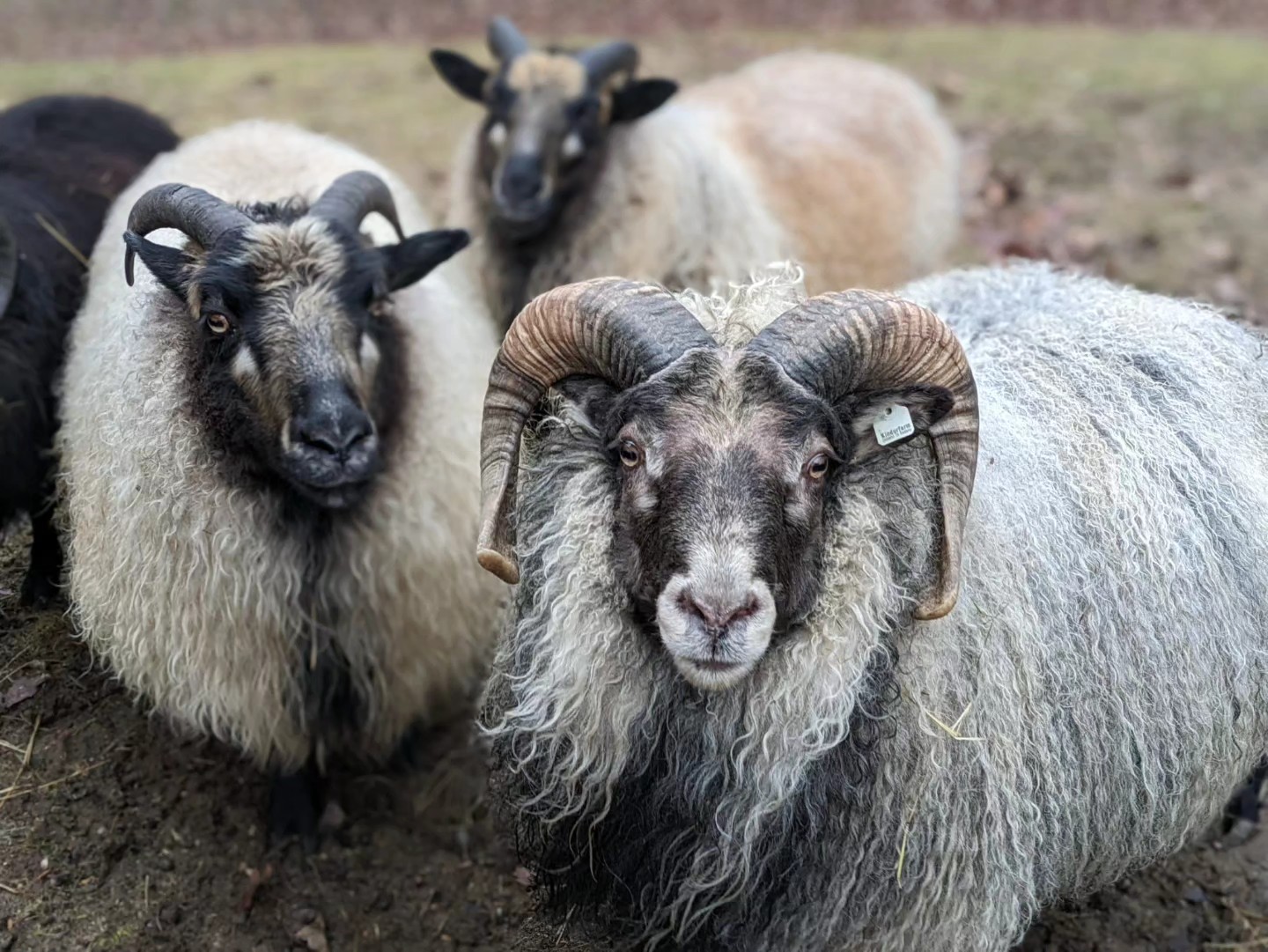
Icelandic sheep evolved in isolation for over 1,100 years after Vikings brought them to the island[11]. Their dual-coat fleece system: a soft inner layer (þel) and a coarse outer layer (tog): developed as an adaptation to extreme temperature swings, maritime humidity, and limited shelter[11][12].
This unique fiber structure translates to superior performance in dryer balls:
- Durability: The tog fibers are incredibly strong and resistant to felting degradation, meaning our dryer balls maintain their shape through hundreds of cycles[12].
- Moisture Management: The combination of fine and coarse fibers creates more surface area for vapor absorption compared to other wool breeds[11].
- Sustainable Production: Icelandic sheep are considered a "threatened" heritage breed by the Livestock Conservancy, so every purchase supports genetic diversity preservation[13].

Here on our veteran-owned farm in New Hampshire, we work with these sheep daily. They're not just livestock: they're partners in a closed-loop system. We shear humanely in spring (never in harsh winter weather), process the wool without harsh chemicals, and hand-felt each dryer ball using traditional techniques. No synthetic dyes, no petroleum-based softening agents, no industrial shortcuts.
It's the same philosophy behind our sheep milk soaps: if we wouldn't put it on our own skin or in our own laundry, we're not selling it to you.
The Static Electricity Solution (No Chemicals Needed)
Static cling happens when clothes rub together in the dryer, transferring electrons and creating opposite charges that attract[14]. Commercial dryer sheets "solve" this by coating fabrics with a thin layer of chemicals that conduct electricity, allowing charges to dissipate[10].
Wool takes a completely different: and cleaner: approach.
Because wool fibers naturally contain 15-17% moisture even when they feel dry, they act as mild conductors, gently dissipating static charges without chemical residue[3][4]. The mechanical separation of fabrics also reduces friction-generated static in the first place.
A 2015 study in the Journal of Electrostatics confirmed that natural protein fibers like wool have significantly different triboelectric properties compared to synthetic fabrics, making them effective static reducers[15].
Translation? Your clothes come out soft, static-free, and chemical-free.

Making the Switch: What to Expect
If you're ready to ditch the dryer sheets, here's the honest truth about transitioning to wool dryer balls:
Week 1: You might notice less artificial fragrance (which is the point), but your laundry will smell clean: like actual clean, not perfume-masked clean.
Week 2-4: You'll dial in the right number of balls for your load size. We recommend 3 balls for small loads, 5-6 for large or heavy items like towels and jeans.
Month 2+: You'll forget dryer sheets ever existed. Your towels will be fluffier (because they're not coated in waxy buildup), your athletic wear will wick moisture better, and your energy bill will reflect those shorter drying cycles.
Want fragrance? Add 2-3 drops of pure essential oil to each ball before the cycle. We're partial to lavender and peppermint, naturally.
The Farm-to-Laundry Room Promise
When I left military service and started this farm, the mission stayed the same: just the uniform changed. We're still about serving others, protecting health, and not cutting corners.
Our Icelandic flock grazes on New Hampshire pastures free from pesticides. The wool is processed without chlorine bleaching or chemical treatments. Each dryer ball is handmade, not mass-produced in a factory halfway around the world.
It's a small thing: switching from disposable sheets to reusable balls. But when you multiply that choice across thousands of families, you're looking at millions of pounds of plastic packaging diverted from landfills, measurable reductions in household VOC exposure, and support for heritage breed conservation.
That's the kind of "revolution" we can get behind.
Ready to make the switch? Our Icelandic wool dryer balls are available now, handmade right here on the farm. Your laundry (and your lungs) will thank you.
References
[1] Steinemann, A. C., MacGregor, I. C., Gordon, S. M., Gallagher, L. G., Davis, A. L., Ribeiro, D. S., & Wallace, L. A. (2011). Fragranced consumer products: Chemicals emitted, ingredients unlisted. Environmental Impact Assessment Review, 31(3), 328-333.
[2] U.S. Environmental Protection Agency. (2021). Volatile Organic Compounds' Impact on Indoor Air Quality. EPA-402-F-21-001.
[3] Wortmann, F. J., & Augustin, P. (2013). The structure and properties of wool. Advances in Wool Technology, 137-154.
[4] Morton, W. E., & Hearle, J. W. S. (2008). Physical Properties of Textile Fibres (4th ed.). Woodhead Publishing.
[5] Nostro, P. L., & Ninham, B. W. (2012). Hofmeister phenomena: An update on ion specificity in biology. Chemical Reviews, 112(4), 2286-2322.
[6] Richter, C. P. (2019). Household laundry energy consumption and opportunities for efficiency improvements. Energy Efficiency, 12, 1427-1442.
[7] U.S. Department of Energy. (2020). Clothes Dryers: Energy Efficiency and Cost Savings. DOE/EE-1842.
[8] U.S. Energy Information Administration. (2022). Residential Energy Consumption Survey. EIA-457A.
[9] U.S. Energy Information Administration. (2024). Electric Power Monthly. Average retail price of electricity.
[10] Lukenbach, E. R., & Bathon, G. (1996). Fabric softener effects on fabric properties. Textile Research Journal, 66(11), 686-692.
[11] Adalsteinsson, S. (1981). Origin and conservation of farm animal populations in Iceland. Zeitschrift für Tierzüchtung und Züchtungsbiologie, 98(1‐4), 258-264.
[12] Hatcher, J. (2014). The Icelandic fleece: Characteristics and processing. Journal of Natural Fibers, 11(3), 255-271.
[13] The Livestock Conservancy. (2023). Conservation Priority List: Icelandic Sheep.
[14] Lacks, D. J., & Sankaran, R. M. (2011). Contact electrification of insulating materials. Journal of Physics D: Applied Physics, 44(45), 453001.
[15] Matsusaka, S., Maruyama, H., Matsuyama, T., & Ghadiri, M. (2010). Triboelectric charging of powders: A review. Chemical Engineering Science, 65(22), 5781-5807.


