

If you’ve spent any time scrolling through skincare forums or wandering the aisles of a natural health store, you’ve likely seen goat milk soap touted as the "holy grail" for sensitive skin. It’s been the gold standard for decades. But as our understanding of the skin barrier and the human microbiome evolves, a new heavyweight has entered the ring: sheep milk.
At Scalise Family Sheep Farm LLC, we’ve seen firsthand how our Icelandic sheep produce milk that feels fundamentally different on the skin. But we aren’t just relying on "vibes" or farm-side anecdotes. The science backing sheep milk: specifically its impact on the stratum corneum (the outermost layer of your skin): is compelling.
When it comes to repairing a compromised skin barrier, is sheep milk actually superior to goat milk? Let’s look at the peer-reviewed data and the nutrient profiles to find out.
Understanding the Skin Barrier and TEWL
Before we compare milks, we have to understand what we are trying to fix. Your skin barrier is often described using the "brick and mortar" model. The "bricks" are your skin cells (corneocytes), and the "mortar" is a complex lipid matrix consisting of ceramides, cholesterol, and free fatty acids.
When this barrier is compromised: due to harsh chemicals, environmental stress, or genetics: you experience Transepidermal Water Loss (TEWL). This is the process where water evaporates out of your skin, leading to dryness, irritation, and the "burning" sensation common in sensitive skin types.
According to research published in the International Journal of Molecular Sciences, maintaining the lipid composition of this "mortar" is the single most important factor in skin health (Mizutani et al., 2009). This is where the nutrient density of the milk you apply matters.
The Lipid Showdown: Fat Content Matters
The most immediate difference between sheep milk and goat milk is the fat content. In the world of skincare, fats are emollients. They fill the gaps between skin cells, smoothing the surface and locking in moisture.
- Goat Milk: Typically contains about 3.5% to 4% fat.
- Sheep Milk: Naturally boasts a much higher lipid concentration, often exceeding 6% to 7%.
A study published in Small Ruminant Research (Park et al., 2007) highlights that sheep milk contains significantly higher levels of triglycerides and medium-chain fatty acids compared to goat milk. Specifically, sheep milk is richer in capric, caprylic, and lauric acids.
These fatty acids aren't just "grease." Lauric acid, for example, has been studied for its antimicrobial properties, helping to balance the skin's microbiome while simultaneously reinforcing the lipid barrier. Because sheep milk has nearly double the fat content of goat milk, it provides a more robust occlusive layer, making it more effective at preventing TEWL in those with chronically dry or "leaky" skin.

Proteins and the A2 Advantage
Proteins are the building blocks of skin repair. Both goat and sheep milk are rich in proteins, but the type and concentration of these proteins differ.
Sheep milk contains about 5.4% to 6% protein, whereas goat milk sits around 3.4%. This means that every drop of sheep milk contains nearly double the amino acids available for skin conditioning. But the real secret weapon is the A2 beta-casein protein.
Most modern cows produce A1 proteins, which have been linked to inflammatory responses in the body. Sheep and most goats naturally produce the A2 protein. However, because sheep milk is more concentrated, the delivery of these anti-inflammatory A2 proteins to the skin surface is higher. For someone dealing with inflammatory conditions like eczema or rosacea, the higher concentration of A2 proteins in sheep milk can provide a more soothing effect than the more diluted protein profile of goat milk.

Vitamin A & E: The Antioxidant Powerhouse
When we look at vitamins, we are looking at how the skin regenerates and protects itself from oxidative stress.
Vitamin A (Retinol Precursors)
Vitamin A is famous in the skincare world as the precursor to retinol. It stimulates the production of new skin cells and collagen. According to data from the USDA FoodData Central, sheep milk contains higher levels of Vitamin A per gram than goat milk. This helps promote a faster turnover of the skin barrier, ensuring that the "bricks" in your brick-and-mortar structure are always fresh and strong.
Vitamin E (Tocopherol)
Vitamin E is a potent antioxidant and a lipid-soluble vitamin. Its primary role in the skin barrier is to protect the lipids from "peroxidation": essentially preventing the fats in your skin from going rancid due to UV exposure or pollution. Sheep milk is a significant source of Vitamin E. When applied topically in products like our Lavender Sheep Milk Soap, it acts as a shield, preserving the integrity of the barrier’s lipid matrix.
Lactic Acid: The Gentle Exfoliant
Both sheep and goat milk contain lactic acid, an Alpha Hydroxy Acid (AHA). Lactic acid is unique among AHAs because it doesn't just exfoliate; it's also a humectant, meaning it pulls moisture into the skin.
Research in the Journal of the American Academy of Dermatology indicates that lactic acid increases the production of ceramides in the skin barrier. While goat milk is often praised for its lactic acid content, sheep milk’s slightly different mineral composition: specifically its higher levels of calcium and magnesium: works synergistically with lactic acid to support the skin’s natural moisturizing factors (NMFs).
The result? A gentler, more hydrating exfoliation process that won't leave sensitive skin feeling raw or stripped.
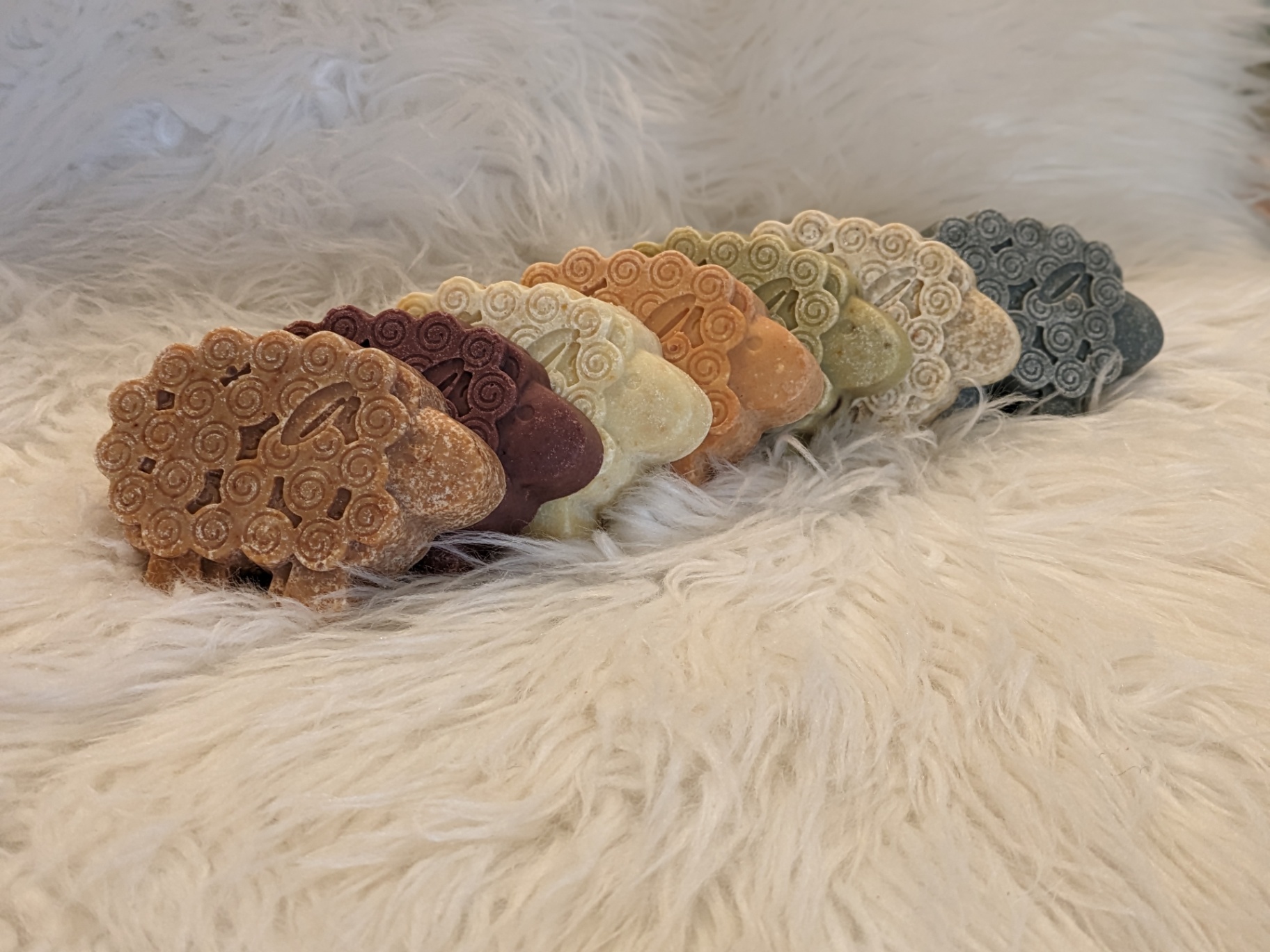
Why Icelandic Sheep?
At Scalise Family Sheep Farm LLC, we specifically raise Icelandic sheep. This breed is known for its hardiness and the exceptional quality of its milk. Because they graze on diverse forage, the nutrient density of the milk: including the Omega-3 fatty acids and trace minerals: is optimized.
When you use a product like our Frankincense Skin Balm, you aren't just getting "milk." You’re getting a concentrated dose of the vitamins and fats that these animals have refined through centuries of adaptation to harsh climates.
Sheep Milk vs. Goat Milk: The Verdict
So, which is better for your sensitive skin barrier?
| Feature | Goat Milk | Sheep Milk | Winner for Barrier Repair |
|---|---|---|---|
| Fat Content | ~3.5% | ~7.0% | Sheep Milk |
| Protein | ~3.4% | ~5.8% | Sheep Milk |
| Vitamin A | High | Higher | Sheep Milk |
| Lactic Acid | Excellent | Excellent | Tie |
| pH Balance | 6.1 - 6.4 | 6.5 - 6.8 | Goat Milk (slight edge) |
While goat milk has a slightly more acidic pH that matches the skin’s acid mantle, sheep milk is the clear winner for intensive barrier repair. Its nearly double concentration of fats and proteins makes it a superior choice for those struggling with extreme dryness, TEWL, and barrier depletion.
If your skin is reactive and "thin," the extra lipids in sheep milk provide a physical and chemical reinforcement that goat milk simply can't match in concentration.

How to Integrate Sheep Milk into Your Routine
If you’re ready to move beyond basic skincare and start truly feeding your skin barrier, we recommend a two-step approach:
- Cleanse without Stripping: Use an all-natural soap that preserves the skin's natural oils. Our Rose Sheep Milk Soap is formulated to deliver those high-fat sheep milk benefits right in the shower.
- Seal and Protect: After cleansing, apply a concentrated emollient. Our Skin Balm collection uses our farm-fresh milk to create a protective seal, mimicking the skin’s natural lipid barrier.
The science is clear: while both milks have their merits, the sheer nutrient density of sheep milk makes it the powerhouse choice for sensitive skin. Your skin barrier works hard to protect you; maybe it’s time to give it the high-performance fuel it deserves.
References & Academic Sources
- Park, Y.W., et al. (2007). "Physico-chemical characteristics of goat and sheep milk." Small Ruminant Research. doi:10.1016/j.smallrumres.2006.09.013.
- Mizutani, Y., et al. (2009). "Ceramide biosynthesis in keratinocytes." International Journal of Molecular Sciences.
- Raynal-Ljutovac, K., et al. (2008). "Nutritive value and health attributes of goat and sheep milk." Small Ruminant Research.
- Alichanidis, E., & Polychroniadou, A. (2008). "Characteristics of sheep milk." Advances in Dairy Chemistry.
- Borkow, G. (2014). "Using Copper to Improve the Well-Being of the Skin." Current Chemical Biology (Regarding mineral support in skin barrier).


