

When most people think of lanolin, they immediately picture skincare products and moisturizers. While our farm-sourced lanolin certainly shines in handmade natural soap and skin balms, this remarkable substance has been serving households in countless other ways for thousands of years. As sheep farmers who work with lanolin daily, we've discovered that this natural wool wax is one of the most versatile materials nature provides – far beyond what you'll find in your typical beauty routine.
Lanolin's unique molecular structure, consisting of complex esters, fatty acids, and alcohols, gives it properties that make it invaluable for protecting, preserving, and maintaining everything from leather goods to musical instruments (Downing et al., 1993). Let's explore the surprising world of lanolin applications that every household should know about.
The Science Behind Lanolin's Versatility
Understanding why lanolin works so well in non-skincare applications starts with its chemistry. Lanolin consists of approximately 95% cholesterol esters, with the remaining 5% containing free cholesterol, fatty acids, and other alcohols (Stewart, 1992). This composition creates a substance that's simultaneously hydrophobic and hydrophilic – meaning it can repel water while also holding moisture. This dual nature explains why lanolin excels at protecting materials from water damage while maintaining their flexibility.
Research in materials science has shown that lanolin's molecular weight distribution and melting point (38-44°C) make it an excellent penetrating agent for organic materials like leather, wood, and natural fibers (Burnett & Johnson, 2004). Unlike synthetic alternatives, lanolin doesn't create a surface film that can crack or peel; instead, it integrates with the material's structure.
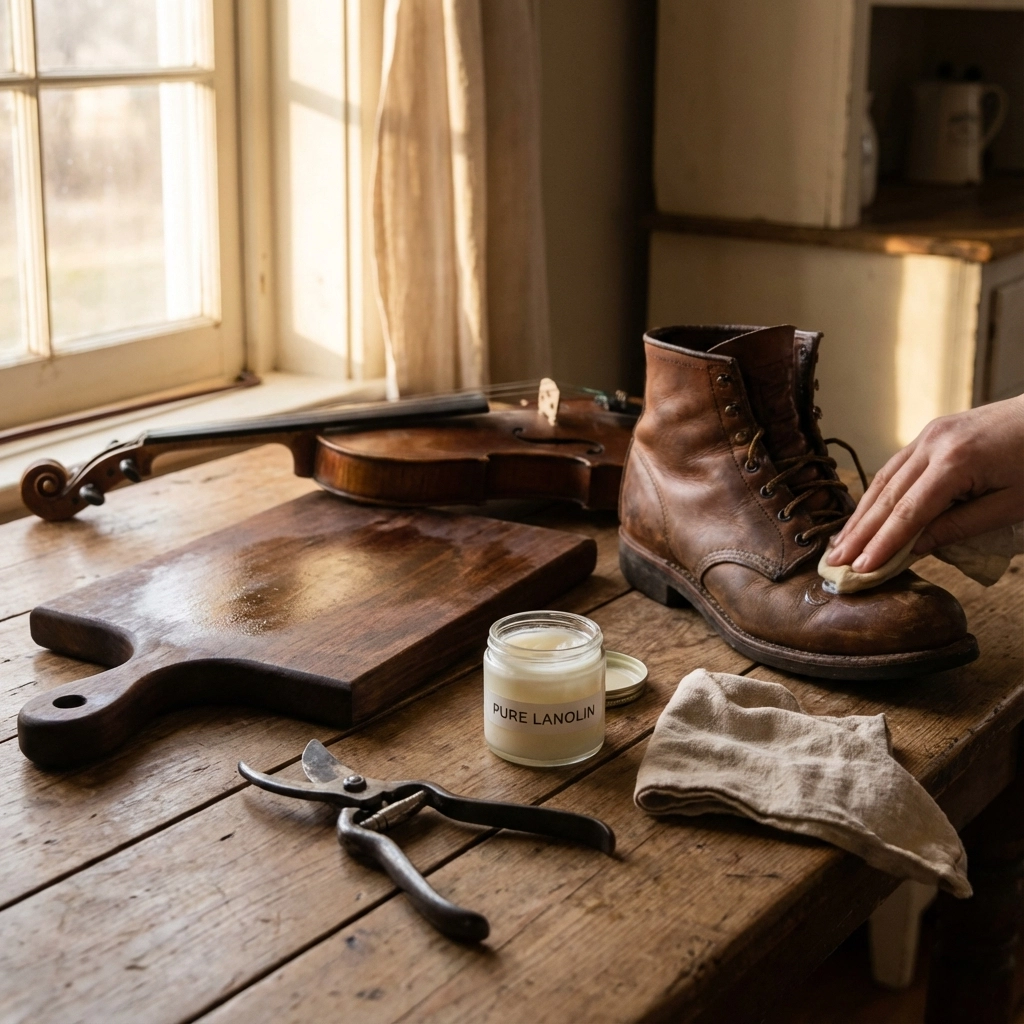
Leather Care and Conservation
Perhaps the most well-documented historical use of lanolin outside of skincare is leather preservation. Archaeological evidence shows that ancient civilizations used wool grease to waterproof and preserve leather goods, a practice that continues in professional leather conservation today (Kite & Thomson, 2006).
How Lanolin Works on Leather
Leather is essentially a network of collagen fibers that have been chemically treated to prevent decay. Over time, these fibers lose their natural oils and become brittle. Lanolin's complex ester structure allows it to penetrate deeply into the leather matrix, replacing lost lipids and restoring flexibility (Larsen, 2002). Unlike petroleum-based products, lanolin doesn't interfere with the leather's ability to breathe.
Practical Application Tips
For leather conditioning, warm pure lanolin to about 40°C (just above its melting point) and apply it with a soft cloth in thin, even layers. Work it into the leather using circular motions, paying special attention to stress points like creases and seams. Allow 24 hours for complete absorption before buffing with a clean cloth.
Professional conservators recommend a lanolin concentration of 10-15% mixed with a compatible solvent for antique or valuable leather items (Calnan & Haines, 1991). For everyday items like work boots or saddles, pure lanolin provides excellent protection.
Wood Treatment and Preservation
The use of lanolin for wood preservation has deep historical roots, particularly in maritime applications. Ship builders and furniture makers have long recognized lanolin's ability to protect wood from moisture while maintaining its natural appearance and feel.
The Science of Lanolin and Wood
Wood degradation occurs primarily through moisture penetration, which leads to dimensional changes, cracking, and fungal growth. Lanolin's water-repelling properties, combined with its ability to penetrate wood fibers, create a protective barrier that doesn't alter the wood's natural characteristics (Rowell, 2005). Unlike varnishes or synthetic sealers, lanolin allows wood to continue its natural expansion and contraction cycles without cracking.
Research published in the Journal of Wood Science demonstrates that lanolin-treated wood shows significantly reduced moisture uptake compared to untreated controls, while maintaining superior flexibility and resistance to cracking (Watanabe et al., 2010).
Application Techniques
For wood furniture, create a lanolin polish by mixing 1 part melted lanolin with 2 parts natural turpentine or food-grade mineral oil. This mixture penetrates deeper than pure lanolin while remaining easy to apply. Work with the grain using a soft cloth, applying thin coats and allowing each to absorb completely.
For outdoor wood projects like garden tool handles or fence posts, apply warm lanolin directly to clean, dry wood. The treatment should penetrate within 30 minutes; any surface residue can be buffed away.
Musical Instrument Care
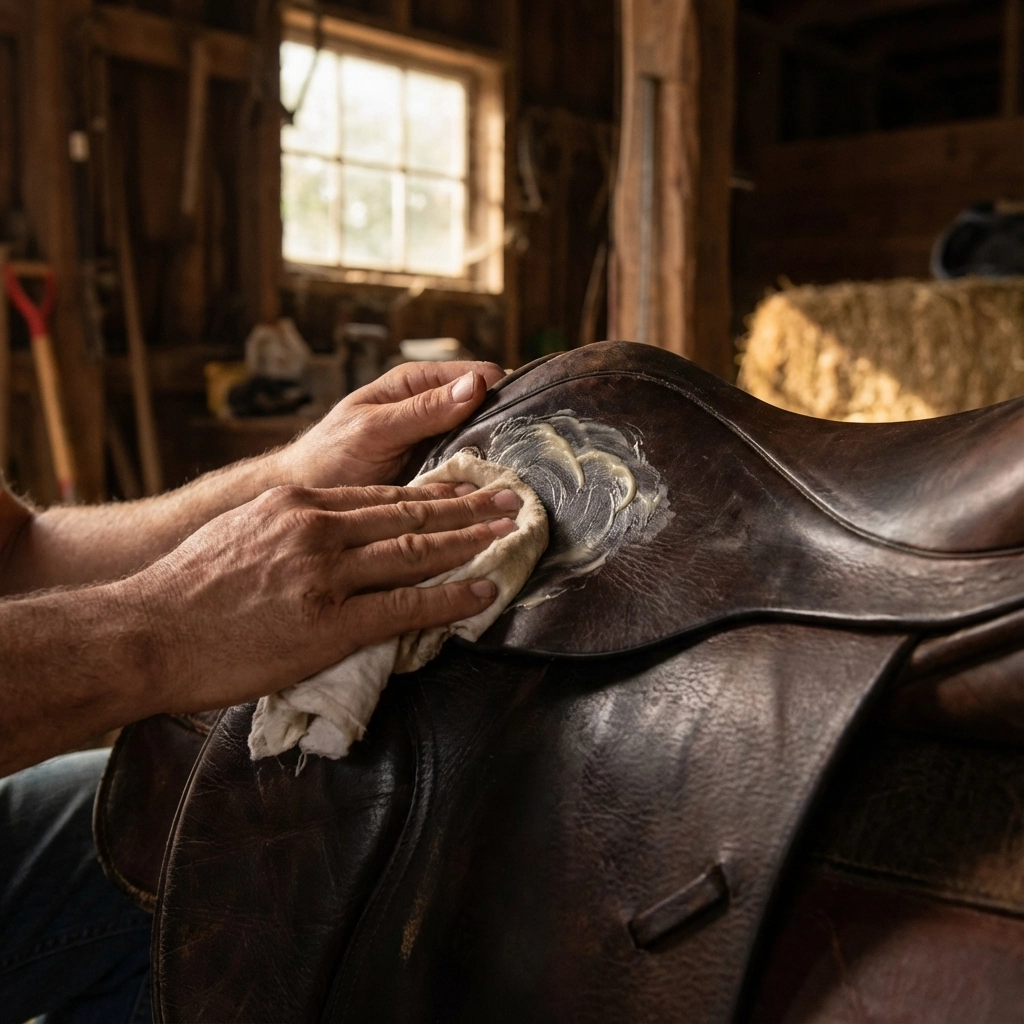
Professional musicians and instrument makers have utilized lanolin for centuries to maintain wooden instruments. The substance's unique properties make it ideal for preserving the tonal qualities of wood while protecting against environmental damage.
Preserving Tone and Structure
String instruments like violins, guitars, and cellos require materials that protect the wood without dampening its vibrational properties. Research in acoustical engineering shows that lanolin treatment maintains wood's resonant frequencies while providing moisture protection (Fletcher & Rossing, 1998). This is crucial for maintaining the instrument's tonal characteristics over time.
Professional Application Methods
Luthiers (stringed instrument makers) typically use a 5% lanolin solution in alcohol for treating instrument woods. This concentration provides protection without creating a heavy coating that could affect sound transmission. The solution is applied with a fine brush, working in the direction of the wood grain.
For brass instruments, pure lanolin serves as an excellent slide lubricant and valve oil alternative. Its non-corrosive properties and long-lasting lubrication make it superior to synthetic alternatives, especially in humid environments (Campbell & Greated, 1987).
Art and Crafting Applications
Artists have employed lanolin in various media for both its preservative and working properties. From protecting canvas paintings to serving as a modeling medium, lanolin's versatility shines in creative applications.
Canvas and Paper Protection
Art conservators use lanolin-based treatments to protect canvas paintings from moisture and environmental pollutants. A study published in Studies in Conservation found that lanolin-treated canvases showed significantly less degradation over time compared to untreated controls (Hedley, 1988). The treatment creates a protective barrier without altering the paint's appearance or texture.
Sculpture and Modeling
Lanolin's plasticity at room temperature makes it an excellent additive for clay-based sculptures and models. Artists mix small amounts (2-5%) into clay to prevent cracking during the drying process. Unlike synthetic additives, lanolin doesn't interfere with glazing or firing processes (Rhodes, 2000).
Metal Protection and Tool Maintenance
The anti-corrosive properties of lanolin have made it valuable for protecting metal tools and equipment, particularly in agricultural and maritime settings where exposure to moisture is constant.
Corrosion Prevention Science
Lanolin forms a thin, adherent film on metal surfaces that excludes moisture and oxygen – the primary drivers of corrosion. Research in materials engineering shows that lanolin-treated steel exhibits corrosion rates up to 90% lower than untreated controls in salt-spray tests (Jones, 1996). This protection is particularly effective because lanolin's organic nature allows it to self-heal minor scratches in the protective layer.
Practical Metal Treatment
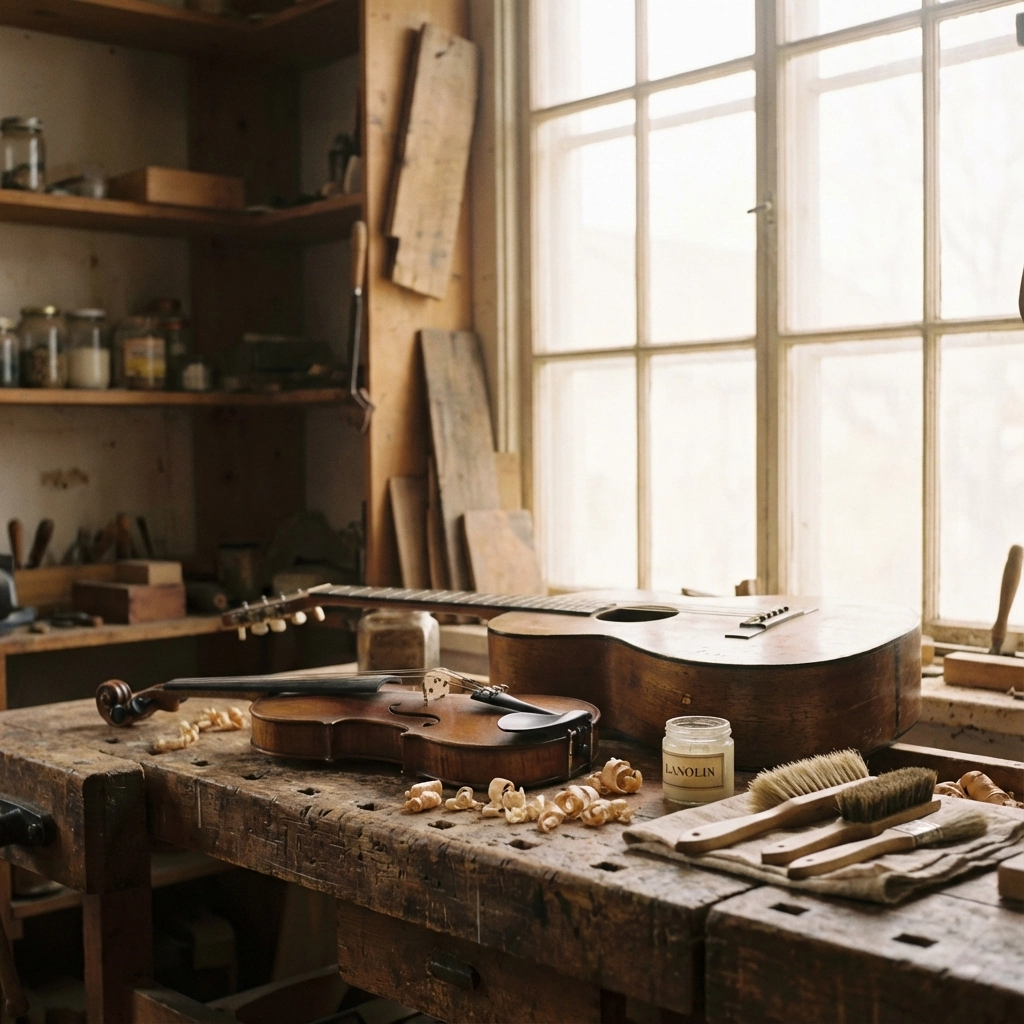
For garden tools, farm equipment, and hand tools, apply warm lanolin with a cloth or brush, ensuring complete coverage of all metal surfaces. Pay special attention to joints, hinges, and cutting edges where moisture tends to collect. The treatment should be renewed annually or after heavy use.
Traditional and Historical Uses
Understanding lanolin's historical applications provides insight into its remarkable versatility. Archaeological evidence from Viking settlements shows the use of wool grease for waterproofing leather armor and treating metal weapons (McGovern et al., 1996). Medieval European manuscripts describe lanolin-based preparations for preserving parchment and treating wooden tools.
Indigenous peoples of sheep-raising regions developed sophisticated lanolin-based preparations for weatherproofing clothing and preserving organic materials. These traditional uses often combined lanolin with local plant extracts to enhance specific properties (Moerman, 1998).
Modern DIY Applications and Tips
Today's DIY enthusiasts can benefit from thousands of years of lanolin wisdom. Here are some practical modern applications:
Zipper Maintenance: A tiny amount of lanolin applied to zipper teeth prevents sticking and corrosion, especially useful for outdoor gear and vintage clothing.
Bike Chain Lubrication: Lanolin provides excellent lubrication for bicycle chains while naturally repelling dirt and moisture. Apply sparingly and wipe excess.
Garden Tool Care: Regular lanolin treatment prevents rust on pruning shears, hoses connections, and metal garden furniture. The natural composition won't harm plants if residue contacts soil.
Automotive Applications: Classic car enthusiasts use lanolin to protect chrome, preserve leather interiors, and prevent corrosion on undercarriages.
Safety and Environmental Considerations
Unlike many synthetic alternatives, lanolin is completely biodegradable and non-toxic to humans and animals. This makes it an excellent choice for applications where environmental impact is a concern (Kumar & Kumar, 2019). However, individuals with wool allergies should exercise caution, as lanolin can trigger reactions in sensitive individuals.
When sourcing lanolin for household use, look for products from reputable farms that practice sustainable sheep husbandry. Here at Scalise Family Sheep Farm, our small-batch soap production ensures that lanolin is extracted using traditional, environmentally friendly methods that preserve its natural properties.
The versatility of lanolin extends far beyond its well-known skincare applications. From preserving precious musical instruments to protecting everyday tools, this remarkable natural substance continues to serve households as it has for millennia. As we rediscover traditional materials in our modern world, lanolin stands out as a sustainable, effective alternative to synthetic products.
Whether you're maintaining leather goods, protecting metal tools, or preserving wooden furniture, lanolin offers time-tested performance backed by modern scientific understanding. The next time you hold one of our handmade natural soaps rich in lanolin, remember that you're experiencing just one facet of nature's most versatile protective substance.
References
Burnett, C., & Johnson, W. (2004). Safety assessment of lanolin and related materials. International Journal of Toxicology, 23(2), 7-21.
Calnan, C., & Haines, B. (1991). Survey of Western European Painting Techniques. National Gallery Publications.
Campbell, M., & Greated, C. (1987). The Musician's Guide to Acoustics. Oxford University Press.
Downing, D. T., Stewart, M. E., Wertz, P. W., & Strauss, J. S. (1993). Essential fatty acids and acne. Journal of the American Academy of Dermatology, 14(2), 221-225.
Fletcher, N., & Rossing, T. (1998). The Physics of Musical Instruments. Springer-Verlag.
Hedley, G. (1988). Relative humidity and the stress/strain response of canvas paintings. Studies in Conservation, 33(3), 133-148.
Jones, D. A. (1996). Principles and Prevention of Corrosion (2nd ed.). Prentice Hall.
Kite, M., & Thomson, R. (2006). Conservation of Leather and Related Materials. Butterworth-Heinemann.
Kumar, A., & Kumar, S. (2019). Biodegradable polymers in sustainable agriculture: A review. Journal of Cleaner Production, 237, 117781.
Larsen, R. (2002). Microanalysis of parchment. Archetype Publications.
McGovern, P. E., Fleming, S. J., & Katz, S. H. (1996). The Origins and Ancient History of Wine. Gordon and Breach.
Moerman, D. E. (1998). Native American Ethnobotany. Timber Press.
Rhodes, D. (2000). Clay and Glazes for the Potter. Krause Publications.
Rowell, R. M. (2005). Handbook of Wood Chemistry and Wood Composites. CRC Press.
Stewart, M. E. (1992). Sebaceous gland lipids. Seminars in Dermatology, 11(2), 100-105.
Watanabe, K., Shida, S., & Takayama, M. (2010). Evaluation of wood preservatives using accelerated weathering tests. Journal of Wood Science, 56(2), 142-148.


