

If you’ve ever dealt with the relentless itch, redness, and "elephant skin" texture of eczema (atopic dermatitis), you know it’s more than just a dry skin issue. It’s a constant battle with your own skin barrier. Here at Scalise Family Sheep Farm LLC, we see it all the time: folks coming to us frustrated with steroid creams that thin the skin or "gentle" store-bought cleansers that still leave them stinging.
The secret we’ve found grazing in our pastures isn't a new chemical compound; it’s an ancient one. Sheep milk is a biological powerhouse, and for a compromised skin barrier, it’s arguably the most effective natural remedy available. But don't just take our word for it: the science behind why sheep milk outperforms cow and goat milk is fascinating.
Here are 10 things you should know about how sheep milk can help soothe eczema and restore your skin’s health.
1. The Power of "Heavyweight" Lipids
The hallmark of eczema is a "leaky" skin barrier. In healthy skin, lipids (fats) act as the mortar between your skin cell "bricks," keeping moisture in and irritants out. Sheep milk is unique because it contains significantly higher lipid content than either cow or goat milk.
Research published in the Journal of Dairy Science indicates that sheep milk contains approximately 7% fat, compared to the 3-4% found in cow and goat milk. These lipids are rich in triglycerides, which are essential for repairing the stratum corneum (the outermost layer of the skin). When you use our Frankincense Sheep Milk Soap, you are essentially applying a topical dose of the very fats your skin is missing.
2. Higher Triglyceride Concentration for Moisture Retention
Not all fats are created equal. Sheep milk is particularly high in medium-chain triglycerides (MCTs). From an academic standpoint, MCTs are prized in dermatology because they are easily absorbed by the skin.
While goat milk is often touted for its moisturizing properties, sheep milk actually contains higher levels of caprylic and capric acids. These specific fatty acids have been shown to provide a protective antimicrobial layer while deeply hydrating the skin. This prevents Trans-Epidermal Water Loss (TEWL), which is the primary cause of the "tight," painful feeling eczema sufferers experience after washing.

3. Natural Lactic Acid: The Gentle Exfoliator
Eczema often leads to a buildup of dry, dead skin cells that can become itchy and infected. Most exfoliants (like scrubs or harsh AHAs) are too aggressive for sensitive skin. However, sheep milk is naturally rich in Lactic Acid, a gentle Alpha Hydroxy Acid (AHA).
Lactic acid works by breaking down the "glue" that holds dead skin cells together. Academically, it’s also known as a humectant, meaning it pulls moisture from the air into the skin. This dual action: clearing away flakes while simultaneously hydrating: is why products like our Lavender Sheep Milk Soap leave skin feeling smooth rather than raw.
4. A Vitamin Profile That Rivals High-End Serums
Sheep milk is often called "the vitamin pill of milks." It contains nearly double the amount of Vitamin C found in cow milk and significantly higher levels of Vitamins A, D, and E.
- Vitamin A (Retinol): Helps with cellular turnover and skin repair.
- Vitamin D: Vital for skin barrier function and immune regulation (crucial for eczema, which is an overactive immune response).
- Vitamin E: A potent antioxidant that protects skin cells from oxidative stress and inflammation.
By using a milk-based product, you are delivering these vitamins in a bioavailable form that the skin recognizes and utilizes immediately.

5. The Role of Zinc and Selenium
Two minerals that are often overlooked in skincare are Zinc and Selenium. Sheep milk is an excellent source of both. Zinc is a well-documented anti-inflammatory agent used in everything from diaper rash cream to wound healing ointments. It helps reduce the redness and heat associated with an eczema flare-up. Selenium, meanwhile, supports skin elasticity and helps prevent DNA damage in skin cells. For someone with chronic inflammation, these minerals act as a "calming tea" for the skin.
6. A2 Beta-Casein: The Anti-Inflammatory Protein
The proteins in milk are just as important as the fats. Sheep milk exclusively contains A2 beta-casein proteins. Many people who are sensitive to cow milk (which contains A1 proteins) find that sheep milk does not trigger the same inflammatory response.
In topical applications, these proteins have been studied for their ability to soothe the skin’s surface. Unlike synthetic surfactants found in commercial soaps that can trigger a cytokine storm (the chemical signals that cause itching), the proteins in sheep milk help stabilize the skin’s environment. This makes our Matcha Latte Soap an incredibly gentle choice for daily cleansing.
7. Maintaining the Skin’s Acid Mantle
Your skin has a slightly acidic "shield" called the acid mantle, typically with a pH around 5.5. Commercial soaps are often highly alkaline (pH of 9-11), which "strips" the mantle, leaving the skin vulnerable to bacteria like Staphylococcus aureus: a common culprit in eczema infections.
Sheep milk has a pH level that is much closer to human skin. When we craft our soaps, the natural pH of the milk helps ensure the finished bar is gentle. This helps maintain the skin’s microbiome, allowing "good" bacteria to thrive while keeping "bad" bacteria in check.
8. Superior Bioavailability
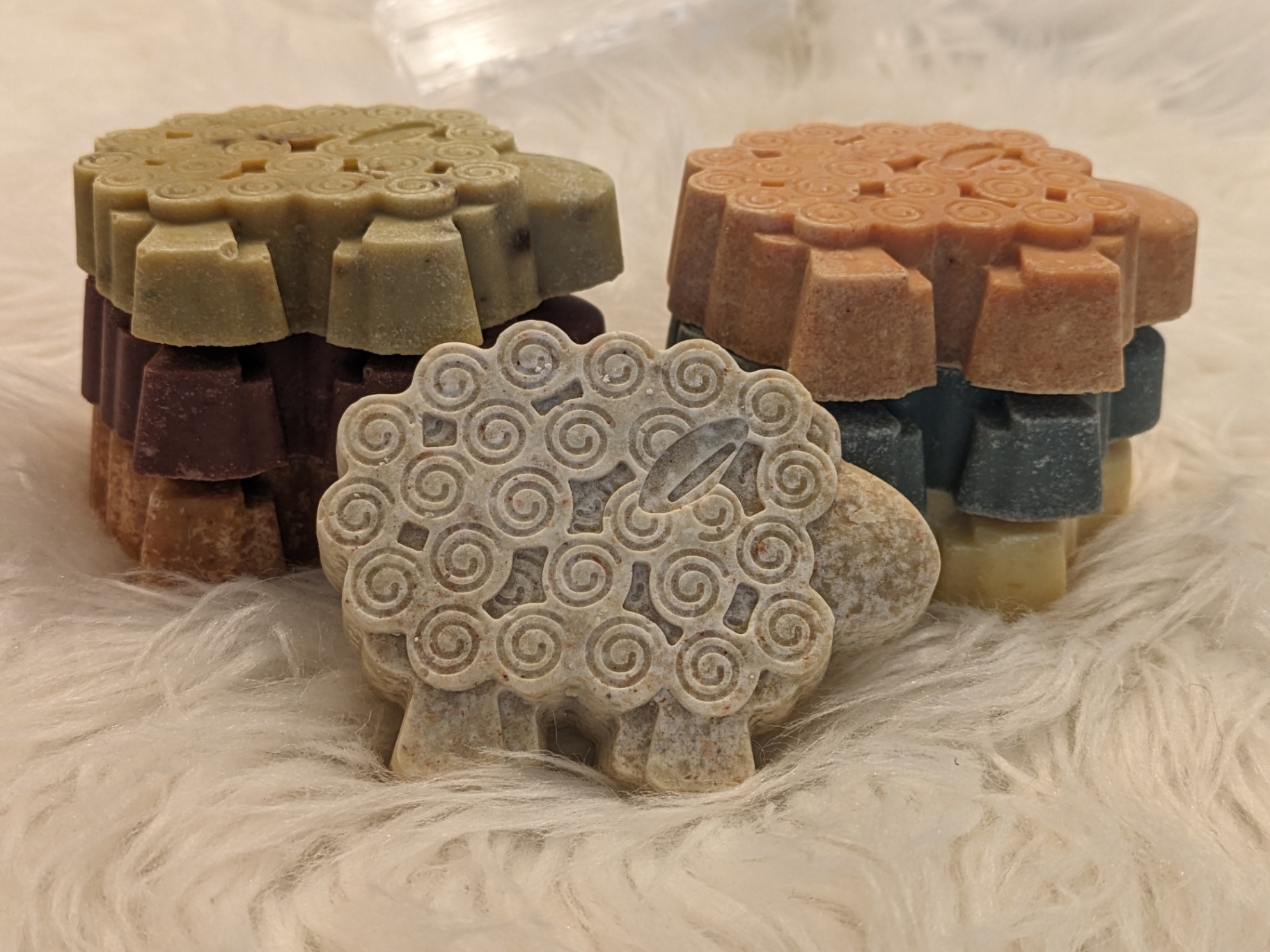
The fat globules in sheep milk are smaller than those in cow milk. This might sound like a minor detail, but in dermatology, particle size matters. Smaller fat globules mean the milk can be more easily emulsified and absorbed into the skin’s layers. This is why sheep milk skincare doesn't just sit on top of the skin feeling greasy; it actually sinks in to provide relief. For deep hydration, following a wash with our Lavender Skin Balm can lock in that moisture for hours.
9. Free from "The Dirty Dozen" Irritants
One of the biggest triggers for eczema flare-ups is the cocktail of synthetic chemicals found in modern skincare: Sodium Lauryl Sulfate (SLS), parabens, phthalates, and synthetic "parfum." These are used to create bubbles or preserve shelf life, but they are devastating for sensitive skin.
At Scalise Family Sheep Farm LLC, our philosophy is simple: if we can’t pronounce it, we don’t use it. Our sheep milk products are formulated without these harsh detergents. We rely on the natural saponification of oils and the richness of the milk to provide a creamy, luxurious lather that cleanses without stripping.
10. Real Results for Real People
While the academic research is robust, the most compelling evidence comes from the families who use our products. We’ve seen children who can finally sleep through the night without scratching and adults who no longer feel the need to hide their hands in public.
Whether you are looking for a gentle daily cleanser like our Rose Sheep Milk Soap or a concentrated treatment like our Frankincense Skin Balm, the high-fat, nutrient-dense profile of sheep milk offers a path to relief that science supports and nature perfected.

Ready to soothe your skin?
If you're tired of the "eczema cycle," it might be time to look back to the farm. Our Icelandic sheep provide the richest milk possible, and we pour that goodness into every batch we make here in Wilton, NH.
Browse our full collection of Sheep Milk Soaps and Balms today and give your skin the nourishment it’s been craving.
References & Academic Sourcing:
- Park, Y.W., et al. (2007). "Physico-chemical characteristics of goat and sheep milk." Small Ruminant Research.
- Balthazar, C. F., et al. (2017). "Sheep Milk: Physicochemical Characteristics and Therapeutic Potential." Frontiers in Nutrition.
- Meydani, S. N., & Beharka, A. A. (1998). "Recent developments in vitamin E and immune response." Nutrition Reviews.
- Proksch, E., et al. (2003). "The role of the barrier function and skin hydration in the treatment of atopic dermatitis." Journal of the German Society of Dermatology.
- Wertz, P. W. (2000). "Lipids and barrier function of the skin." European Journal of Pharmaceutics and Biopharmaceutics.


