

If you have sensitive skin, choosing a facial cleanser can feel surprisingly complicated. “Natural,” “gentle,” and “moisturizing” sound reassuring, but the ingredient list, cleanser type, pH, fragrance, and your own skin condition matter more than marketing language.
So, can you use sheep milk soap on your face?
Some people can use an unscented sheep milk soap comfortably, but traditional soap is not automatically the best choice for sensitive facial skin. The strongest dermatology evidence generally favors a mild, fragrance-free syndet cleanser formulated near the skin’s natural pH, particularly when the skin barrier is damaged or reactive. Traditional sheep milk soap may still be a reasonable option for some people when used carefully and stopped at the first sign of irritation.
Here are seven evidence-based considerations.
1. Your face has a protective outer barrier
The outermost layer of facial skin is the stratum corneum. It is often described as a “bricks and mortar” structure: flattened skin cells act as the bricks, while organized lipids, including ceramides, cholesterol, and fatty acids, help form the mortar.
This layer helps:
- Reduce water loss from the skin
- Limit penetration of irritants and allergens
- Support normal skin flexibility and hydration
- Contribute to the skin’s chemical and immune defenses
When the stratum corneum is disrupted, you may notice dryness, tightness, stinging, flaking, redness, or increased sensitivity. A review of cleanser science explains that harsh surfactants can disrupt proteins and lipids, while inappropriate pH may further affect barrier function (Ananthapadmanabhan et al., PMID 14728695; Mijaljica et al., PMID 35335373).
That is why a facial cleanser should remove sunscreen, excess oil, and dirt without removing more of the skin’s protective structure than necessary.
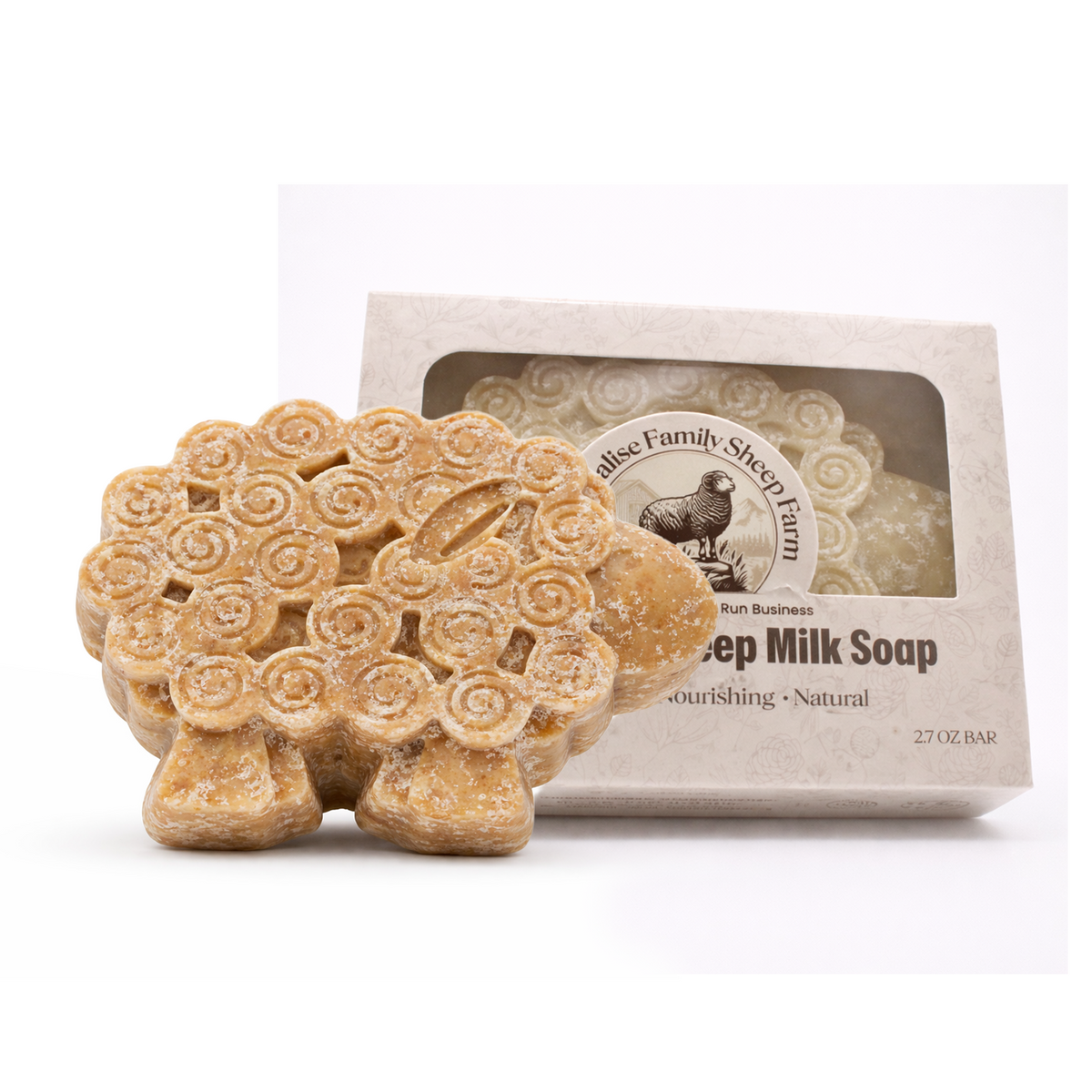
2. Sheep milk adds interesting components, but it does not change soap chemistry
Sheep milk contains proteins, fats, minerals, vitamins, and other milk components. Scientific reviews describe sheep milk as especially nutrient-dense compared with the milk of some other domestic species (Balthazar et al., PMID 33371538). Proteomic research has also identified hundreds of proteins in sheep whey, including proteins involved in biological and immune-related processes (Ha et al., PMID 26447763).
Those findings help explain why sheep milk is an appealing ingredient in handcrafted skincare. However, they do not establish that sheep milk soap moisturizes, repairs, or treats facial skin conditions in clinical use.
A sheep milk bar is still determined primarily by its complete formulation:
- The oils and fats used
- The type and amount of milk
- The soap-making process
- The final pH
- Added fragrance, botanicals, or exfoliating ingredients
- How long the product remains on the skin
Most traditional handmade bars are true soaps, created through saponification of fats or oils with an alkali. This is different from a syndet, or synthetic-detergent cleanser, which can be formulated with milder surfactants and a more skin-compatible pH.
Direct clinical trials testing sheep milk soap on sensitive facial skin are limited. Therefore, it is more accurate to say that sheep milk is a thoughtfully selected natural ingredient, not that sheep milk soap has been proven to treat eczema, acne, rosacea, dermatitis, or other conditions.
3. Lactic acid in milk is not the same as a leave-on AHA treatment
Sheep milk naturally contains lactic acid, and lactic acid is also used in certain leave-on skincare products as an alpha-hydroxy acid, or AHA.
But a rinse-off sheep milk soap should not be treated like a lactic-acid serum.
The effects of a leave-on AHA depend on factors such as:
- The concentration of free acid
- The product’s pH
- The amount applied
- Contact time
- Whether the formula is buffered
- How often it is used
In a soap bar, the milk is incorporated into a cleansing formulation and is quickly rinsed away. The soap-making process and alkaline environment also mean that the presence of milk does not guarantee a meaningful exfoliating effect.
Similarly, sheep milk fats may contribute to the bar’s feel and lather, but that does not mean the soap functions like a leave-on moisturizer. For lasting hydration, a fragrance-free moisturizer applied after cleansing is more appropriate.
4. Soap type and pH matter more than the word “natural”
Healthy skin is mildly acidic at its surface. Traditional soaps are generally alkaline because of the chemistry required to create soap.
That difference matters. In a controlled study comparing several soap formulations, traditional alkaline soap produced a significant increase in transepidermal water loss, often called TEWL, and showed evidence of prolonged barrier disturbance. Other formulations had less persistent effects (Khosrowpour et al., PMID 30160004).
A broader review similarly concluded that soap can alter skin pH, dissolve lipids, and disrupt barrier integrity, while appropriately formulated syndets may be milder (Mijaljica et al., PMID 35335373).
This does not mean every traditional soap will irritate every person. It does mean that people with very dry, reactive, eczematous, or rosacea-prone facial skin should be cautious. If your skin repeatedly feels tight or burns after washing, a mild fragrance-free syndet cleanser is usually the more evidence-aligned choice.
5. Fragrance can be the deciding factor
A scented bar may be enjoyable on the body, but facial skin is often less tolerant of fragrance and essential oils, especially when the barrier is already compromised.
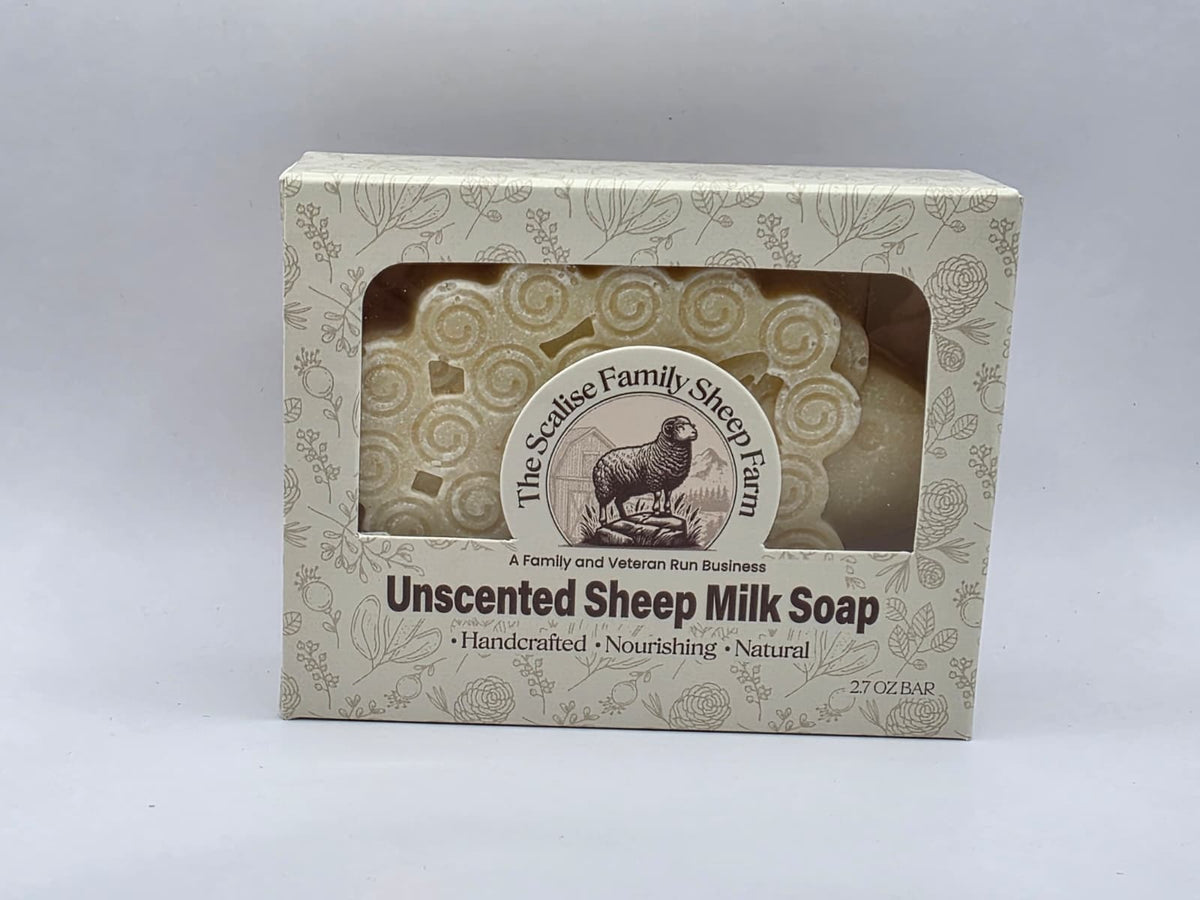
Scalise Family Sheep Farm makes several scented bars, including Lavender Sheep Milk Soap, which lists lavender essential oil among its ingredients. For some customers, the scent is part of the appeal. For sensitive facial skin, however, fragrance is an additional variable that can cause stinging or contact irritation.
If you want to try sheep milk soap on your face, the most conservative choice is the farm’s Unscented Sheep Milk Soap, described as a gentle, fragrance-free bar.
“Unscented” does not guarantee that a product will work for everyone, but removing added fragrance and essential oils reduces the number of potential triggers.
6. Use a careful patch test, and introduce one product at a time
A patch test cannot predict every facial reaction, but it is a sensible precaution.
Try this approach:
- Read the complete ingredient list.
- Lather a small amount and apply it to a limited area near the jawline or behind the ear.
- Rinse thoroughly and observe the area for the next 24–48 hours.
- If there is no reaction, try it on a small section of the face rather than changing your entire routine at once.
- Stop if you experience burning, persistent redness, itching, swelling, worsening dryness, or flaking.
Do not patch-test on broken, sunburned, freshly exfoliated, or actively inflamed skin.
Milk-derived ingredients also deserve special caution. A published case report described goat’s milk allergy developing in members of a household with atopic dermatitis after using goat’s milk soap. This was a single case report, not proof that all milk soaps cause allergy, and it involved goat’s milk rather than sheep’s milk. Still, it supports caution for people with known milk-protein allergies or a severely compromised skin barrier (Anantharajah & Randall, PMID 34007823).
If you have a diagnosed food allergy, consult your allergist before using a milk-based skincare product.
7. Your washing technique and frequency matter
Even a well-tolerated cleanser can become irritating when combined with hot water, vigorous rubbing, or frequent washing.
Research examining washing and drying practices found that washing increased TEWL, repeated washing had cumulative effects, and soap use increased skin pH and erythema more noticeably than water alone (Voegeli, PMID 18199943).
For facial use:
- Choose lukewarm rather than hot water.
- Keep cleansing brief.
- Use your fingertips instead of a rough cloth or scrubber.
- Rinse thoroughly.
- Avoid washing repeatedly unless needed.
- Pat or gently press away excess water.
- Apply a bland moisturizer while the skin is still slightly damp.
Recent research on a soap-free cleansing lotion also supports the broader principle that cleansing can be designed to remove impurities while preserving hydration and barrier function, although that study did not test sheep milk soap (Patel et al., PMID 40978887).
The bottom line
Yes, some people can use sheep milk soap on their face: but sensitive-skin shoppers should choose carefully.
For the best chance of tolerability:
- Start with an unscented bar.
- Patch-test before full-face use.
- Wash briefly with lukewarm water.
- Avoid aggressive rubbing and frequent cleansing.
- Moisturize afterward.
- Stop if your skin becomes tight, itchy, red, or irritated.
Scalise Family Sheep Farm’s Unscented Sheep Milk Soap offers a fragrance-free option for shoppers who prefer a handcrafted bar made with sheep milk from the farm’s own Icelandic flock. Still, traditional soap remains traditional soap. If your facial skin is highly reactive, actively inflamed, or prone to eczema or rosacea, a fragrance-free, mildly acidic syndet cleanser may be the safer everyday choice.
Sheep milk soap is not a cure for a skin disease. It is a personal-care product, and the right choice depends on both the formulation and your skin’s response.
Academic References & Scientific Sources
-
Mijaljica D, Spada F, Harrison IP. Skin Cleansing without or with Compromise: Soaps and Syndets. Molecules. 2022;27(6):2010. PubMed PMID 35335373. doi:10.3390/molecules27062010
-
Khosrowpour Z, Nasrollahi SA, Ayatollahi A, Samadi A, Firooz A. Effects of four soaps on skin trans-epidermal water loss and erythema index. Journal of Cosmetic Dermatology. 2019;18(3):857–861. PubMed PMID 30160004. doi:10.1111/jocd.12758
-
Ananthapadmanabhan KP, Moore DJ, Subramanyan K, Misra M, Meyer F. Cleansing without compromise: the impact of cleansers on the skin barrier and the technology of mild cleansing. Dermatologic Therapy. 2004;17(Suppl 1):16–25. PubMed PMID 14728695. doi:10.1111/j.1396-0296.2004.04s1002.x
-
Vater C, Apanovic A, Riethmüller C, Litschauer B, Wolzt M, Valenta C, Klang V. Changes in Skin Barrier Function after Repeated Exposition to Phospholipid-Based Surfactants and Sodium Dodecyl Sulfate In Vivo and Corneocyte Surface Analysis by Atomic Force Microscopy. Pharmaceutics. 2021;13(4):436. PubMed PMID 33804924. doi:10.3390/pharmaceutics13040436
-
Voegeli D. The effect of washing and drying practices on skin barrier function. Journal of Wound, Ostomy and Continence Nursing. 2008;35(1):84–90. PubMed PMID 18199943. doi:10.1097/01.WON.0000308623.68582.d7
-
Anantharajah A, Randall KL. Goat’s milk allergy in a family following household sensitization to goat’s milk soap. Asia Pacific Allergy. 2021;11:e13. PubMed PMID 34007823. doi:10.5415/apallergy.2021.11.e13
-
Balthazar CF, Pimentel TC, Ferrão LL, et al. Sheep Milk: Physicochemical Characteristics and Relevance for Functional Food Development. Comprehensive Reviews in Food Science and Food Safety. 2017. PubMed PMID 33371538. doi:10.1111/1541-4337.12250
-
Ha M, Sabherwal M, et al. In-Depth Characterization of Sheep (Ovis aries) Milk Whey Proteome and Comparison with Cow (Bos taurus). PLOS ONE. 2015;10(10):e0139774. PubMed PMID 26447763. doi:10.1371/journal.pone.0139774
-
Patel M, Khatri A, Khatri R, et al. Clinical Evaluation of a Soap-Free Cleansing Lotion Containing Sodium Cocoyl Apple Amino Acids for Effective Impurity Removal and Skin Barrier Preservation in Healthy Adults With Diverse Skin Types. Cureus. 2025;17(8):e90538. PubMed PMID 40978887. doi:10.7759/cureus.90538


