

Winter in New Hampshire can be hard on working hands. Cold air, wind, indoor heating, repeated washing, livestock care, tools, detergents, and dry materials can all challenge the skin barrier. By midwinter, many people notice roughness, tightness, peeling, painful knuckles, or cracks around the fingertips.
The good news is that effective winter hand care is less about waiting for damage and more about preventing repeated barrier stress before the first fissure appears.
Why hands often crack before other areas
The outermost layer of skin, the stratum corneum, helps limit water loss and protects against irritants. The backs of the hands have relatively thin skin compared with the palms, and they have far fewer oil-producing sebaceous glands than areas such as the scalp and face. That means the dorsal hands receive less natural lubrication while remaining constantly exposed.
Hands also perform nearly every daily task. They are exposed to:
- Water and repeated wet-dry cycles
- Soaps, detergents, and other surfactants
- Cold air, wind, and low humidity
- Friction from tools, gloves, paper, wood, and equipment
- Soil, manure, cleaning products, and farm materials
- Frequent washing and hand sanitizer use
This combination helps explain why the hands are a common site for xerosis, or dry skin, and hand eczema.
Water and surfactants may matter more than cold alone
Cold weather contributes to dryness, but water exposure and cleansing products are often the larger day-to-day drivers. Repeated wetting causes the stratum corneum to swell; drying causes it to contract. Over time, this wet-dry cycling can disturb the organization of skin lipids and increase transepidermal water loss, commonly called TEWL.
A review of wet work found that frequent hand washing and contact with water or aqueous mixtures were major factors associated with barrier alterations.1 Experimental research also shows that repeated exposure to sodium lauryl sulfate, a model anionic surfactant, can produce measurable changes in TEWL and barrier recovery.2
Surfactants are useful because they remove oils and dirt. However, strong or frequent surfactant exposure can also remove some of the skin’s natural moisturizing factors and disturb intercellular lipids: the lipid “mortar” between corneocytes. A human experimental study of detergent-induced irritation found that a barrier cream reduced the increase in TEWL caused by repeated sodium lauryl sulfate exposure.3
That is why “natural” does not automatically mean “non-drying,” and why any handmade natural soap should be used thoughtfully if your hands are already irritated. Rinse thoroughly, avoid very hot water, and moisturize immediately afterward.
How winter weather weakens the skin barrier
Low humidity increases the difference between moisture in the skin and moisture in the surrounding air. Water leaves the skin more readily, particularly when the barrier is already stressed. Indoor heating can make the air especially dry, while outdoor wind increases evaporation from exposed skin.
A review of environmental humidity and temperature concluded that low humidity and low temperatures generally reduce skin barrier function and increase susceptibility to mechanical stress and dermatitis.4 In a study of irritant skin changes on the hands, low temperature and low absolute humidity were associated with a greater occurrence of hand dermatitis.5
Winter therefore creates a difficult cycle:
- Dry air increases water loss.
- The barrier becomes rougher and more vulnerable.
- Washing and work-related exposure create additional irritation.
- Small areas of inflammation develop.
- Cracks form where the skin bends or experiences friction.
Xerosis is not the same as hand eczema
Simple xerosis usually feels dry, tight, rough, or mildly flaky. It often improves with regular use of a suitable moisturizer and reduced exposure to irritants.
Hand eczema or contact dermatitis may include:
- Persistent redness or inflammation
- Itching or burning
- Scaling and thickening
- Painful fissures or bleeding
- Blisters or oozing
- A rash that spreads beyond the initially dry areas
- Flares that return quickly after temporary improvement
Contact dermatitis may be irritant, caused by repeated exposure to water, detergents, friction, or chemicals. It may also be allergic, caused by sensitivity to a particular ingredient, fragrance, preservative, rubber additive, or other material.
See a dermatologist or other qualified clinician if you have painful fissures, bleeding, blistering, pus, spreading redness, significant swelling, or symptoms that do not respond to consistent barrier care. Persistent hand eczema may require prescription treatment, patch testing, or evaluation for an occupational cause.
Why wet-work jobs are especially demanding on hands
Nursing, food service, cleaning, childcare, hairdressing, and farming all involve combinations of water, gloves, cleansers, friction, and repeated hand hygiene. Farm work may also include cold exposure, soil, feed, animal care, equipment maintenance, and cleaning tasks.
In a study of hospital employees, nursing staff and kitchen workers or cleaners had higher rates of hand eczema than office workers, and wet hospital work approximately doubled the odds compared with dry office work.6 A later study of more than 9,000 healthcare workers found a dose-dependent association between hand eczema and the daily number of soap washes and time spent wearing disposable gloves.7
These studies do not mean that every person doing wet work will develop eczema. They show why exposure management matters, especially for people whose hands are already dry or sensitive.
A practical winter hand-care routine
1. Reduce unnecessary exposure
- Use lukewarm, rather than hot, water.
- Keep washing brief while still following appropriate hygiene practices.
- Choose a mild cleanser that does not leave your hands feeling tight or squeaky.
- Pat dry instead of rubbing vigorously.
- Wear insulated gloves outdoors to reduce exposure to cold and wind.
- Use waterproof protective gloves for wet or chemical work.
- Consider cotton liners beneath occlusive work gloves if sweating and friction are problems.
- Change damp gloves and allow hands to dry between tasks.
Do not skip necessary hand hygiene. Alcohol-based sanitizer is not automatically worse than soap for everyone; a systematic review found that sanitizer use was not significantly associated with hand eczema, while frequent hand washing was associated with increased risk.8 If sanitizer is necessary, let it dry fully and apply moisturizer afterward when practical.
2. Moisturize before your hands feel dry
Moisturizers work best when used proactively. Apply after washing, after wet work, before going outside, and whenever the skin begins to feel tight.
Different ingredients serve different functions:
- Humectants, such as glycerin or urea, attract and hold water in the outer skin.
- Emollients fill gaps between rough corneocytes, making skin feel smoother.
- Occlusives, such as beeswax, lanolin, petrolatum, and some plant oils, form a film that slows water loss.
Thicker creams and balms generally provide more protection than lightweight lotions during winter. For diagnosed eczema, moisturizer is usually an important adjunct: not a substitute for treatment prescribed by a clinician. In a randomized clinical trial involving hand eczema, a urea-containing moisturizer used alongside once-daily corticosteroid treatment performed at least as well overall as twice-daily corticosteroid treatment, supporting the role of consistent moisturizing as part of a steroid-sparing care plan.9

3. Use an occlusive balm at night
At bedtime, apply a generous layer of balm to clean, slightly damp hands. Concentrate on knuckles, fingertips, cuticles, and areas that tend to split. Clean cotton gloves may help keep the balm in place and reduce transfer to bedding.
The purpose is straightforward: occlusion slows evaporation and gives the skin several uninterrupted hours with less friction and exposure. However, if gloves cause sweating, itching, or worsening irritation, remove them and discuss alternatives with a clinician.
Scalise Family Sheep Farm’s balms are cosmetic moisturizers designed to help soften and protect dry skin. Their barrier effect comes from the formula’s oils, butters, beeswax, and lanolin: not from treating an underlying disease. A balm can protect a fissure from drying and friction, but it is not a treatment for diagnosed eczema, infection, or allergic contact dermatitis.
Common winter hand-care mistakes
- Over-washing: Clean hands when needed, but avoid washing repeatedly out of habit when it is unnecessary.
- Using very hot water: Hot water can increase dryness without cleaning hands better.
- Scrubbing or exfoliating cracks: This can remove fragile barrier tissue and delay recovery.
- Sanitizing without moisturizing: Sanitizer may sting dry skin; moisturize after it dries when possible.
- Using a thin body lotion on severely fissured hands: A thicker cream or balm is often more suitable for heavy winter dryness.
- Picking peeling skin: Pulling at loose skin can enlarge cracks and create bleeding.
- Wearing damp gloves: Moisture, friction, and trapped irritants can aggravate dermatitis.

Farm-sourced care for hardworking hands
At Scalise Family Sheep Farm, winter hand care is personal. Farming means working outdoors, washing frequently, handling animals, and using hands for tasks that cannot be postponed because of the weather.
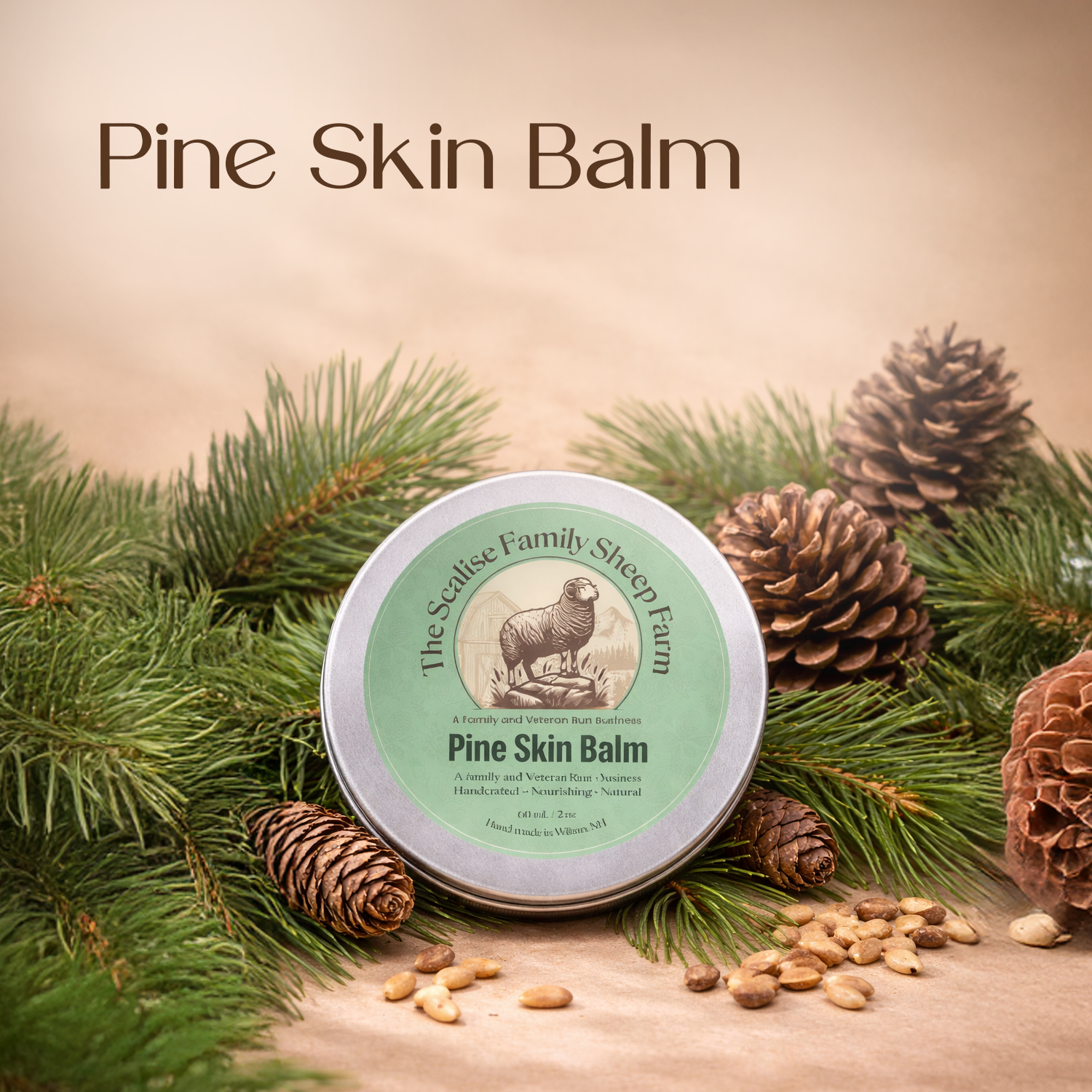
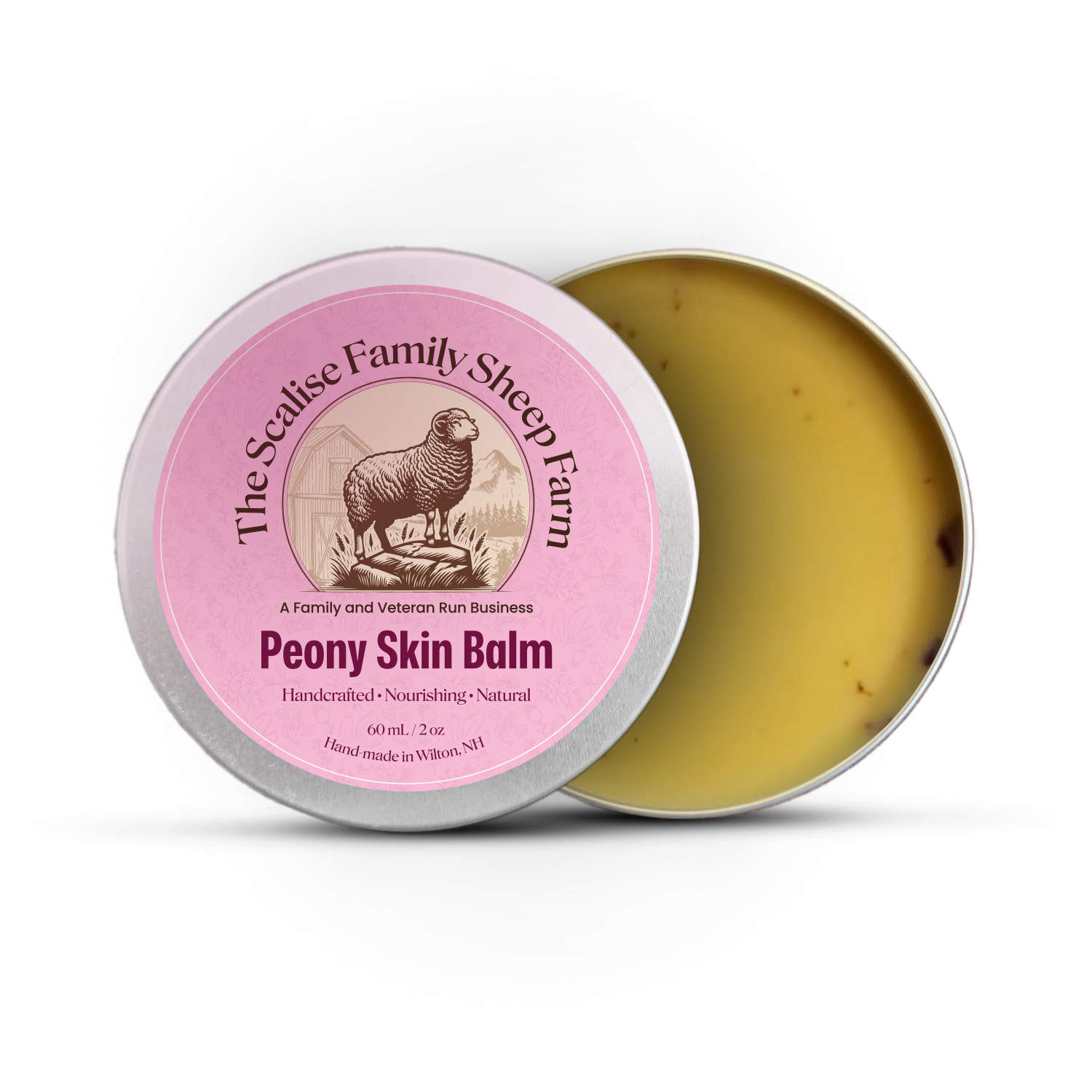
Our Frankincense, Rose, Lavender, Peony, Pine, and Unscented Skin Balms are available in 2-ounce tins for $10. The Pine Resin Balm, available in a 6-ounce size for $25, is a practical option for people who use balm repeatedly on hardworking areas.
For cleansing, pair a balm routine with a gentle sheep-milk soap or other small-batch soap, keep the bar dry between uses, and moisturize immediately after rinsing. Our products are handmade in small batches on our New Hampshire farm, reflecting our farm-sourced approach to natural skincare and our belief that the benefits for skin begin with thoughtful ingredients and consistent care.
Explore the Scalise Family Farm skin balm collection, handmade sheep-milk soaps, or learn more about our family farm.
Medical disclaimer: This article is for general education and is not medical advice, diagnosis, or treatment. Cosmetic balms and soaps cannot treat diagnosed eczema, infection, or allergic contact dermatitis. Stop using any product that causes burning, itching, swelling, or a worsening rash. Contact a dermatologist or other qualified healthcare professional for persistent, painful, bleeding, blistering, spreading, or work-limiting hand symptoms.
Academic References & Scientific Sources
-
Fartasch M. Wet Work and Barrier Function. Current Problems in Dermatology. 2016;49:144–151. PMID: 26844906. DOI: 10.1159/000441590.
-
Tupker RA, Pinnagoda J, Nater JP. The transient and cumulative effect of sodium lauryl sulphate on the epidermal barrier assessed by transepidermal water loss: inter-individual variation. Acta Dermato-Venereologica. 1990;70(1):1–5. PMID: 1967864. No DOI was listed in the verified PubMed record.
-
Fartasch M, Schnetz E, Diepgen TL. Characterization of detergent-induced barrier alterations: effect of barrier cream on irritation. Journal of Investigative Dermatology Symposium Proceedings. 1998. PMID: 9734825. DOI: 10.1038/jidsymp.1998.25.
-
Engebretsen KA, Johansen JD, Kezic S, Linneberg A, Thyssen JP. The effect of environmental humidity and temperature on skin barrier function and dermatitis. Journal of the European Academy of Dermatology and Venereology. 2016;30(2):223–249. PMID: 26449379. DOI: 10.1111/jdv.13301.
-
Uter W, Gefeller O, Schwanitz HJ. An epidemiological study of the influence of season (cold and dry air) on the occurrence of irritant skin changes of the hands. British Journal of Dermatology. 1998;138(2):266–272. PMID: 9602872. DOI: 10.1046/j.1365-2133.1998.02072.x.
-
Meding B, Swanbeck G. Atopy, occupation and domestic work as risk factors for hand eczema in hospital workers. Contact Dermatitis. 1985;13(4):216–223. PMID: 2935362.
-
Hamnerius N, Svedman C, Bergendorff O, Björk J, Bruze M, Pontén A. Wet work exposure and hand eczema among healthcare workers: a cross-sectional study. British Journal of Dermatology. 2018;178(2):452–461. PMID: 28722122. DOI: 10.1111/bjd.15813.
-
Loh EDW, Yew YW. Hand hygiene and hand eczema: A systematic review and meta-analysis. Contact Dermatitis. 2022;87(4):303–314. PMID: 35460528. DOI: 10.1111/cod.14133.
-
Lodén M, Wirén K, Smerud KT, et al. The effect of a corticosteroid cream and a barrier-strengthening moisturizer in hand eczema: a double-blind, randomized, prospective, parallel-group clinical trial. Journal of the European Academy of Dermatology and Venereology. 2012;26(5):597–601. PMID: 21605175. DOI: 10.1111/j.1468-3083.2011.04128.x.


