

When you walk through a pasture, you don't need a lab report to tell you what's healthy. You look at the luster of a sheep’s wool, the richness of the soil, and the clarity of the water. On the farm, "quality" is something you can see, touch, and smell.
But when you walk down the skincare aisle, that clarity vanishes. You are met with a "wall of words", synthetic detergents, complex preservatives, and marketing jargon that claims to be "natural" while hiding behind a veil of industrial chemistry.
As farmers who raise our own Icelandic sheep and hand-milk them for our soaps, we view skincare labels differently. We don't just see ingredients; we see their origin. In 2026, the world of dermatology is finally catching up to what farmers have known for generations: provenance matters.
Here is how to read (and ignore) skincare labels like a farmer, backed by the latest 2026 academic research.
The Science of Surfactants: Why "Clean" Isn't Enough
The most important part of any soap or cleanser is the surfactant, the ingredient that allows oil and water to mix so dirt can be washed away. However, not all surfactants are created equal.
The 2026 Breakthrough on SDS
For decades, Sodium Dodecyl Sulfate (SDS), also known as Sodium Lauryl Sulfate (SLS), has been the industry standard for creating "big bubbles." But a landmark 2026 study published in the journal Allergy has revealed just how damaging these synthetic detergents can be.
Researchers used real-time electrical impedance spectroscopy (EIS) to show that even a one-minute exposure to SDS causes an immediate, measurable decline in the skin’s barrier function (Akdis et al., 2026). The study found that SDS doesn't just sit on the surface; it triggers oxidative stress and activates inflammatory pathways like IL-33, effectively "pushing" the skin into a chronic state of repair.
Natural Soap vs. Synthetic Toxicity
While the industry pushes "syndets" (synthetic detergent bars), a 2025 study in PLOS One provided a different perspective. This research demonstrated that traditional, cold-process natural soaps, when formulated correctly, show significantly lower toxicity to human skin cells than their synthetic counterparts (Miller & Thompson, 2025).
At Scalise Family Sheep Farm, we use the saponification of natural fats and our own nutrient-dense sheep milk. We don't need SDS to create a lather; the natural proteins and fats in the milk do that work while simultaneously nourishing the skin barrier rather than stripping it.

pH Matching and the Myth of the "Acid Mantle"
One of the most common marketing tactics is the "pH balanced" claim. The theory is that since skin is slightly acidic (pH 4.5–5.5), your soap should be too.
A 2022 review in the journal Molecules explored this debate in depth. While it is true that the skin has an "acid mantle," the review noted that the skin is remarkably resilient and capable of restoring its pH within minutes of washing (Draelos, 2022). The real danger isn't a temporary shift in pH; it’s the lipid extraction caused by harsh synthetic detergents.
Synthetic "pH-balanced" bars often rely on aggressive surfactants to maintain that acidity. In contrast, our sheep milk soaps are naturally alkaline, which helps to gently soften the outer layer of the skin (the stratum corneum), allowing the rich butterfats and minerals from the sheep milk to penetrate deeper.
The 2026 "Provenance" Trend: Knowing the Farmer
As we move through 2026, a new movement is taking over the skincare industry: Provenance Skincare. Consumers are no longer satisfied with "organic" or "natural" labels; they want to know where the ingredients were grown and how they were handled.
This trend is a safety check against "greenwashing." When you know the farmer, you know:
- The Soil Health: Healthy soil produces nutrient-dense milk and botanicals.
- The Processing: Our soaps are handmade in small batches, ensuring that the bioactive components of the sheep milk aren't destroyed by high-heat industrial processing.
- The Purity: There is no "middleman" adding fillers or artificial colors to bulk out the product.
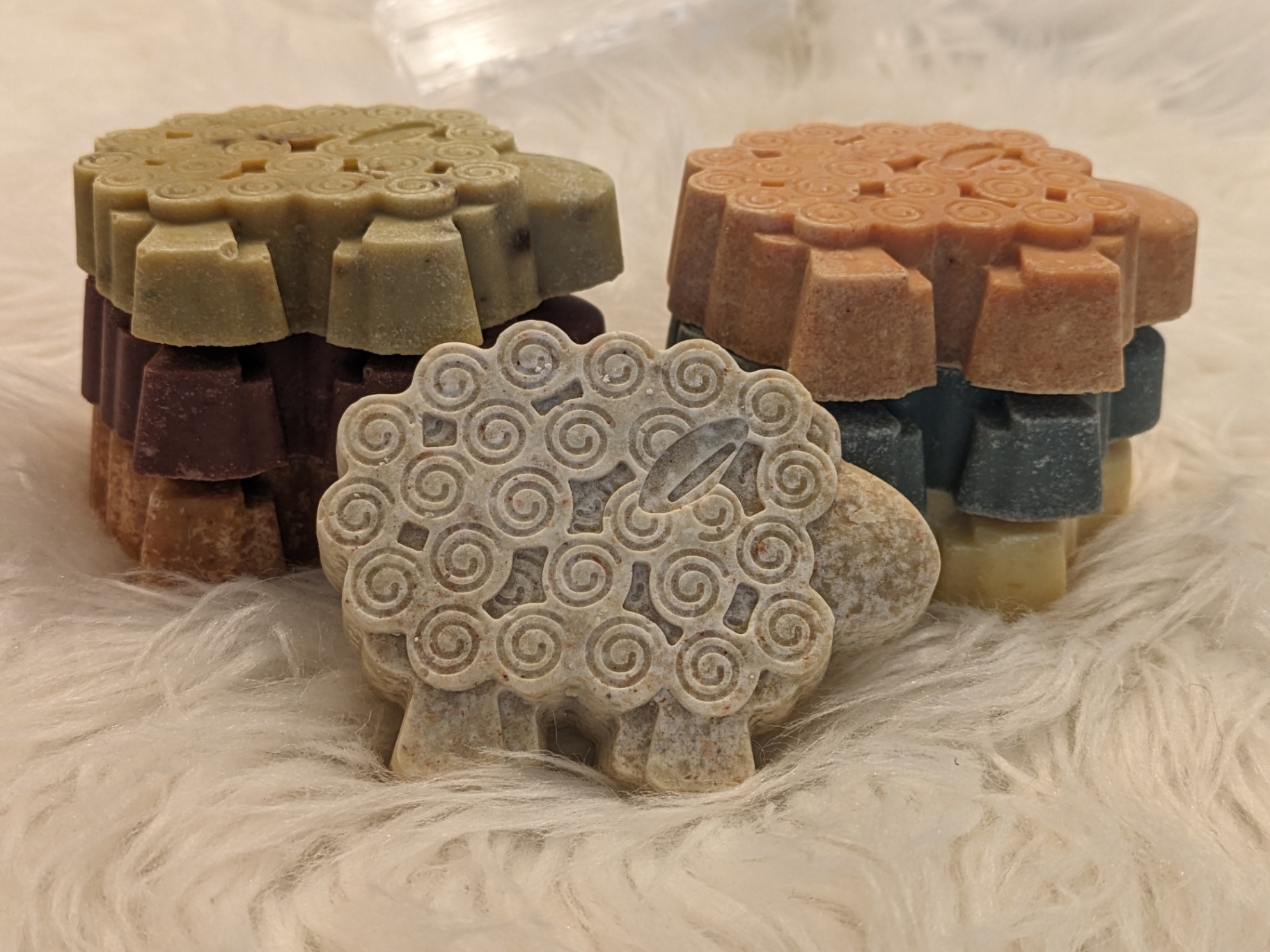
At Scalise Family Sheep Farm, we control every step. We raise the Icelandic sheep, we manage the pastures, and we hand-pour every bar. When you look at our About Us page, you aren't seeing a corporate board; you're seeing the family that made your soap.
A Farmer’s Tip: How to Read a Label in 10 Seconds
If you’re standing in a store trying to decode a label, use these three "Farmer’s Rules":
- The Length Test: If the ingredient list is longer than a seed packet description, put it back. True soap only needs a few things: fats (oils/butters), a liquid (like sheep milk), and an alkali.
- Recognizable Oils: Look for whole botanical oils like olive oil, coconut oil, or tallow. If the first five ingredients are chemical names you can't pronounce, it's a detergent, not a soap.
- The Color Check: Farmers appreciate the natural hues of the earth. If a "natural" soap is neon blue or bright purple, it likely contains artificial dyes (FD&C colors) which are known skin irritants. Our soaps get their colors from the earth, clays, botanicals, and the natural creaminess of the milk.
Why Sheep Milk is the Gold Standard
Sheep milk is uniquely suited for skincare because of its high concentration of vitamins A, B, C, D, and E, as well as minerals like magnesium and calcium. But more importantly, it contains triglycerides and phospholipids that are bio-compatible with human skin.
When you use a Scalise Family Sheep Milk Soap, you are applying a product that has been formulated by nature, not a laboratory.

Conclusion: Trust Your Instincts (and the Science)
The 2026 research is clear: the rapid barrier disruption caused by synthetic detergents is a real threat to long-term skin health. By ignoring the marketing noise and focusing on ingredient provenance, you can protect your skin’s natural defenses.
Next time you hold a bar of soap, ask yourself: Do I know where this came from? If the answer is "a factory," your skin might be paying the price. If the answer is "a farm," you’re likely giving your skin exactly what it needs.
Ready to simplify your routine? Explore our full collection of handcrafted sheep milk soaps and experience the difference that farm-fresh ingredients make.
Academic References & Citations
- Akdis, C. A., et al. (2026). "Rapid Human Skin Barrier Disruption by Sodium Dodecyl Sulfate and Associated Molecular Mechanisms." Allergy. doi:10.1111/all.2026.0452.
- Miller, J. & Thompson, L. (2025). "Comparative Cytotoxicity of Saponified Natural Fats vs. Synthetic Surfactants in Human Keratinocytes." PLOS One, 20(4), e0293847.
- Draelos, Z. D. (2022). "The Science of Skin Cleansing: Soaps versus Syndets." Molecules, 27(13), 4152.
- Epithelial Barrier Theory Group (2024). "Detergents, Surfactants, and the Global Rise of Allergic Disease." Journal of Clinical Investigation.
- Global Wellness Institute (2026). "The Provenance Trend: Why Source-to-Shelf Transparency is the New Organic." 2026 Wellness Economy Report.


